
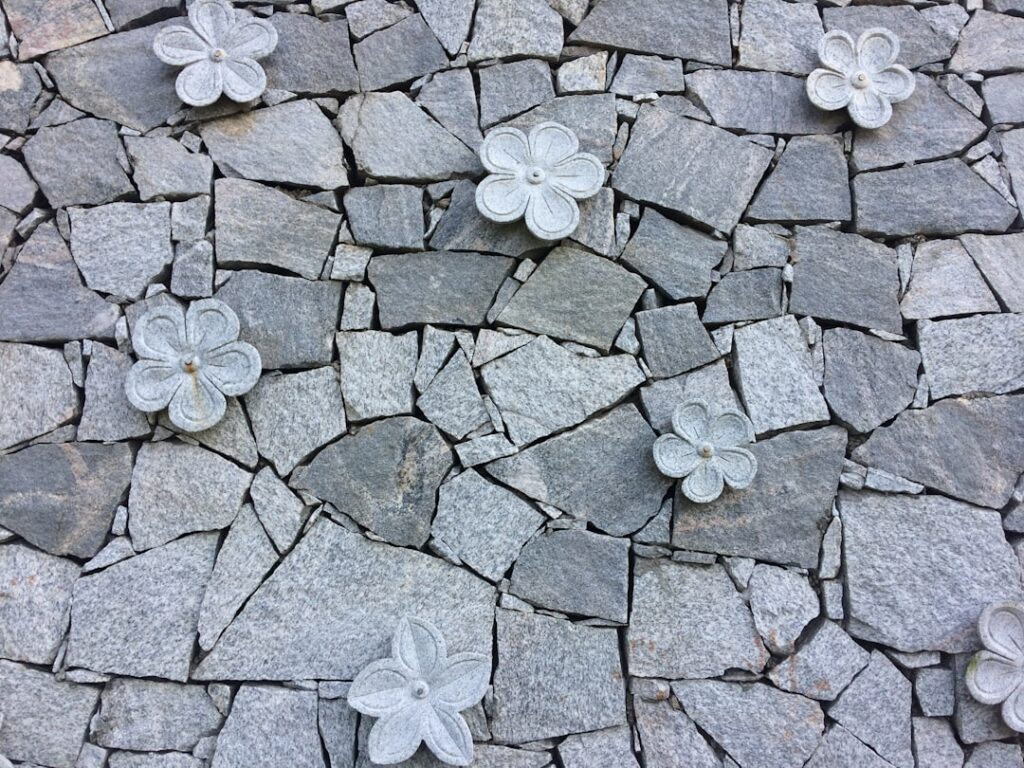
Cut flagstone in clean rectangles reads formal and predictable. Irregular flagstone reads like the patio grew out of the landscape. The trade-off is that organic shapes take 30-50% longer to install because every joint has to be hand-fit, and a sloppy installer can leave inch-wide gaps that swallow patio chairs. A well-built irregular flagstone patio runs $8-22 per square foot depending on stone type and labor, lasts 30+ years with minimal maintenance, and looks better at year 10 than year 1 as moss and weathering soften the joints. Knowing what to specify and how to prep the base separates a $5,000 success from a $12,000 redo.
Part of our Decks & Outdoor guide — explore the full guide →
Stone Types and Where Each Excels
Most irregular flagstone in the US is sandstone, quartzite, limestone, slate, or bluestone. Each behaves differently in freeze-thaw climates and against staining.
- Pennsylvania Bluestone: $4-7 per sqft material, dense and freeze-resistant, classic blue-gray
- Arizona Sandstone: $3-5 per sqft, warm rust and gold tones, softer surface
- Tennessee Crab Orchard: $4-6 per sqft, multi-tonal browns and grays
- Oklahoma Pink: $3-5 per sqft, salmon pink with iron veining
- Quartzite: $7-12 per sqft, hardest option, premium price
For northern climates with hard winters, pick bluestone or quartzite. Softer sandstones spall and pit after 5-8 freeze cycles.
Thickness Matters More Than You Think
Flagstone comes in three thickness ranges: thin (1/2-1 inch), standard (1-1.5 inch), and full (1.5-3 inch). For a mortared patio over concrete, thin stone works fine. For a sand-set or stone-dust set patio over a gravel base — the typical residential install — go with 1.5-2 inch minimum. Thinner stones crack under foot loads and patio furniture over a flexible base.
Full 2-3 inch flagstone tolerates direct laying over compacted soil in mild climates, skipping the gravel base entirely. Saves money but limits longevity.
Base Preparation: The Make-or-Break Step
The base determines whether the patio lasts 5 years or 30. Excavate 8-10 inches below finished grade. Lay landscape fabric (Mirafi 140N or similar geotextile) across the bottom to prevent gravel migration into soil. Add 6 inches of compacted 3/4-inch minus crushed stone in two lifts of 3 inches each, compacting each lift with a plate compactor rental ($85 per day).
Top with 1-2 inches of stone dust or coarse sand, screeded flat with a 2×4 dragged across pipe rails. This is your setting bed — the layer the flagstone actually sits in.
Pitch and Drainage
Pitch the entire patio 1/8 to 1/4 inch per foot away from any structure. A 16-foot patio against the house needs 2-4 inches of drop across that distance. Get this wrong and you’ll have water pooling against siding within the first hard rain. Use a string line stretched at finished grade from highest to lowest point, then check pitch with a 4-foot level and a measured shim.
For patios surrounded by lawn, pitch toward a low corner with a defined runoff path. Don’t trust the surrounding grade to handle stormwater — design the drainage explicitly.
Laying Out Irregular Pieces
Sort the stones by size before starting. Stage the largest pieces — typically 18-24 inches across — as your foundation. Work from the corners inward, fitting each subsequent piece against its neighbors with joint gaps between 1/2 and 1-1/2 inches. Wider gaps look sloppy; narrower gaps leave no room for joint material.
Avoid the “starburst” pattern where four stones meet at a single point. That junction always cracks first. Stagger joints so no more than three corners meet at any spot, mason-style.
Cutting and Shaping
You’ll need to trim stones to fit the perimeter and around obstacles. A 7-inch wet saw with a diamond blade ($45-65 to rent for a day) cuts cleanly. For rough shaping in the field, a brick hammer and a stone chisel work fine and leave a more natural edge. Score the cut line with the chisel, then strike sharply along the score to break.
Wear safety glasses and a dust mask. Wet saw cutting throws a slurry; dry cutting throws silica dust that you don’t want in your lungs.
Joint Material Choices
Three common options fill the joints between irregular flagstones. Polymeric sand (Alliance Gator Maxx or Techniseal HP NextGel, $30-40 per bag) sweeps into joints dry, then activates with light water misting to set into a flexible matrix. Stone dust or coarse mason sand fills joints cheaply and lets moss establish naturally. Mortar grout — Portland cement and sand — locks stones permanently but cracks with any base movement.
For sand-set patios over a flexible base, polymeric sand is the smart middle ground: holds stones in place, resists weed growth, doesn’t crack with seasonal movement.
Sealing and Long-Term Care
Most flagstone benefits from a single coat of breathable penetrating sealer in the first year. Aqua Mix Sealer’s Choice Gold ($60 per gallon, covers 200 sqft) and SuperSeal 30 ($65 per gallon) are both safe on natural stone. Skip topical sealers — they peel within 18 months and look terrible.
Spot-treat moss only where it’s unwanted. Most homeowners building an irregular flagstone patio actually want some moss growth between stones — it’s the visual signature of a mature stone patio. Power wash gently every 3-4 years to remove organic buildup without stripping the patina. Done right, the patio will outlast every piece of furniture you put on it.


