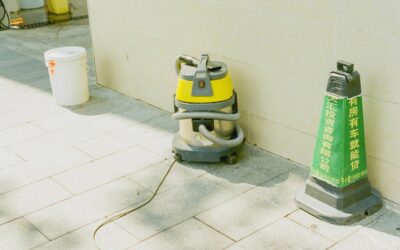
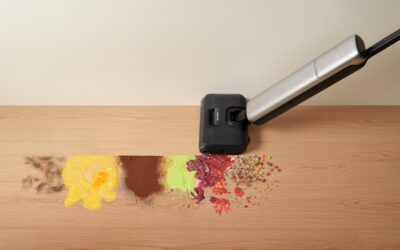
Anyone who has spent an afternoon on their knees scrubbing a large tile or vinyl floor quickly starts wondering whether there is a better way, and there is. A floor maintenance machine, the rotary buffer-style unit you see janitors run down school hallways, does in minutes what hand scrubbing takes hours to accomplish, and it does it better. By spinning a pad or brush at high speed against the floor, these machines strip old wax, scrub away embedded grime, buff out scuffs, and polish hard surfaces to a shine that no mop can match.
Whether you are maintaining a large home, a rental property, or a small commercial space, this guide explains the machine types, how they are used, what pads and chemicals to pair with each job, and whether renting or buying makes more sense for you.
What a Floor Maintenance Machine Does
At its core, a floor maintenance machine is a motor driving a rotating disc, and swapping the pad or brush and adjusting the speed lets one machine perform several jobs. In stripping mode, an aggressive pad and a chemical stripper break down and lift layers of old floor finish or wax so you can rinse them away and start fresh. In scrubbing mode, a medium pad and a cleaning solution dig grime out of the surface and out of grout lines far more thoroughly than mopping, which only pushes dirty water around.
Buffing and polishing modes use soft pads at higher speeds to smooth out scuffs and bring up a shine on waxed or polished floors. The same class of machine can also scrub grout, hone stone, and even sand under the right pad. This versatility is why a single floor machine earns its place in the maintenance kit of anyone responsible for a lot of hard flooring.
The Main Types of Machines
Understanding the categories helps you match the tool to the task. Low-speed rotary machines, running roughly 175 to 320 RPM, are the true all-rounders; they handle stripping, deep scrubbing, and general maintenance and are the type most commonly rented. Their slower, torquey rotation makes them ideal for aggressive work like removing old wax. These are the classic single-disc “swing” machines that pull left and right as you feed the handle.
High-speed burnishers, spinning 1,000 to 2,500 RPM, are dedicated to polishing and produce a wet-look, glass-like shine on finished floors, but they are not for stripping. Automatic scrubbers, or auto-scrubbers, combine a scrubbing head with a solution tank and a squeegee-vacuum that lays down cleaner, scrubs, and sucks up the dirty water in one pass, which is a huge time-saver on large open floors. For a home or small property, a low-speed rotary machine covers the widest range of needs, while auto-scrubbers make sense for bigger commercial areas.
Pads and Brushes: Matching Color to Task
Floor pads follow a near-universal color code, and using the wrong one can either fail to do the job or damage the floor. Black and brown pads are the most aggressive and are reserved for stripping old finish. Blue and green pads handle heavy scrubbing and deep cleaning. Red pads are for light scrubbing and spray buffing, and white and tan pads are the gentlest, used for polishing and buffing to a high shine. As a rule, start with the least aggressive pad that will do the job and only step up if needed, because an overly aggressive pad can dull or scratch a delicate finish.
For grout, stone honing, or very heavy grime, a nylon or wire brush attachment replaces the pad. Always match the pad size to your machine’s disc, keep a spare pad or two on hand because they wear out during a big stripping job, and flip or rinse pads as they load up with dissolved finish so they keep cutting.
Renting Versus Buying
For a one-time or occasional job, renting is almost always the smart move. Home-improvement stores and equipment-rental yards rent low-speed floor machines for roughly $30 to $60 for a half day and $50 to $90 for a full day, often with pads available to purchase separately. That is a fraction of the several hundred to over a thousand dollars a new machine costs, and you avoid storing a heavy piece of equipment you use twice a year.
Buying makes sense if you manage multiple properties, run a cleaning business, or have a large amount of hard flooring that needs regular stripping and refinishing. In that case, a machine pays for itself in avoided rental fees and labor within a season or two. Whichever route you choose, remember that these machines are heavy, often 80 to 120 pounds, so factor in transport and the physical effort of controlling one, especially the low-speed rotaries, which take practice to steer.
How to Use One Safely and Effectively
Operating a floor machine takes a bit of technique, and the first surprise for most people is that a low-speed rotary steers by tilting the handle, not by pushing. Raising the handle slightly moves the machine to the right, lowering it moves it left, and holding it level keeps it in place; this counterintuitive control is why you should practice in an open area before working near walls or fixtures. Keep the pad flat and let the machine’s weight do the work rather than pressing down.
Before starting, clear the floor, sweep or vacuum loose debris, and apply the appropriate solution. Work in overlapping passes, moving steadily so you do not dwell in one spot and burn a swirl into the finish. Keep the power cord over your shoulder and behind you so you never run over it. When stripping, pick up the slurry with a wet vacuum or mop before it dries, and always test any chemical and pad combination in an inconspicuous corner first to be sure it will not harm your specific flooring.
Matching the Machine to Your Floor
Not every floor tolerates a rotary machine, so confirm compatibility before you start. Tile, terrazzo, sealed concrete, and commercial vinyl composition tile are ideal candidates and respond beautifully to machine maintenance. Sheet vinyl and luxury vinyl can be scrubbed at low speed with a gentle pad, but avoid aggressive stripping pads that can gouge the wear layer. Hardwood requires specialized equipment and finishes and is generally not a job for a standard maintenance rotary. When used correctly on the right floor, a floor maintenance machine transforms a dreaded, back-breaking chore into a fast, satisfying job with professional-looking results, which is exactly why they remain a staple of every serious cleaning operation.
Prefer to explore on your own?
See how new flooring looks in your actual room in seconds — free, no signup.
Try the free Floor Studio →