Most flooring failures are not failures of the floor; they are failures of floor maintenance. A $9 per sq ft engineered oak floor maintained correctly will outlive a $14 per sq ft floor that gets the wrong cleaner once a week. The challenge is that every material wants something different, and the cleaning aisle at Home Depot is full of universal “all-floor” cleaners that quietly dull, etch, or strip half of the floors they touch.
The Universal Rules
Two habits prevent more damage than every fancy cleaner combined. First, dust mop or vacuum daily in high-traffic zones. Grit is what scratches floors, and it accumulates faster than people realize. A microfiber dust mop pulls fine dust without abrasion better than a broom.
Second, use walk-off mats at every exterior door. A 4-foot by 6-foot rough-textured mat outside and a soft absorbent mat inside catches roughly 80 percent of incoming dirt and moisture. Replace door mats annually; they wear out and stop trapping debris.
Hardwood: Damp Mop, Not Wet Mop
Solid and engineered hardwood need cleaners formulated for finished wood. Bona Pro Series Hardwood Floor Cleaner (about $25 per gallon refill) and Murphy Oil Soap (used sparingly, on waxed-only floors) are the two reliable picks.
Spray, do not pour. The mop should be barely damp, not wet. Standing water is the number one cause of hardwood failure: cupping, gaps, and finish cloudiness. Mop with the grain in long passes, not in circles.
- Daily: dust mop or vacuum (use the bare-floor setting)
- Weekly: damp mop with hardwood-specific cleaner
- Annually: assess for scratches and screen-and-recoat if needed
- Every 7-15 years: full sand and refinish for solid hardwood
Never use vinegar on hardwood. The acid dulls polyurethane finishes over time, and water-based finishes especially are sensitive. Steam mops are also off-limits; the heat and moisture combination warps wood from the top down.
Luxury Vinyl Plank: The Most Forgiving
LVP and SPC are nearly bulletproof. The only mistake people make is using oil-based cleaners that leave a film, or vinegar-heavy solutions that strip the urethane wear layer over years.
Use a pH-neutral cleaner like Bona for Stone, Tile, and Laminate, or simply warm water with a few drops of mild dish soap. Avoid Pine-Sol, Murphy Oil Soap, and Mop and Glo on vinyl; all three leave residue that attracts dirt and dulls the finish.
Steam mops are technically off-limits for vinyl, though the damage is slow rather than instant. Most manufacturers void the warranty if you steam clean. The heat softens the click edges and can release glue from glue-down installs.
Tile: Grout Is the Real Maintenance
Ceramic and porcelain tile shrugs off most cleaning chemistry. The maintenance issue is grout. Unsealed grout absorbs spills, mildew, and dirt; sealed grout cleans easily but the sealer needs renewal every 1 to 2 years.
Use a pH-neutral tile cleaner weekly; spray-on grout sealer (StoneTech or Aqua Mix) annually. For deep grout cleaning, mix 1/2 cup baking soda with hydrogen peroxide into a paste, scrub with a stiff toothbrush, and rinse. Skip bleach unless grout is already badly stained, because repeated bleach exposure breaks down the grout binder.
Natural stone tile (marble, travertine, slate) is the exception. These are porous and acid-sensitive. Use only stone-safe cleaners and seal twice a year minimum.
Laminate: Keep It Dry
Laminate’s worst enemy is water at the seams. Moisture works between planks, swells the HDF core, and creates permanent edge raise that no refinishing can fix.
Vacuum or dust mop daily; use a barely damp microfiber mop with a laminate-specific cleaner like Bona or Quick-Step weekly. Wipe up spills immediately, especially near doorways and pet water bowls.
Add felt pads to every furniture leg and replace them every six months. Laminate has a thin decorative layer that is forgiving of light scratches but unforgiving of deep scratches that expose the brown core.
Carpet: Vacuum More Than You Think
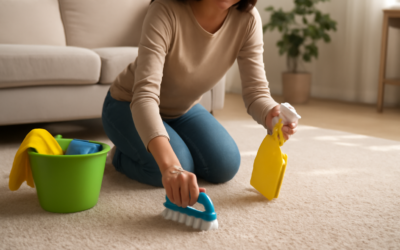
Carpet manufacturers recommend vacuuming high-traffic areas twice a week and full-house vacuuming weekly. Most homeowners do half that. The result is matted fibers that look “old” five years before the carpet is actually worn out.
Use a vacuum with adjustable height for carpet pile depth and a HEPA filter to capture allergens. Empty the canister or change bags before they get more than 2/3 full because suction drops fast as bags fill.
Schedule professional hot water extraction (true steam cleaning, not the rental Rug Doctor kind) every 12 to 18 months. Manufacturer warranties typically require professional cleaning records to remain valid.
Spill Response: The 60-Minute Rule
Most flooring damage from spills happens because the spill sat too long. Wine, pet accidents, tomato sauce, and grape juice cause far less staining when blotted and treated within 60 minutes than after they have dried.
Keep a spill kit accessible: a stack of clean white microfiber towels, an enzyme cleaner for protein-based stains, hydrogen peroxide for organic stains, and pH-neutral floor cleaner for general use.
Furniture Pads and Floor Protectors
Felt furniture pads are the cheapest insurance against scratches. A $6 pack covers a dining table and four chairs, and the pads should be replaced every 6 months on chairs that move daily. Self-adhesive pads fall off faster than nail-in or screw-in versions; spend the extra dollar for the kind that mechanically attach.
Use floor protectors under rolling office chairs. A $30 polycarbonate chair mat saves a $9-per-sq-ft hardwood floor from caster damage. The damage from rolling casters is invisible week-to-week but accumulates into a worn arc that requires refinishing within 5 years on unprotected floors.
Seasonal Maintenance Worth Doing
Twice a year, do a deep maintenance pass. Move furniture and clean underneath. Check baseboard caulk for gaps where water can seep in. Inspect floor seams and transitions for movement or separation. Tighten loose threshold strips and replace any felt pads that have worn through.
This 90-minute investment, scheduled with the change of seasons, catches small problems before they become full plank replacements. Consistent floor maintenance saves thousands over the lifespan of any installation.
Prefer to explore on your own?
See how new flooring looks in your actual room in seconds — free, no signup.
Try the free Floor Studio →