When you need extra seating but do not want to crowd a room with more chairs, the answer is often sitting right on the floor. A floor pillow delivers casual, flexible seating that tucks away when you do not need it and pulls out instantly when guests arrive, kids pile in for movie night, or you simply want a comfortable spot to read. Beyond function, an oversized cushion adds texture, color, and a relaxed, layered feel to a living room, nursery, reading nook, or playroom.
This guide walks through the types of floor pillows, the fills and fabrics that hold up best, how to size them, and how to keep them looking fresh.
What a Floor Pillow Is
A floor pillow is simply an oversized cushion designed to be sat or lounged on directly on the floor. They are typically much larger and thicker than a standard throw pillow, ranging from around 20 inches square up to large 30-inch and bigger versions. The goal is enough surface and loft to support an adult comfortably without compressing flat.
Because they sit on the floor and absorb real body weight, the construction matters more than with a decorative pillow. A good floor pillow uses a durable cover, a generous fill, and often a sturdy zipper so the cover can come off for cleaning.
Types of Floor Pillows
- Square and rectangular cushions: The most common, great for stacking, lining a bench, or creating casual floor seating.
- Round pouf-style pillows: Thick, structured cushions that double as footrests or low stools.
- Meditation cushions (zafu): Firmer, supportive cushions designed to keep good posture during seated activities.
- Oversized lounge pillows: Extra-large, plush cushions meant for sprawling and lounging.
- Kids’ floor pillows: Smaller, soft, and washable, ideal for playrooms and reading corners.
Choosing the Right Fill
The fill determines how a floor pillow feels and how well it holds up. Each option strikes a different balance between softness and support:
- Polyester fiberfill: Soft, affordable, and lightweight, though it can flatten over time and may need fluffing.
- Foam or shredded foam: Firmer and more supportive, holding its shape well for everyday seating.
- Down and feather: Luxuriously soft and moldable, but pricier and best for low-traffic, decorative use.
- Beads or microbeads: Conform to the body like a beanbag, good for casual lounging.
- Buckwheat hulls: Firm and supportive, common in meditation cushions.
For seating that sees daily use, a firmer foam or dense fiber fill keeps its shape far longer than soft fiberfill that compresses flat.
Fabrics and Durability
Because floor pillows live at ground level where dirt, crumbs, and spills happen, the cover fabric is critical. Cotton and linen feel natural and breathable but can stain and wrinkle. Performance fabrics and tightly woven synthetics resist stains and clean up easily, making them the smart choice for homes with kids or pets. Velvet and chenille add a plush, cozy texture but show wear faster in high-traffic spots.
A removable, machine-washable cover with a sturdy zipper is the single most useful feature you can look for, since it lets you launder the part that gets dirty without replacing the whole pillow.
Where to Use Floor Pillows
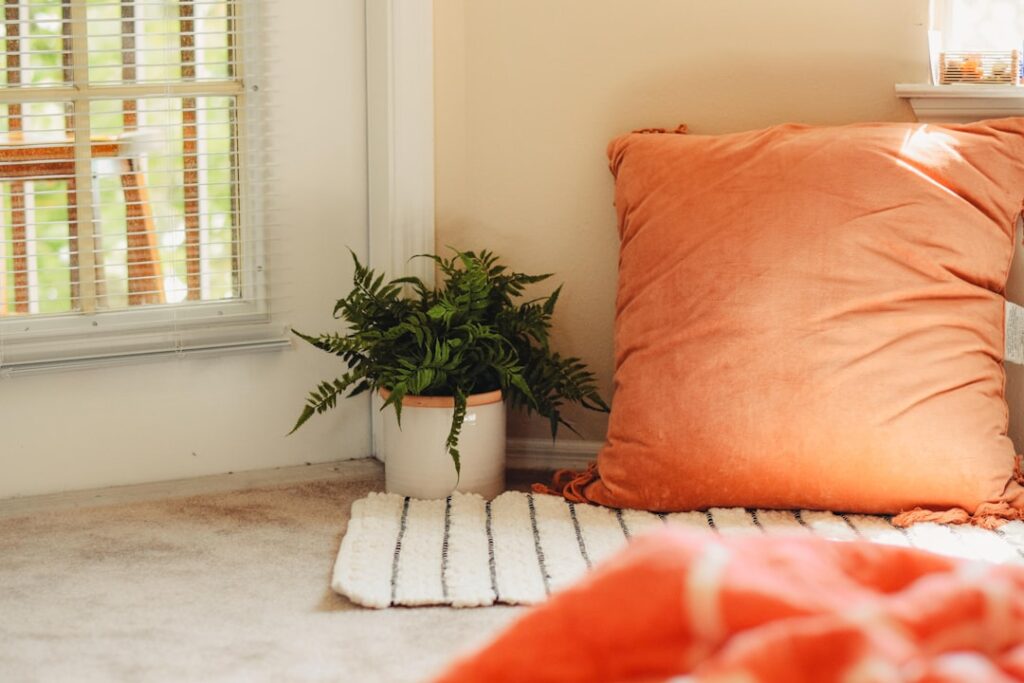
Floor pillows are versatile enough for nearly any room. In a living room, they provide overflow seating for guests and a relaxed perch for movie nights. In a kids’ room or playroom, they create a soft, safe reading or play corner. A nursery benefits from a comfortable cushion for late-night feedings, and a bedroom or office can use one in a window nook for a cozy reading spot.
They also shine in flexible spaces like dorm rooms, finished basements, and home theaters, where you want comfortable seating that adjusts to however many people show up. When not in use, they stack neatly in a corner or slide under a console.
Styling With Floor Pillows
Treat floor pillows as part of your decor, not just utility. Mix sizes and textures, pairing a large square cushion with a couple of smaller round poufs for a layered look. Coordinate the colors with your existing throw pillows, rug, or curtains to tie the space together, or use a bold patterned pillow as an accent against neutral furniture. Grouping a few cushions around a low coffee table instantly creates a casual, inviting seating area.
What to Look for When Buying
A few features separate a floor pillow that lasts from one that flattens within months. Start with the fill density, since a firm foam or tightly packed fiber holds up to daily sitting far better than loose, fluffy stuffing. Check the cover construction next: double-stitched seams and a heavy-duty zipper survive repeated use and washing where flimsy seams split.
Size and thickness matter for comfort, so look for at least a few inches of loft if adults will sit on it. A removable, washable cover is the most practical feature of all, especially in homes with kids or pets. Finally, weigh the fabric against your room: a performance or tightly woven synthetic resists stains, while velvet and linen prioritize looks over durability.
Care and Maintenance
Keeping floor pillows fresh is straightforward with the right habits. Vacuum or shake them regularly to remove dust, crumbs, and pet hair. Spot-clean spills promptly with a mild cleaner suited to the fabric, and wash removable covers according to the care label. Fluff and rotate the cushions periodically so they wear evenly and keep their shape.
For pillows without removable covers, choose a stain-resistant fabric from the start and rely on spot cleaning. Let any washed cover dry fully before reassembling to avoid trapping moisture and odor inside the fill.
The Bottom Line
A floor pillow is an easy, affordable way to add flexible seating, comfort, and style to almost any room. Match the fill to how often you will use it, prioritize a durable cover with a removable, washable design, and size it to support adults comfortably. Choose well and a good floor pillow will give you cozy, adaptable seating that looks great and tucks away whenever you need the space back.
Prefer to explore on your own?
See how new flooring looks in your actual room in seconds — free, no signup.
Try the free Floor Studio →