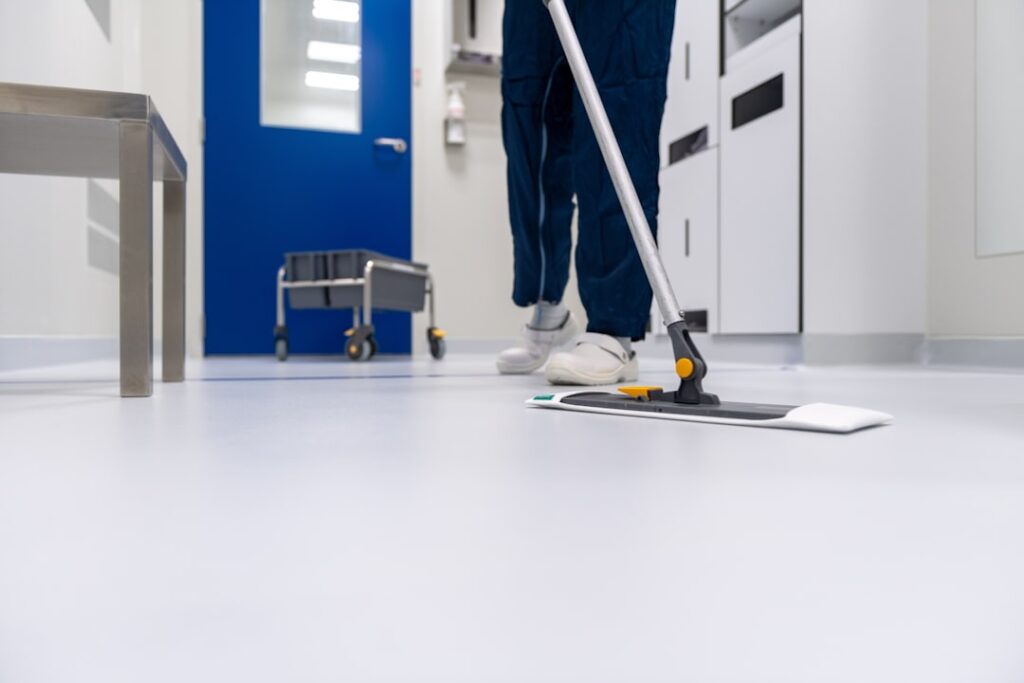
If you have ever swept a dusty garage and watched a gray cloud rise into the air, floor sweeping compound is the fix you did not know existed. It is a granular material, often sawdust, sand, or absorbent clay treated with a small amount of oil or wax, that you scatter on the floor before sweeping. As you push your broom, the granules grab dust, dirt, and fine grit, trapping them in clumps that sweep up cleanly instead of scattering into the air. Warehouses, workshops, and schools have used it for over a century, and it works just as well in a home garage or shop.
What Floor Sweeping Compound Does
The core problem with sweeping a dirty hard floor is that a broom lifts as much dust as it collects. Fine particles go airborne, settle right back down, and you breathe them in the meantime. Sweeping compound solves this by giving the dust something to cling to. The slightly oily or damp granules act like a magnet for fine debris, binding it into heavier clumps that the broom can actually corral.
The result is a cleaner floor, far less airborne dust, and less wear on your lungs and your broom. On large concrete floors it is dramatically faster and more thorough than dry sweeping alone.
Types of Sweeping Compound
Oil-Based Compounds
The traditional type, usually sawdust or wood granules treated with mineral oil and sometimes a sweeping sand. It controls dust extremely well and is cheap. The downside is the oil residue, which can leave a faint film and is not ideal on finished or porous floors where staining is a concern.
Wax-Based Compounds
These use wax instead of oil, leaving less residue and a slight polish on the floor. They suit sealed concrete and surfaces where you want minimal film. A bit more expensive than oil-based.
Water-Based and Oil-Free Compounds
Newer formulations use moisture-retaining granules or absorbent clay with no oil at all. They are the choice when you cannot risk any oil residue, such as near food prep areas or on floors due to be coated.
Grit-Based (Sand) Compounds
Heavier sand-based products add scouring action for ground-in dirt and are common in industrial settings with greasy floors.
How to Use Sweeping Compound
- Scatter a light layer of compound across the floor, working in a band a few feet wide. A little goes a long way; over-applying just wastes product and leaves residue.
- Push the compound across the floor with a wide push broom, letting it roll and pick up dust as it travels.
- Work systematically from one end of the room toward an exit or collection point.
- Sweep the dirt-laden clumps into a dustpan and discard.
- For heavily soiled floors, repeat with a fresh light application.
The trick is restraint. Most people dump far too much. A thin scatter that you keep moving ahead of the broom does the job.
Which Surfaces It Suits
Sweeping compound shines on large hard floors: bare and sealed concrete, garage floors, workshop and warehouse floors, and rough industrial surfaces. It is excellent before painting or coating a slab, since it lifts fine dust that would otherwise ruin the finish.
Be cautious on finished surfaces. Oil-based compound can stain unsealed wood, leave film on glossy tile, or be tracked onto carpet. On those floors, choose a wax-free or oil-free product, or skip the compound and use a microfiber dust mop instead. Always test a small area first on any finished floor.
Safety and Storage
Sweeping compound is generally low-hazard, but a few cautions apply. Oil-treated sawdust is combustible; store it in a closed metal container away from heat and ignition sources, and never leave oily used compound piled up where it could smolder. Keep it dry until use, because moisture can cause some products to clump or, in the case of oily sawdust, generate heat as it oxidizes. Sweep up and dispose of used compound promptly rather than letting it sit.
Cost and Where to Buy
Sweeping compound is inexpensive and sold in bags or pails, typically 25 to 50 pounds. Expect to pay roughly $20 to $50 for a large bag, available at hardware stores, janitorial suppliers, and home centers. One bag covers a lot of floor because each application is light, so even a small purchase lasts a long time in a home garage.
Alternatives Worth Knowing
If you only sweep occasionally, a few alternatives may serve. A microfiber dust mop traps fine dust without any compound and is great for finished floors. A shop vacuum with a fine-dust filter avoids the airborne problem entirely. For ongoing garage cleaning, though, a bag of sweeping compound remains the cheapest and fastest way to control dust on a big slab.
Why It Beats a Plain Broom
It helps to understand exactly why the compound works so much better than dry sweeping. A bare broom relies on the bristles to corral debris, but the lightest and most harmful particles, fine dust and silica, are too light to stay put. The broom’s motion lofts them into the air, where they hang for minutes and then resettle. You end up redistributing dust rather than removing it, and breathing a good share of it in the process.
The compound changes the physics. By coating each particle with a slightly oily or moist granule, it adds weight and stickiness so the dust clings together and stays on the floor where the broom can sweep it up. On a large concrete slab, that single difference turns a frustrating, hazy chore into a fast, clean one, and it noticeably reduces the dust you inhale while doing it.
Final Thoughts
Floor sweeping compound is a simple, old-school product that solves a real problem: it keeps dust on the floor and out of the air while you sweep. Pick an oil-based product for raw concrete and a wax-free or oil-free version for finished surfaces, apply it lightly, and store the oily types safely. For anyone with a garage, workshop, or large hard floor, it earns its keep.
Prefer to explore on your own?
See how new flooring looks in your actual room in seconds — free, no signup.
Try the free Floor Studio →