Los Angeles flooring projects fail for reasons that surprise out-of-towners: dry indoor air that shrinks wood, seismic movement that cracks rigid tile, and licensing rules that catch unwary homeowners off guard. Before you compare flooring companies Los Angeles has to offer, know that California holds contractors to strict licensing standards, and the region’s dry, sunny climate behaves very differently from the humid markets most national advice assumes. This guide helps you vet companies, read quotes, and choose floors that fit Southern California.
- How LA’s Climate Shapes the Right Floor
- Why Licensing Matters in California
- Types of Flooring Companies in LA
- How to Vet a Flooring Company
- Reading the Quote Carefully
- Best Flooring Choices for Los Angeles
- Acclimation in a Dry Climate
- Designing for Seismic Movement
- Timing and Negotiation
- Making the Final Decision
How LA’s Climate Shapes the Right Floor
Los Angeles is dry for much of the year, with low humidity that can pull moisture out of solid hardwood and cause gapping between planks. Intense sun through large windows also fades certain finishes and can warp materials in sunrooms. On the flip side, the mild winters mean you rarely deal with the freeze-thaw stress that plagues colder markets.
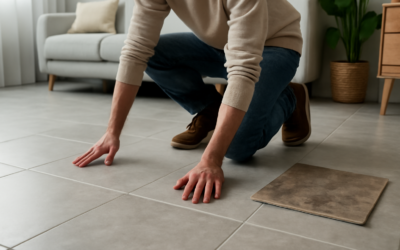
Earthquake country adds another wrinkle. Seismic movement and slab settling can crack rigid tile, which is why uncoupling membranes and flexible floating floors are popular. A good company will ask about sun exposure, slab condition, and whether you want a floor that tolerates movement.
Why Licensing Matters in California
California requires contractors performing work over $500 to hold a license from the Contractors State License Board. This is one of the most important checks you can make. Verify the license number, confirm it is active and in the correct classification, and check that the company carries workers’ compensation and liability insurance. Hiring an unlicensed installer can leave you liable for injuries and void manufacturer warranties.
Always ask for the license number up front and verify it independently. A legitimate company provides it without hesitation; reluctance is a clear warning sign.
Types of Flooring Companies in LA
The market is large and varied:
- National home centers: Broad stock and frequent sales, with subcontracted installation.
- Independent flooring contractors: Best for hardwood, tile, and custom work, often with in-house crews.
- Design-build remodelers: Suited to whole-home renovations where flooring is one part of a larger project.
- Specialty showrooms: Appointment-based, strong on premium and imported products.
For seismic-smart tile or premium hardwood, a licensed independent contractor with strong references is usually the safest choice.
How to Vet a Flooring Company
Beyond licensing, run this checklist:
- Verify the CSLB license, insurance, and workers’ compensation coverage.
- Ask whether installers are employees or subcontractors, and who is liable for problems.
- Request three local references on the same product, with at least one job a year old or more.
- Get the warranty in writing and clarify the split between material and labor coverage.
A reputable company answers all of this openly. Vague responses on licensing or references should end the conversation.
Reading the Quote Carefully
A complete quote separates materials, underlayment or membrane, demolition and haul-off, subfloor or slab prep, labor, transitions, and trim. In LA the surprise costs are usually slab leveling and crack isolation, plus disposal in older homes with multiple existing floor layers. Acclimation also matters: in a dry climate, hardwood must acclimate to your home’s humidity before installation, and a good company builds that time into the schedule.
Confirm whether furniture moving and old-floor removal are included, and get the waste factor in writing: 7 to 10% for straight plank, 12 to 15% for diagonal or patterned tile.
Best Flooring Choices for Los Angeles
Given dry air and seismic considerations, focus here:
- Living areas: Engineered hardwood, which handles dry air better than solid planks, or premium luxury vinyl.
- Kitchens and baths: Porcelain tile with an uncoupling membrane for crack resistance.
- Indoor-outdoor spaces: Large-format porcelain or polished concrete that flows to patios.
- Bedrooms: Engineered wood or carpet.
Expect installed pricing around $5 to $8 per square foot for quality vinyl, $10 to $16 for engineered hardwood, and $12 to $24 for porcelain tile, reflecting LA’s higher labor rates.
Acclimation in a Dry Climate
Los Angeles air is dry for most of the year, and that low humidity is hard on wood floors that arrive from a more humid warehouse. If hardwood is installed before it adjusts to your home’s moisture level, the planks will shed moisture, shrink, and open gaps between boards within months. A competent company stages the flooring inside your home for several days to a week before installation, ideally with the HVAC running at the same settings you will live with year-round.
Ask any company directly how long they acclimate wood and whether they measure the moisture content of both the planks and the subfloor before starting. A firm that wants to deliver and install on the same day is prioritizing its schedule over your floor’s longevity. This single step prevents one of the most common and frustrating callbacks in Southern California hardwood installs.
Designing for Seismic Movement
Earthquake country rewards floors that can flex. Rigid tile bonded directly to a slab is the most likely flooring to crack when the ground shifts or the slab settles, which is why an uncoupling membrane is standard practice for quality tile work in LA. The membrane absorbs lateral movement so the tile layer does not have to. Floating floors such as click-lock luxury vinyl and engineered wood also tolerate movement well because they are not glued to the substrate.
If you have your heart set on large-format tile or natural stone, make sure the quote includes crack isolation and ask how the installer handles existing slab cracks. Cutting that step to save a few hundred dollars often leads to a cracked floor after the next significant tremor.
Timing and Negotiation
Holiday weekends bring the deepest manufacturer rebates, and some contractors offer better scheduling in slower winter months. Given LA’s high demand and long lead times, booking well ahead is wise. Always ask whether store promotions stack with manufacturer rebates and confirm lead times for any imported or special-order product, which can run several weeks in this market.
Making the Final Decision
The right company balances proper licensing, installation skill, transparent pricing, and real knowledge of Southern California conditions. Get bids from two or three licensed companies, bring measurements and photos, and ask each the same questions about acclimation, crack isolation, and warranty. Take samples home, study them under LA’s strong daylight for several days, and choose the company that proved its credentials and explained the trade-offs honestly rather than the one that merely quoted the lowest number.
Prefer to explore on your own?
See how new flooring looks in your actual room in seconds — free, no signup.
Try the free Floor Studio →