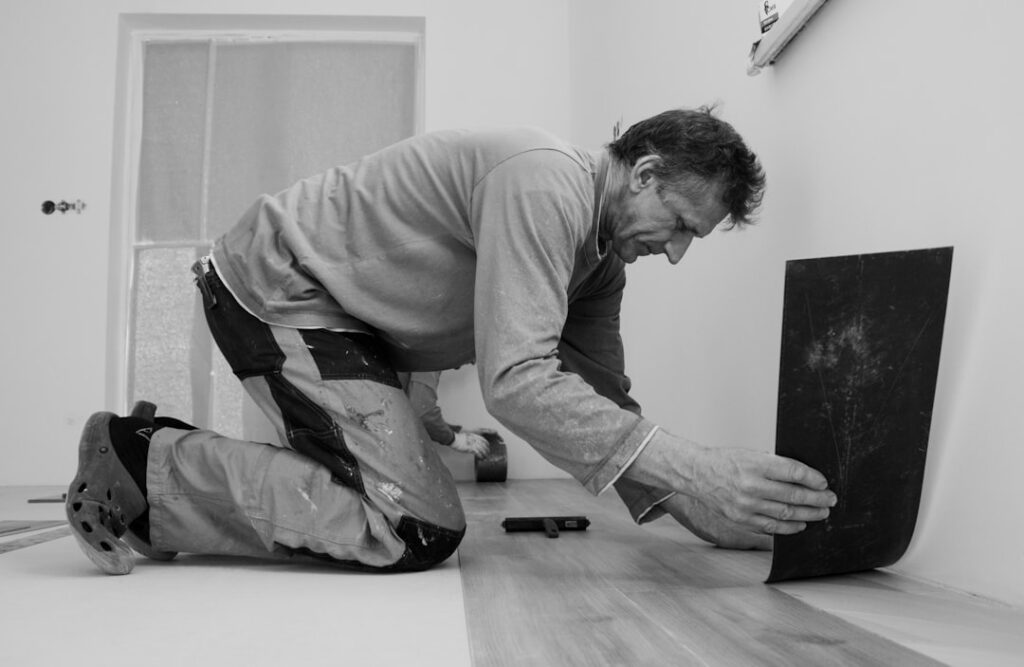
Flooring installation in Los Angeles, CA covers an unusually wide range of homes: 1920s Spanish Revival houses with raised wood floors, Craftsman bungalows in Highland Park and Pasadena, mid-century ranches in the San Fernando Valley, hillside homes on stepped foundations and stacked condos across the Westside. Each one calls for a different approach to hardwood floors, luxury vinyl plank and tile.
Homeowners across the Greater Los Angeles area use our network of vetted flooring professionals to compare installers for houses, condos and income properties. Request free quotes and compare scope, schedule and price.
- Our Flooring Installation Services in Los Angeles
- Raised Foundations Versus Slabs
- Climate Considerations for Los Angeles Flooring
- Condo and HOA Sound Requirements
- Choosing Materials for LA Homes
- ADUs and Garage Conversions
- Older Materials and Safety
- Comparing Los Angeles Quotes
- How It Works
- Helpful Flooring Guides
- Frequently Asked Questions
- How much does flooring installation cost in Los Angeles?
- How long does flooring installation take?
- Do I need to be home during installation?
- Are your Los Angeles flooring contractors licensed?
- Do you offer free estimates in Los Angeles?
- Why do gaps appear in my wood floor during Santa Ana winds?
- Do I need HOA approval for new flooring in my LA condo?
Our Flooring Installation Services in Los Angeles
- Hardwood floor installation
- LVP/vinyl plank installation
- Tile installation
- Carpet installation
- Laminate flooring installation
- Engineered wood installation
- Epoxy flooring
- Commercial flooring
Raised Foundations Versus Slabs
Older Los Angeles homes, roughly those built before the 1950s, usually sit on raised foundations with a crawlspace. Their wood subfloors accept nail-down solid hardwood, and many still have original oak strip under carpet that may be worth refinishing. Before new flooring goes in, an installer should check for squeaks, loose subfloor and any sagging from older framing or past earthquake damage.
Postwar tract homes in the Valley, the South Bay and much of the Inland side of the county are typically slab on grade. Slabs suit LVP, tile and glue-down or floating engineered wood. Cracks in older slabs are common in Southern California and are often harmless hairline shrinkage, but wider or uneven cracks should be looked at before tile goes over them. Crack-isolation membranes help keep tile from cracking along an old slab crack.
Climate Considerations for Los Angeles Flooring
Los Angeles has a dry-summer Mediterranean climate, but conditions vary sharply across the basin. Coastal neighborhoods sit under marine layer much of late spring and early summer, with moderate humidity and mild temperatures. The San Fernando and San Gabriel valleys run much hotter and drier. In fall, Santa Ana winds can drop indoor humidity very low for days at a time.
Those dry spells shrink wood flooring, so gaps between boards are common in fall and winter. Let wood acclimate in the home for several days before installation, and aim to keep indoor humidity roughly between 30 and 50 percent. A whole-home or room humidifier helps in the Valley. Engineered wood is more stable than solid boards through these swings, which is one reason it is so popular in Los Angeles.
Condo and HOA Sound Requirements
Many Los Angeles condo buildings and HOAs restrict hard flooring on upper floors unless it is installed over a sound-rated underlayment. Some require approval from the board or management company before work starts, plus proof of the contractor’s insurance. Read your CC&Rs and ask management for the specific requirement in writing before buying materials. Replacing carpet with hard flooring without approval can lead to fines or an order to remove it.
Practical building rules matter as well: elevator pads, work hours, parking for the crew, and where debris can go. Mention these during the estimate so the installer can plan for them.
Choosing Materials for LA Homes
- Engineered hardwood is the most common wood option, especially wide-plank white oak, because it tolerates dry winds and slab installation.
- Solid hardwood fits raised-foundation homes and restorations of 1920s and 1930s houses.
- Porcelain tile suits Spanish-style homes, kitchens, baths and indoor-outdoor living areas that open to patios.
- LVP is a common choice for rentals, ADUs and condos thanks to its water resistance and easy upkeep.
- Polished or coated concrete appears in modern remodels and converted garages.
ADUs and Garage Conversions
Accessory dwelling units are a big part of Los Angeles remodeling. A converted garage usually has a sloped concrete slab built to drain toward the door, which must be leveled before most finished flooring can go in. Garage slabs also tend to lack a vapor barrier underneath, so moisture testing and a vapor retarder are worth the small added cost. LVP and tile are the most common choices for ADUs because they handle tenant wear and are easy to clean between occupants.
Older Materials and Safety
Homes built before the 1980s may have vinyl tile, sheet flooring or black adhesive that contains asbestos. Test before removal. Homes built before 1978 may also have lead paint on baseboards and trim, so ask about lead-safe practices when trim will be removed or sanded.
Comparing Los Angeles Quotes
Labor rates in Los Angeles tend to be on the higher side, and parking, traffic and hillside access all affect time on site. Ask each contractor to list demolition, disposal, subfloor or slab prep, underlayment, trim, stairs and transitions separately. Our flooring cost guide explains how typical costs are built, and the types of flooring guide compares material options. Late winter and spring, before the Valley’s summer heat and after the fall Santa Ana season, are good windows for wood installation.
How It Works
- Request a free quote: Tell us about your project, room size, and flooring preferences.
- Get matched with local pros: We connect you with up to 3 licensed flooring installation contractors in the Greater Los Angeles area.
- Compare and choose: Review quotes, credentials, and reviews. Pick the installer that fits your budget and timeline.
Helpful Flooring Guides
Read more before you decide:
Frequently Asked Questions
How much does flooring installation cost in Los Angeles?
It depends on the material, square footage, subfloor or slab condition and access. Los Angeles labor rates, parking and condo logistics often push prices above national averages. Request free quotes for itemized numbers.
How long does flooring installation take?
Most Los Angeles projects take 1 to 5 days. Condo approvals, slab repairs or tile cure time can extend the schedule.
Do I need to be home during installation?
Be on hand for the first morning and the closing inspection. Many installers can work while you are out as long as they have access and parking.
Are your Los Angeles flooring contractors licensed?
Yes. All professionals in our Los Angeles, CA network are licensed, insured, and background-checked. We verify credentials before connecting them with homeowners.
Do you offer free estimates in Los Angeles?
Yes. All quotes from our Los Angeles flooring professionals are free with no obligation. Most contractors offer in-home measurements and estimates at no cost.
Why do gaps appear in my wood floor during Santa Ana winds?
Those winds bring very dry air, and wood shrinks as it loses moisture. Gaps usually close again when humidity returns. A humidifier and engineered wood both reduce the effect.
Do I need HOA approval for new flooring in my LA condo?
Often yes, especially when replacing carpet with hard flooring on upper floors. Check your CC&Rs and get the sound underlayment requirement in writing before you order materials.
Prefer to explore on your own?
See how new flooring looks in your actual room in seconds — free, no signup.
Try the free Floor Studio →