Good flower bed edging does more than look pretty — it keeps grass from creeping into your garden beds, defines planting zones, and reduces maintenance time. From budget-friendly plastic strips to premium natural stone, the right edging material depends on your style, budget, and how much upkeep you are willing to do. This guide compares 12 popular options with real costs, installation difficulty, and durability ratings.
- Why Flower Bed Edging Matters
- 12 Flower Bed Edging Materials Compared
- 1. Natural Stone
- 2. Brick
- 3. Concrete Pavers
- 4. Metal Edging (Steel or Aluminum)
- 5. Plastic/Polyethylene Edging
- 6. Rubber Edging
- 7. Wood (Landscape Timbers)
- 8. Composite/Recycled Plastic Lumber
- 9. Woven Willow/Wattle
- 10. Poured Concrete (Decorative Curbing)
- 11. Trench Edging (No Material)
- 12. Gabion Baskets
- Cost & Durability Comparison Chart
- Best Edging by Garden Style
- How to Install Flower Bed Edging
- Maintenance Tips
- Common Edging Mistakes to Avoid
- Frequently Asked Questions
Why Flower Bed Edging Matters
- Prevents grass invasion — A physical barrier stops lawn grass and weeds from spreading into flower beds.
- Contains mulch and soil — Edging keeps mulch from washing onto walkways and driveways during rainstorms.
- Defines visual boundaries — Clean edges create a polished, intentional look that boosts curb appeal.
- Reduces mowing and trimming — A solid border eliminates the need for hand-trimming along bed edges.
- Increases property value — Landscaping improvements, including defined flower beds, can increase home value by 5–15%.
12 Flower Bed Edging Materials Compared
1. Natural Stone
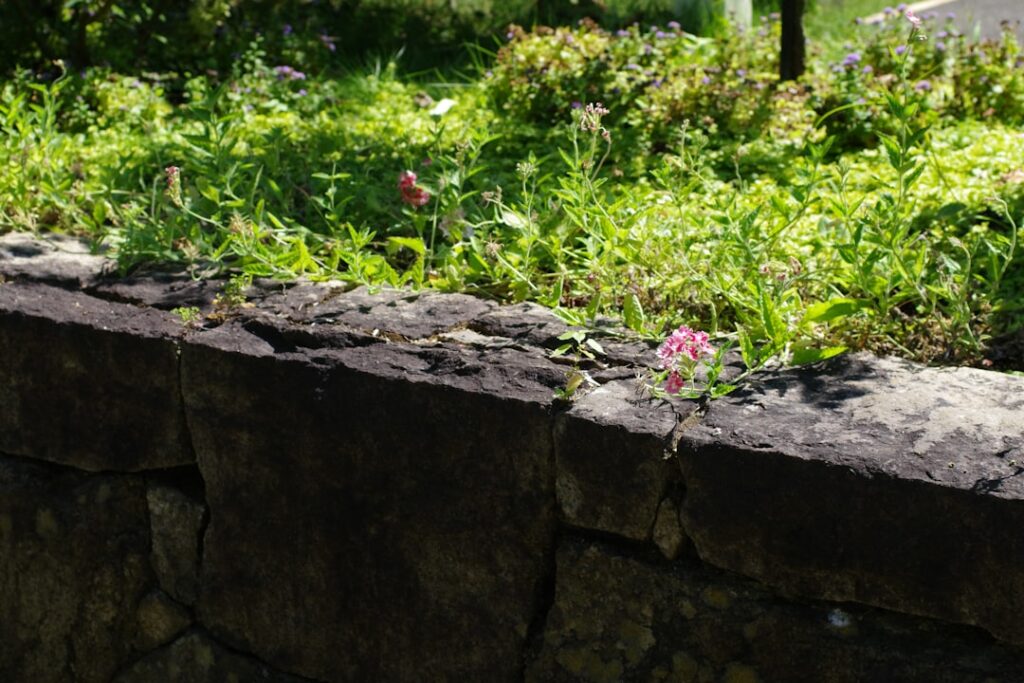
Fieldstone, flagstone, or river rock stacked along bed edges. Natural stone is timeless and extremely durable, lasting 20+ years. Costs range from $3–$15 per linear foot depending on stone type and region.
2. Brick
Classic red or gray bricks laid end-to-end or at an angle create a traditional border. Bricks cost $1.50–$4 per linear foot and last 15–25 years. They pair beautifully with cottage-style gardens.
3. Concrete Pavers
Available in countless shapes, colors, and textures. Concrete pavers are more uniform than natural stone and cost $2–$8 per linear foot. They are easy to install and hold up well for 15–20 years.
4. Metal Edging (Steel or Aluminum)
Thin metal strips create a sleek, nearly invisible border. Steel edging costs $2–$6 per linear foot and lasts 20+ years. Aluminum is lighter and rust-proof but slightly more expensive. Popular in modern and minimalist landscapes.
5. Plastic/Polyethylene Edging
The most affordable option at $0.50–$2 per linear foot. Flexible plastic rolls curve easily around beds. However, plastic can become brittle and crack after 3–5 years of sun exposure.
6. Rubber Edging
Made from recycled tires, rubber edging is flexible, durable, and eco-friendly. It costs $1–$3 per linear foot and lasts 10–15 years. It bends easily around curves and will not crack in cold weather.
7. Wood (Landscape Timbers)
Pressure-treated 4×4 or 6×6 timbers create a rustic border. Cost: $1.50–$4 per linear foot. Wood lasts 7–12 years before needing replacement due to rot. Cedar and redwood last longer naturally.
8. Composite/Recycled Plastic Lumber
Looks like wood but resists rot and insects. Costs $3–$7 per linear foot and lasts 20+ years. Available in brown, gray, and black tones.
9. Woven Willow/Wattle
A decorative option made from woven willow branches. Creates a charming cottage-garden look. Costs $4–$10 per linear foot for pre-made panels but only lasts 3–5 years outdoors.
10. Poured Concrete (Decorative Curbing)
Professional landscape curbing machines extrude continuous concrete borders in various profiles. Cost: $5–$15 per linear foot installed. Extremely durable (20+ years) but difficult to move or modify later.
11. Trench Edging (No Material)
Simply cutting a V-shaped trench between the lawn and bed. Free to DIY, and the clean line looks elegant. Requires re-cutting every 4–8 weeks during the growing season.
12. Gabion Baskets
Wire cages filled with rocks. Industrial-chic look that works well in modern gardens. Costs $8–$20 per linear foot and lasts indefinitely. Best for raised beds and retaining applications.
Cost & Durability Comparison Chart
| Material | Cost/Linear Ft | Lifespan | DIY Difficulty | Maintenance |
|---|---|---|---|---|
| Natural stone | $3–$15 | 20+ years | Moderate | Low |
| Brick | $1.50–$4 | 15–25 years | Moderate | Low |
| Concrete pavers | $2–$8 | 15–20 years | Easy–moderate | Low |
| Metal (steel/aluminum) | $2–$6 | 20+ years | Easy | Very low |
| Plastic | $0.50–$2 | 3–5 years | Very easy | Medium |
| Rubber | $1–$3 | 10–15 years | Easy | Low |
| Wood timbers | $1.50–$4 | 7–12 years | Easy | Medium |
| Composite lumber | $3–$7 | 20+ years | Easy | Very low |
| Woven willow | $4–$10 | 3–5 years | Easy | High |
| Poured concrete | $5–$15 | 20+ years | Professional | Very low |
| Trench (no material) | Free | Ongoing | Easy | High |
| Gabion baskets | $8–$20 | 25+ years | Moderate | Very low |
Best Edging by Garden Style
| Garden Style | Recommended Edging | Why It Works |
|---|---|---|
| Cottage / English garden | Brick, woven willow | Warm, traditional charm |
| Modern / minimalist | Metal, concrete pavers | Clean lines, low profile |
| Rustic / farmhouse | Wood timbers, natural stone | Organic, earthy textures |
| Contemporary | Steel edging, gabion | Industrial-chic aesthetic |
| Budget-friendly | Plastic, trench edging | Lowest cost, easy DIY |
| Formal / estate | Poured concrete, natural stone | Polished, permanent borders |
How to Install Flower Bed Edging
While each material has unique steps, the general installation process is the same:
- Mark the bed outline — Use a garden hose or spray paint to define the shape. Step back and adjust until you are satisfied with the curves and proportions.
- Cut the edge — Use a flat-blade spade or half-moon edger to cut a clean line 3–4 inches deep along the marked line.
- Dig a trench — For materials like brick, stone, or pavers, dig a trench slightly wider and deeper than the edging material (typically 4–6 inches deep).
- Level the base — Add 1–2 inches of coarse sand or gravel to the trench bottom and tamp it flat.
- Set the edging — Place your material in the trench, checking for level every few feet. Butt pieces tightly together.
- Backfill and compact — Fill behind and in front of the edging with soil and tamp firmly to hold everything in place.
- Add mulch — Spread 2–3 inches of mulch inside the bed, keeping it below the top of the edging.
For metal and plastic strip edging, follow the manufacturer’s instructions for stake placement, typically every 3–5 feet.
Maintenance Tips
- Re-cut trench edging every 4–8 weeks during the growing season with a half-moon edger.
- Reset shifted stones or bricks in spring after freeze-thaw cycles.
- Check metal edging stakes annually and push any that have lifted back into the ground.
- Replace cracked plastic edging before it becomes an eyesore — UV damage is the main cause.
- Seal poured concrete curbing every 2–3 years with a concrete sealer to prevent cracking.
- Treat wood timbers with a wood preservative annually to extend their lifespan.
For adjacent outdoor surfaces, proper edging also prevents soil and mulch from ending up on patios and walkways. If your patio connects to indoor spaces, keeping debris outside protects your tile floors and hardwood floors from tracked-in grime.
Common Edging Mistakes to Avoid
- Edging too shallow — Grass roots travel 2–4 inches underground. Edging must reach at least 3 inches deep to block them.
- Ignoring drainage — Ensure edging does not create a dam that pools water against your house foundation.
- Using the wrong material for curves — Rigid materials like wood timbers do not bend. Use flexible metal, rubber, or plastic for curved beds.
- Skipping the base layer — Stone and brick edging without a sand base will shift and become uneven within a year.
- Mulching over the edging — Keep mulch at least 1 inch below the top of the edging to maintain the visual border.
Frequently Asked Questions
What is the cheapest flower bed edging?
Trench edging is free (just labor), and plastic edging costs as little as $0.50 per linear foot. For a 50-foot flower bed, plastic edging costs about $25–$100 total.
What is the most durable flower bed edging?
Steel edging, natural stone, and poured concrete all last 20+ years with minimal maintenance. Steel edging offers the best balance of durability, appearance, and ease of installation.
How deep should flower bed edging be?
At least 3–4 inches below ground level. This depth blocks most grass runners and root systems from crossing into the bed.
Can I install flower bed edging myself?
Yes. Most edging types are DIY-friendly. Plastic, metal, and rubber strips require no special tools. Stone and brick need a shovel, level, and rubber mallet. Only poured concrete curbing typically requires professional equipment.
What is the best flower bed edging for slopes?
Flexible metal edging or stacked natural stone work best on slopes because they conform to grade changes. Avoid rigid materials like wood timbers on sloped terrain.
How do I keep grass from growing over my edging?
Choose edging that sits at least 1 inch above the soil line. Apply a pre-emergent herbicide along the border in early spring. Re-cut trench edges monthly during the growing season.
Last updated: March 2026