Aircraft cabin floors, yacht decks, and high-speed train floors have used honeycomb core panels since the 1960s because the engineering math is unbeatable — a 1-inch aluminum honeycomb panel weighs 1.2 lbs per square foot and supports point loads up to 850 lbs per square inch. Honeycomb flooring has migrated from aerospace into yacht refits, mezzanine floors, and trade-show booth construction in the residential and commercial markets. Expect $12.99 to $48.99 per square foot for aluminum honeycomb panels in 2026 and $6.99 to $19.99 for polymer core alternatives.
How Honeycomb Flooring Is Built
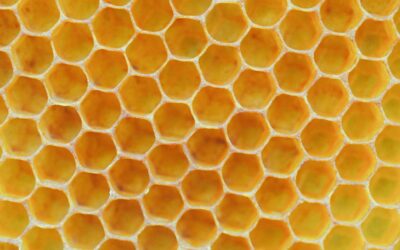
The core is hexagonal cells — typically aluminum, Nomex aramid paper, or polypropylene — sandwiched between two face skins. Aluminum cells run 1/4 inch to 1 inch diameter with wall thickness from 0.001 inch to 0.003 inch. The face skins are commonly 0.030 inch to 0.125 inch aluminum sheet, fiberglass laminate, or carbon fiber prepreg cured under heat and pressure.
Total panel thickness ranges from 1/2 inch (light-duty applications) to 4 inches (industrial mezzanines). The strength-to-weight ratio is the headline number: a 1-inch aluminum honeycomb panel achieves the stiffness of a 3/4 inch steel plate at one-tenth the weight. Commercial suppliers like Plascore, Aerocell, and TriCore Composites lead the structural panel market.
Applications Beyond Aerospace
- Yacht and superyacht decks where every pound saved increases fuel efficiency and reduces draft
- Trade-show and exhibition flooring for raised platforms with cable management below the deck
- Mezzanine floors in warehouses where structural steel cannot be added overhead
- Mobile broadcast trucks and trailers where loaded equipment weight has to drop below GVWR limits
- Stage and theater rigging decks needing high point loads without supporting joist depth
- Cleanroom raised access floors where the cavity below carries HVAC and electrical services
Pros That Drive the Premium Price
Weight reduction is the unbeatable advantage. A 1,000 square foot trade-show platform built from honeycomb panels weighs roughly 1,200 lbs total versus 6,000 to 12,000 lbs for plywood-on-aluminum-frame. The weight difference saves trucking costs, simplifies setup labor, and lets the platform deploy on freight elevators with 2,000 lb limits.
Load distribution is equally strong. The hexagonal cell geometry spreads point loads laterally across the panel, so a 400 lb table leg landing on a single cell transfers stress to neighboring cells and the face skin. Plywood under the same load shows local deflection of 1/4 inch or more, while a 1-inch aluminum honeycomb panel deflects under 1/16 inch.
Cons You Need to Weigh
Cost is the major barrier. Aluminum honeycomb panels run 3x to 10x the price of equivalent plywood on a per-square-foot basis. A 1,000 square foot yacht deck refit in aluminum honeycomb runs $35,000 to $48,000 in materials before fasteners and finish surface, versus $4,000 to $7,000 for marine-grade plywood.
Field cutting and edge sealing require specialty tools. Honeycomb panels cannot be cut with a circular saw without crushing the core — most installers use a carbide router or CNC saw. Cut edges expose the open honeycomb cells, which must be filled with epoxy or capped with edge banding to prevent water ingress and crush damage. Plan $400 to $1,200 in specialty tool costs for any installer new to the product.
Where Honeycomb Flooring Excels
Yacht refits over 60 feet length-overall almost universally use honeycomb panels for new decks. The weight savings on a single deck can move the boat’s center of gravity meaningfully — a critical performance metric on planing hulls. Manufacturers like Lonseal and Bolidt provide finish surfaces (teak-look vinyl, polyurethane decking) that bond directly to honeycomb panels.
Modular trade-show contractors lean on honeycomb for the same weight reason. A 30 by 30 foot booth platform shipped in 4 foot by 8 foot honeycomb sections weighs 1,400 lbs versus 5,500 lbs for plywood-on-steel. The freight savings on cross-country drayage to McCormick Place, Mandalay Bay, or Javits Center recovers the panel cost premium within 3 to 5 show cycles.
Cost Per Square Foot in 2026
- Polypropylene honeycomb core with fiberglass skins (1/2 inch): $6.99 to $11.99 material
- Nomex aramid honeycomb with fiberglass skins (1/2 inch): $14.99 to $22.99 material
- Aluminum honeycomb with aluminum skins (1 inch, 5052 alloy): $18.99 to $28.99 material
- Aluminum honeycomb with aluminum skins (2 inch, 5052 alloy): $28.99 to $42.99 material
- Carbon fiber prepreg face skin honeycomb (high-performance yacht): $42.99 to $68.99 material
- Pro install (yacht or trade-show, includes edge sealing and bonding): $7.99 to $14.99
Installation Best Practices
Bond panels to supporting framework with structural methacrylate adhesive (3M DP810, Plexus MA590) rather than mechanical fasteners alone. Through-bolts crush the cell walls and create stress concentrations that propagate cracks over time. If fasteners are required for serviceability, use solid-core insert plugs bonded into the panel before drilling — Click Bond AC4 inserts are the industry standard.
Edge sealing protects the cell core from moisture, debris, and crush damage. Apply a 1/2 inch wide epoxy fillet (West System 105/205, Pro-Set 125/226) around every cut edge, then cap with extruded aluminum or fiberglass edge banding bonded with the same epoxy. Skipping the edge seal is the most common installation failure — water enters the core and the panel delaminates from the inside within 12 to 24 months.
Finish Surface Options
Vinyl decking from Lonseal and Bolidt bonds directly to aluminum honeycomb with manufacturer-approved contact adhesive. These finishes deliver teak-look or stone-look aesthetics with marine-grade durability and run $9.99 to $24.99 per square foot installed. Lightweight rubber tile, click-lock LVT, and even thin-section porcelain (Stonepeak Plane) work as alternatives for trade-show and commercial uses.
Carpet tile is rarely used over honeycomb because the panel’s smooth aluminum or fiberglass face doesn’t accept the bitumen backing without primer. If carpet tile is required, prime the panel with PVC-compatible bonding primer first. Honeycomb flooring is engineering-grade construction that rewards careful spec, careful install, and careful finish selection — done right, it delivers 25 to 40 year service life in environments that would destroy conventional plywood within 2 to 5 years.
Prefer to explore on your own?
See how new flooring looks in your actual room in seconds — free, no signup.
Try the free Floor Studio →