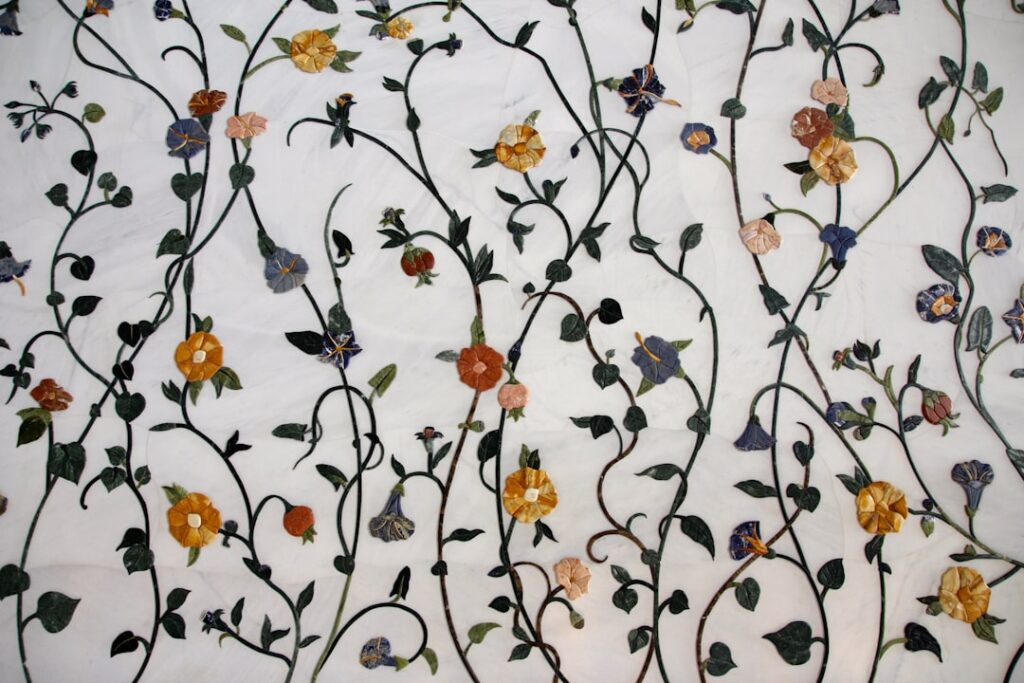
Flower tile brings pattern and personality to a room in a way that plain field tile simply cannot. Whether it is a single hand-painted bloom set as an accent or a full floor of repeating floral motifs, this style has stayed popular for decades because it works in everything from a farmhouse mudroom to a modern powder bath. The catch is that floral patterns are bold, so a little planning keeps the look charming instead of overwhelming.
What Counts as Flower Tile
The term covers any tile with a flower or floral motif, and it spans several materials and production methods. You will find printed porcelain that mimics hand-painted ceramic, true glazed ceramic with the design fired into the surface, and encaustic cement tile where the pattern runs through the body of the tile rather than sitting on top. Each looks different up close and ages differently over time.
Patterns range from a single centered bloom on each tile to interlocking designs that only resolve when several tiles are laid together. That second type, often called a “quarter pattern” or “rug” layout, creates a continuous floral field that reads almost like a printed carpet.
Common Materials and How They Compare
- Porcelain: Dense, water-resistant, and rated for floors and walls. Printed floral porcelain is the most durable and easiest to maintain, often $4 to $12 per square foot.
- Glazed ceramic: Slightly softer than porcelain and great for walls and light-traffic floors. Hand-painted versions cost more, frequently $10 to $30 per square foot.
- Encaustic cement: The classic vintage look with rich matte color. It is porous and must be sealed, but the pattern will not wear off. Expect $8 to $25 per square foot and more for handmade.
- Glass mosaic: Used for accents and backsplash flowers, glass adds shine but is best kept off floors.
Best Rooms for Flower Tile
Powder rooms and small bathrooms are the easiest place to commit to a bold floral floor or feature wall because the square footage is low and the pattern feels like a delightful surprise. Kitchen backsplashes are another strong fit, where a floral accent strip or a single decorative row breaks up plain subway tile.
Entryways, mudrooms, and laundry rooms suit durable porcelain or sealed encaustic flower tile, since the pattern hides dirt and adds visual interest in a hard-working space. For larger areas like an open kitchen floor, consider using flower tile as a defined “rug” inset surrounded by a plain border so the pattern feels intentional.
Designing With Floral Patterns
Bold pattern works best when the rest of the room stays calm. Pair a busy floral floor with solid-color walls, simple cabinetry, and minimal competing pattern. If you want floral tile but worry about it feeling dated, choose a two-tone or monochrome design, such as navy on white, which reads more modern than full multicolor.
Scale matters too. Large-format floral porcelain feels contemporary, while small encaustic squares lean traditional or Mediterranean. Lay out loose tiles on the floor before committing to confirm the repeat lines up the way you expect, especially with interlocking patterns.
Installation Notes
Dry-lay the full pattern first and mark your starting point from the center of the room so the design stays balanced and any cut tiles land at the edges. Floral patterns are unforgiving of crooked lines, so use spacers and check your layout against a chalk line as you go.
For encaustic cement tile, seal before grouting to keep grout haze and pigment from staining the porous surface, then seal again after installation. Use a grout color that complements the pattern; a soft gray often disappears, while a high-contrast grout turns the grid into part of the design.
Cleaning and Long-Term Care
Glazed ceramic and porcelain flower tile clean with a neutral pH cleaner and a microfiber mop, no special products needed. Avoid acidic or harsh abrasive cleaners that can dull the glaze over many cleanings. Wipe spills promptly on any tile to keep grout lines bright.
Encaustic cement requires more attention. Reseal it every one to three years depending on traffic, skip acidic cleaners entirely since they etch cement, and blot rather than scrub. Treated well, encaustic flower tile develops a soft patina that many homeowners prize.
Color and Style Direction
The color story of flower tile sets its whole personality. Soft blue-and-white florals read coastal and traditional, perfect for a cottage bath or a classic kitchen. Black-and-white floral patterns lean modern and graphic and pair beautifully with brass fixtures. Warm terracotta, ochre, and sage floral tiles evoke a Mediterranean or Spanish feel, while pastel multicolor blooms suggest a romantic, vintage look.
If you want flower tile but worry about it overpowering a room, limit it to a defined zone rather than every surface. A single floral feature wall, a tiled stair riser run, or a “tile rug” inset in a plain floor gives you the pattern you love while keeping the overall scheme balanced. The rest of the palette can then stay quiet, letting the flowers be the clear focal point.
Buying Tips and Common Pitfalls
Order at least 10 to 15 percent extra to cover cuts, breakage, and future repairs, especially with handmade or imported tile that may be hard to rematch later. Check whether a pattern is a single-tile motif or a multi-tile repeat, since the repeat type changes how much waste you generate and how the layout must be planned. Always view a few loose tiles in your own lighting before buying a full order, because glaze colors shift under different light.
The most common pitfall is pairing busy floral tile with equally busy surroundings. Patterned floors fight patterned wallpaper, ornate counters, and bold cabinetry. Give your flower tile room to breathe and it will look intentional rather than chaotic.
Is Flower Tile Right for You?
If you love pattern and want a space that feels collected and personal, flower tile delivers character that plain tile cannot match. Choose porcelain for the lowest maintenance, ceramic for hand-painted charm on walls, and encaustic for that timeless old-world look you are willing to seal and baby. Keep surrounding finishes simple, plan the layout carefully, and a floral floor or accent can stay beautiful for decades.
Prefer to explore on your own?
See how new flooring looks in your actual room in seconds — free, no signup.
Try the free Floor Studio →