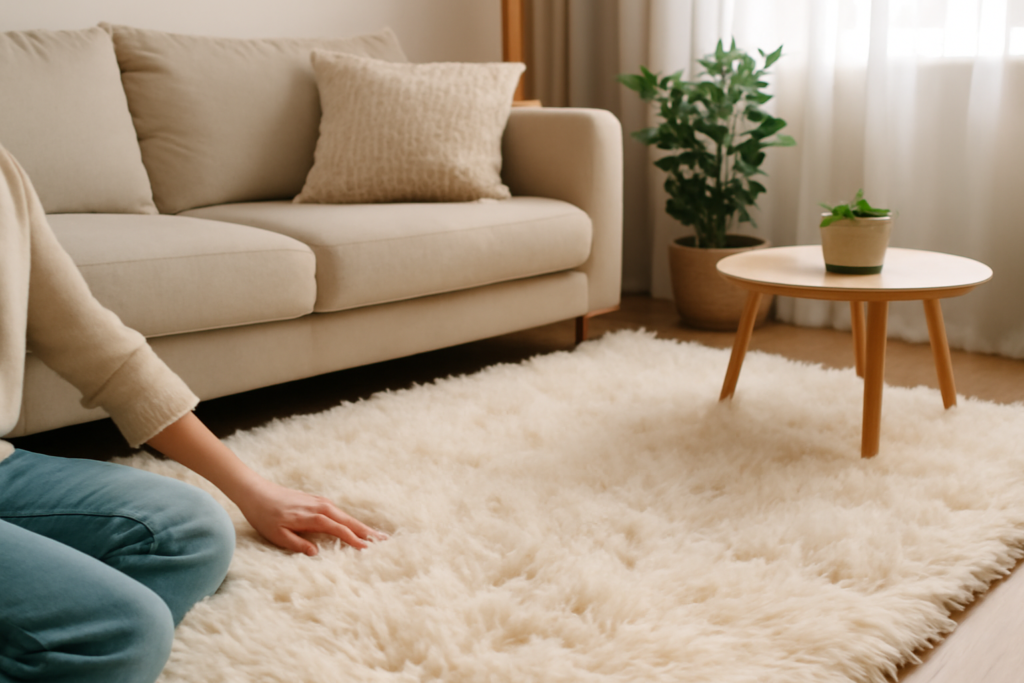
Nothing changes the feel of a room faster than a deep, soft underfoot layer, and a well-chosen fluffy rug does exactly that. These high-pile floor coverings trap warmth, soften hard surfaces, and pull a space together visually. But not every plush rug holds up to real life, and the wrong one mats down within months. This guide walks through materials, pile heights, where these rugs work best, and how to keep them looking new.
What Makes a Rug “Fluffy”
Fluffiness comes down to pile height and fiber density. Pile is the length of the yarn tufts standing up from the backing. A shag rug typically runs 1 to 2 inches, while a true high-pile plush rug can reach 2 to 3 inches. The longer and denser the pile, the softer and more cushioned the rug feels.
Density matters as much as height. A sparse high-pile rug feels stringy and shows the backing when you part the fibers. A dense one springs back when you press your hand in. When shopping, push your fingers down to the base. If you can feel the backing easily, the rug will flatten quickly.
Best Materials for Plush Rugs
Material drives both feel and durability, and the right choice depends on the room and your budget.
- Polyester: The most common fluffy rug fiber. Soft, affordable, and stain-resistant, with prices often running $30 to $150 for a 5×7. It mats faster than wool in high-traffic spots.
- Wool: Naturally resilient, warm, and long-lasting. Expect to pay $200 to $700 or more for a quality 5×7. Wool resists crushing better than any synthetic.
- Faux fur (acrylic): Ultra-soft and great for accents, but best kept off heavy-traffic areas where it flattens.
- Microfiber and chenille: Velvety and budget-friendly, ideal for bedrooms and reading nooks.
Where a Fluffy Rug Works Best
High-pile rugs shine in low-traffic, comfort-focused spaces. Bedrooms are the classic spot, where bare feet meet the rug first thing in the morning. Living rooms work well too, especially under a coffee table or anchoring a seating group.
Avoid placing deep-pile rugs in kitchens, entryways, and dining rooms. Crumbs, spills, and chair legs are hard to manage in long fibers, and food debris sinks deep where a vacuum struggles to reach. For those zones, a low-pile flatweave performs far better.
Choosing the Right Size
Sizing mistakes are the most common rug error. In a bedroom, a 5×8 placed under the lower two-thirds of a queen bed leaves a soft landing on both sides. For a king, step up to an 8×10. In the living room, aim for the front legs of all seating to rest on the rug, which usually means an 8×10 or 9×12 in an average room.
Measure your space and tape out the rug footprint on the floor before ordering. A rug that is too small makes the whole room look disjointed, no matter how plush it feels.
Cleaning and Maintenance
High pile traps dust and debris, so regular care keeps a fluffy rug fresh. Vacuum weekly using a suction-only setting or a handheld attachment. A rotating beater bar can grab and pull long fibers, causing fuzzing and shedding, so turn it off or raise it to the highest setting.
Shake out smaller rugs outdoors monthly to release deep grit. For spills, blot immediately with a clean cloth, then treat with a mild detergent solution. Never rub, which drives the stain deeper and tangles the pile. Rotate the rug 180 degrees every few months so foot traffic and sunlight wear it evenly.
Reviving a Flattened Pile
If fibers compress, lightly mist the area with water and fluff the pile with your fingers or a wide-tooth comb. For stubborn flat spots from furniture, place an ice cube on the dent, let it melt, then blot and fluff as it dries.
Safety and Pad Considerations
A thick rug on a hard floor can slide and become a trip hazard. Add a non-slip rug pad sized about an inch smaller than the rug on all sides. A good pad also adds cushion, protects the floor finish, and extends the rug’s life by absorbing impact.
If you have young children or older adults at home, the non-slip pad is not optional. It is the single most important accessory for any plush rug on tile, laminate, or hardwood.
What to Spend
Budget plush rugs start around $30 to $80 for a small synthetic piece, which is fine for a bedroom you redecorate often. Mid-range polyester and microfiber rugs in a 5×7 to 8×10 run $80 to $250. Wool and high-density options climb to $300 and well beyond, but they last for years and resist matting. Match the spend to the room’s traffic and how long you want the rug to last.
Remember that the rug pad, delivery, and any professional cleaning add to the lifetime cost. Spending a little more on a denser, better-made rug usually pays off, because a cheap plush rug that mats and sheds within a year is no bargain. If you redecorate frequently or have a temporary space, the budget tier makes sense, but for a long-term bedroom or living room, the mid to upper range delivers far better value.
Shedding and What to Expect Early On
Most new fluffy rugs shed loose fibers for the first few weeks, and this is normal. Manufacturing leaves short, unanchored fibers in the pile that work their way out with use. To speed the process along, vacuum gently every few days at first and shake the rug outdoors. The shedding should taper off noticeably within a month or two.
Excessive, ongoing shedding past that window can signal a low-quality rug with poorly anchored fibers. Wool and tightly tufted synthetics shed less than loosely constructed budget rugs, which is another reason density matters when you shop. If a rug sheds heavily for months, the construction is the culprit, not your care routine.
Styling a Fluffy Rug
Beyond comfort, a plush rug is a design tool. A light, creamy shade brightens a room and adds a soft, airy feel, while a charcoal or deep-toned rug grounds a space and hides everyday soil better. Layering a smaller fluffy rug over a larger flatweave is a popular trick that adds texture and defines a seating or sleeping zone without committing to wall-to-wall plush.
Consider the rug’s texture against your furniture too. A high-pile rug pairs beautifully with sleek, low-profile furniture, balancing hard lines with softness. In a minimalist room, a single fluffy rug can be the warming element that keeps the space from feeling cold or stark.
Final Thoughts
A fluffy rug is one of the easiest upgrades for comfort and warmth, but its success depends on matching the material and pile to the room. Choose dense fibers, pick the right size, add a non-slip pad, and vacuum gently. Do that, and your plush rug will stay soft and inviting for years instead of matting down by the next season.