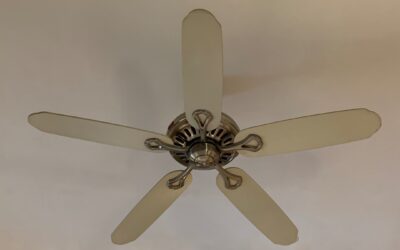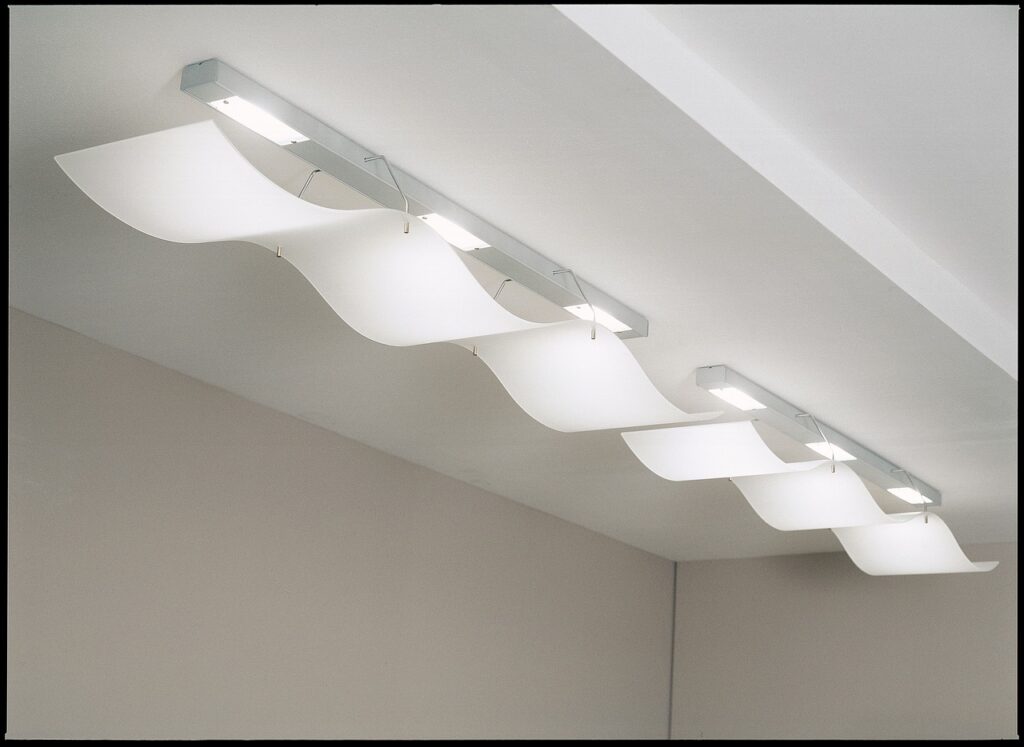
A flush ceiling fan with light, also called a flush-mount or hugger fan, sits close against the ceiling instead of hanging on a downrod, making it the ideal choice for rooms with low ceilings. By combining airflow and illumination in a single fixture that stays out of the way, it keeps headroom clear while cooling the room and lighting it evenly. For anyone with 8-foot or lower ceilings, this style solves the clearance problem without sacrificing comfort or brightness.
This guide explains how flush-mount fans differ from standard ones, sizing, light and airflow features, and how to pick the right model for your room.
- What Makes a Fan "Flush Mount"
- When to Choose a Flush-Mount Fan
- Sizing the Fan to the Room
- Lighting Features to Consider
- Airflow and Motor Options
- Controls and Convenience
- Style and Finish
- Installation Considerations
- Energy Efficiency and Running Costs
- Noise and Comfort
- Best Rooms for a Flush-Mount Fan-Light
- Blade Count and Airflow Myths
- Making the Right Choice
What Makes a Fan “Flush Mount”
Standard ceiling fans hang from a downrod that drops the blades several inches to a foot or more below the ceiling. A flush-mount fan attaches directly to the ceiling mounting box, hugging the surface so the blades sit just below it. This design maximizes clearance, which matters for safety and comfort in rooms where a hanging fan would sit too low.
- Mounts directly against the ceiling, no downrod.
- Keeps blades safely above head height in low rooms.
- Integrates a light kit for combined function.
- Ideal for ceilings around 8 feet or lower.
When to Choose a Flush-Mount Fan
Building guidelines call for fan blades to sit at least 7 feet above the floor. With a standard 8-foot ceiling, a downrod fan can drop blades too close to that limit, especially for taller people. A flush mount preserves clearance, making it the right pick for bedrooms, low-ceiling living rooms, hallways, closets, and finished basements.
- Bedrooms and living rooms with 8-foot ceilings.
- Basements and attics with limited headroom.
- Hallways and small rooms where clearance is tight.
Note that flush-mount fans generally move slightly less air than downrod models, because being close to the ceiling limits airflow, so proper sizing matters even more.
Sizing the Fan to the Room
Blade span should match room size for effective air movement. Undersize a fan and it barely cools; oversize it and it overwhelms a small space.
- Up to 75 sq ft: 29 to 36-inch fan.
- 75 to 175 sq ft: 42 to 48-inch fan.
- 175 to 350 sq ft: 52-inch fan.
- 350+ sq ft: 56 inches or larger.
Because flush mounts sit close to the ceiling, choosing the correct span helps compensate for the slightly reduced airflow.
Lighting Features to Consider
The integrated light is a major reason to choose a fan-light combo. Modern flush fans usually include LED light kits that are energy-efficient, long-lasting, and available in adjustable color temperatures. Look for models with dimmable lights and selectable warm-to-cool tones so you can set the mood, from bright task lighting to soft evening warmth.
- Integrated LED for efficiency and long life.
- Dimmable output for flexible ambiance.
- Adjustable color temperature from warm to cool white.
- Consider lumen output to ensure the room is bright enough.
Airflow and Motor Options
Motor type affects performance and noise. DC motors are quieter, more energy-efficient, and often offer more speed settings and reverse function than traditional AC motors. Check the fan’s airflow rating in CFM, and prioritize a strong number since flush mounts already give up some airflow to their low profile. A reverse function is valuable for pushing warm air down in winter.
Controls and Convenience
Control options add everyday convenience. Many flush fans include a remote or wall control for speed and light, and smart models integrate with home apps and voice assistants for scheduling and hands-free operation. Separate control of the fan and light lets you use one without the other.
- Remote or wall control for speed and dimming.
- Smart-home compatibility for app and voice control.
- Independent fan and light switching.
Style and Finish
Flush fans come in styles from sleek modern discs with hidden blades to traditional designs with visible wooden blades. Match the finish, brushed nickel, matte black, bronze, or white, to your room’s fixtures and hardware for a cohesive look. Low-profile “disc” fans with enclosed blades suit contemporary spaces, while classic designs fit traditional rooms.
Installation Considerations
Because a flush-mount fan attaches directly to the ceiling box, installation is straightforward, but the electrical box must be rated to support a ceiling fan’s weight and motion, not just a light fixture. A standard lighting box is not sufficient, a fan-rated box securely fastened to a joist or brace is required for safety. If you are replacing an existing fan, the box is likely already rated; if converting from a light-only fixture, you may need to upgrade the box.
- Confirm a fan-rated electrical box is installed.
- Turn off power at the breaker before working.
- Support the fan while connecting wiring.
- Balance the blades after mounting to eliminate wobble.
For combined fan-and-light units, you may want separate switch legs so the fan and light operate independently, which sometimes means running an extra wire, best planned before installation.
Energy Efficiency and Running Costs
Modern flush fans are inexpensive to run, especially with a DC motor and LED light. DC motors use markedly less electricity than older AC motors while offering smoother speed control and quieter operation. The integrated LED light consumes a fraction of the energy of old incandescent bulbs and lasts for many years. Running a fan alongside your air conditioning also lets you raise the thermostat a few degrees while staying comfortable, trimming cooling costs over a season.
Noise and Comfort
In bedrooms especially, a quiet fan matters. Cheaper units can hum, click, or develop a wobble that produces a rhythmic noise. To avoid this, choose a quality fan with a balanced blade set, and if any wobble appears after installation, use a balancing kit to correct it. DC-motor fans tend to run noticeably quieter than AC models, making them a strong choice for sleeping areas where you want airflow without distraction.
Best Rooms for a Flush-Mount Fan-Light
Certain rooms are natural fits for a hugger fan with a light. Bedrooms benefit from the combination of quiet airflow for sleeping and integrated lighting that removes the need for a separate ceiling fixture. Living rooms and dens with standard 8-foot ceilings stay comfortable without a fan hanging into the space. Kitchens, home offices, and finished basements all appreciate the two-in-one convenience, and low-clearance areas like hallways and children’s rooms are safer with blades tucked close to the ceiling. Because the fixture handles both cooling and lighting, it is an efficient choice anywhere you would otherwise need both a fan and a separate light.
- Bedrooms: quiet airflow plus soft, dimmable light.
- Living rooms with 8-foot ceilings: comfort without lost headroom.
- Basements, hallways, kids’ rooms: safer low-clearance operation.
Blade Count and Airflow Myths
Shoppers often assume more blades mean more airflow, but that is not quite how it works. Blade count affects sound and aesthetics more than raw performance; a well-engineered three- or four-blade fan can move as much air as a five-blade model while looking more modern. What actually determines airflow is the combination of motor strength, blade pitch, and span. Focus on the fan’s CFM rating and motor quality rather than counting blades. For flush-mount fans specifically, where the low profile already trims airflow slightly, prioritizing a strong motor and appropriate blade span for your room size matters far more than how many blades the fan has.
- Airflow depends on motor, blade pitch, and span, not blade count.
- Fewer blades can look sleeker and run just as effectively.
- Compare CFM ratings to judge real performance.
Making the Right Choice
For rooms where every inch of headroom counts, a flush ceiling fan with light delivers cooling and illumination without hanging into the space. Prioritize correct blade span for your room size, a strong airflow rating, an efficient dimmable LED light, and controls that fit your lifestyle. With the right model, you get comfortable air circulation and even lighting from a single, unobtrusive fixture that keeps your low ceiling feeling open and safe.