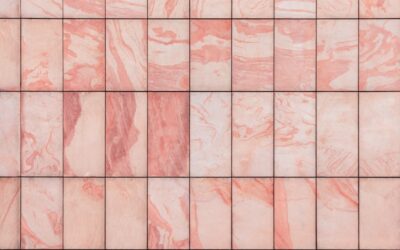
One well-designed wall can carry an entire room while every other surface stays simple and quiet. That is the entire point of a feature wall, and yet half the homeowners who attempt one pick the wrong wall in the room. The best focal wall ideas start with choosing the right surface, not the right finish. Get the location wrong and even a flawless paint job will feel off, because the eye keeps trying to land somewhere else.
- Pick the Right Wall First
- Paint Treatments for Maximum Impact
- Color Drenching the Modern Way
- Board and Batten and Picture Frame Molding
- Wood Slat Walls for Texture and Sound
- Statement Wallpaper That Earns Its Spot
- Stone, Brick, and Tile Veneer
- Floor-to-Ceiling Bookshelves as a Feature
- Dramatic Lighting That Completes the Look
- Common Mistakes to Avoid
Pick the Right Wall First
Stand in the doorway of any room and notice where your eye naturally settles. That is your focal wall, period. In most living rooms it is the wall behind the sofa or the wall behind the television. In bedrooms it is the wall behind the headboard. In dining rooms it is the wall the table sits against or, in larger rooms, the wall flanked by the largest windows.
Decorating a wall the eye does not naturally find creates visual confusion. Trust the architecture; do not fight it.
Paint Treatments for Maximum Impact
A single saturated color is still the cheapest and fastest path to a strong feature wall. Two gallons of premium interior paint plus a sample pot runs $90 to $130, and a 12-foot wall can be done in an afternoon. Picking the color matters more than the technique.
Reliable winners include Benjamin Moore Hale Navy (HC-154), Sherwin-Williams Urbane Bronze (SW 7048), and Farrow and Ball Hague Blue (No. 30). Avoid trendy colors with no track record; saturated jewel tones and deep neutrals age better than the muted blush and sage shades that come and go on Instagram every 18 months.
Color Drenching the Modern Way
Color drenching takes a paint focal wall further by carrying the same color onto the trim, ceiling, and sometimes the inside of bookshelves on the same wall. The result feels like a designer room rather than a DIY accent. Use eggshell on walls, semi-gloss on trim, and flat on the ceiling so the same color reads as different textures under light.
This treatment works best on walls with built-ins, fireplaces, or significant trim detail because the consistent color highlights the architecture rather than letting trim chop it into pieces.
Board and Batten and Picture Frame Molding
Architectural molding adds dimension that paint alone cannot match. Board and batten with 1×4 vertical battens 16 inches on center and a 1×6 top rail at 60 inches creates a clean farmhouse or modern transitional look. Picture frame molding using 1.5-inch primed pine creates rectangles that read as Old World classical.
Materials for a 12-foot wall run $90 to $180. Plan a full weekend including paint. Use a brad nailer with 2-inch 18-gauge nails, a quality miter saw, and paintable acrylic caulk for every joint. Sloppy caulk lines ruin otherwise great trim work, so tool the bead with a wet finger immediately.
Wood Slat Walls for Texture and Sound
Vertical wood slat walls have dominated focal wall ideas on Pinterest since 2023, and the trend has staying power because the panels also reduce echo. Pre-made acoustic slat panels from Felt Right or Acupanel run $90 to $200 per panel and cover roughly 24 square feet each. Real wood options in walnut or white oak veneer command a premium but install with the same hardware.
For a budget DIY version, rip 1×2 poplar boards on a table saw, stain with Minwax Provincial, and attach with construction adhesive plus brad nails to a painted black plywood backer. Total cost for a 12-foot wall runs around $300 in materials.
Statement Wallpaper That Earns Its Spot
Wallpaper makes a focal wall instantly. Large-scale prints, murals, and bold geometric patterns work better than small repeating motifs because the visual weight needs to read from across the room. Brands like Rebel Walls, Hovia, and Spoonflower print custom murals from $5 to $9 per square foot.
Removable peel-and-stick options like those from Tempaper and Rifle Paper Co. work for renters and indecisive homeowners. Plan extra material for pattern matching; standard waste runs 15 to 20 percent depending on repeat size.
Stone, Brick, and Tile Veneer
Real stacked stone or thin brick veneer reads expensive and lasts forever. Products like Eldorado Stone or Boral Versetta Stone install over standard drywall with a metal lath and mortar bed. Material costs run $7 to $14 per square foot plus mortar and grout.
For a faster install, panelized stone from Native Custom Stone clips together like vinyl siding and finishes a 60-square-foot wall in a weekend. Lightweight versions weigh under 12 pounds per square foot, which means no structural reinforcement needed.
Floor-to-Ceiling Bookshelves as a Feature
Built-in bookshelves on a focal wall create instant character in even the most generic spec home. IKEA Billy bookcases ($90 to $160 each) lined up wall-to-wall with crown molding on top, baseboards run continuously, and a coat of trim paint create a near-custom look for under $1,000.
Style with 70 percent books, 20 percent decorative objects, and 10 percent negative space. Solid blocks of books with no breaks read cluttered; empty shelves between objects let the eye rest.
Dramatic Lighting That Completes the Look
Even the best focal wall falls flat without lighting. Picture lights, sconces, recessed wall washers, or floor uplights highlight the wall and create the depth that photographs love. Plan one fixture per 6 to 8 feet of wall length. Use warm white bulbs (2,700K) for trim and stone walls, slightly cooler (3,000K) for paint walls.
Hardwired sconces from brands like Visual Comfort and Hudson Valley start around $200 each. Battery-operated picture lights from Modo Lighting solve the no-wiring problem for $50 to $90 per fixture.
Common Mistakes to Avoid
Three issues show up over and over. First, picking the wall with the doorway or window because it has obvious features; that wall is broken up too much for a unified design. Second, choosing a treatment that fights the room style; a sleek wood slat wall in a Victorian dining room reads as a mistake. Third, going too small; the focal wall needs to be the dominant visual element, not a 4-foot-wide stripe.
Pick the right wall, choose a treatment that works with the room’s style, scale it to dominate, and the rest of the decor can stay restrained. That is the entire formula behind every magazine-worthy room.