Two homeowners with the same crack in the same basement can get quotes that differ by $15,000, and neither quote is necessarily wrong. Foundation work is priced by the repair method, the number of support points, soil conditions, and access, not by the crack itself. A foundation repair cost calculator approach helps you break a project into those line items, so you can build a realistic budget and spot a padded estimate. The method below uses current 2026 US price ranges and simple formulas you can work through with a pencil or spreadsheet before a contractor ever arrives.
- How a Foundation Repair Cost Calculator Works
- Unit Prices to Plug Into Your Estimate
- Estimating How Many Piers or Anchors You Need
- Three Worked Examples
- Factors That Push Your Estimate Up or Down
- Hidden Costs Calculators Often Miss
- When to Call a Licensed Professional
- Comparing Quotes and Controlling Costs
- Why the Average Cost of Foundation Repair Can Mislead You
- Frequently Asked Questions
How a Foundation Repair Cost Calculator Works
Every foundation estimate is a sum of units multiplied by unit prices, plus fixed costs. Once you know the units, the math is simple:
Total cost = (support units x price per unit) + (crack repair length x price per foot) + drainage and waterproofing + engineering and permits + access and restoration.
Support units are piers, wall anchors, or braces. Crack length is measured in linear feet. Drainage and waterproofing are priced per linear foot of perimeter. Fixed costs include a structural engineer’s report, permits, and landscaping or interior finish restoration afterward. Knowing which categories apply to your home is the first step toward an accurate foundation repair budget.
Unit Prices to Plug Into Your Estimate
Use these national ranges as your inputs. Costs run higher in coastal metros and regions with expansive clay soil, such as Texas, Oklahoma, and parts of Colorado and California.
| Repair Item | Typical Unit Cost | Unit |
|---|---|---|
| Epoxy or polyurethane crack injection | $400 to $800 | per crack up to 10 feet |
| Steel push piers | $1,200 to $2,500 | per pier |
| Helical piers | $1,500 to $3,000 | per pier |
| Concrete pressed pilings | $800 to $1,500 | per piling |
| Wall anchors or tiebacks | $700 to $1,200 | per anchor |
| Carbon fiber straps | $500 to $1,000 | per strap |
| Steel I-beam wall braces | $600 to $1,100 | per brace |
| Interior drain tile and sump | $40 to $100 | per linear foot |
| Mudjacking or foam slab lifting | $5 to $25 | per square foot |
Add a structural engineer’s evaluation at $400 to $1,000 and permits at $100 to $500, depending on your municipality. Many cities require a permit for any pier installation or wall stabilization.
Estimating How Many Piers or Anchors You Need
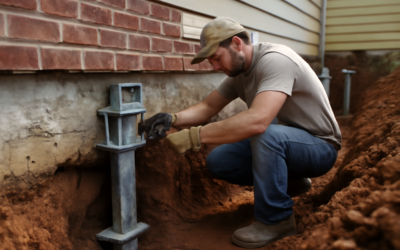
Unit counts drive most of the total, so this is where estimates swing the most. Piers are usually spaced every 5 to 8 feet along the settling section of a footing. To estimate:
- Measure the length of foundation wall that shows settlement, such as the span with stair-step cracks, sticking doors above it, or a visible drop.
- Divide by the spacing, typically 6 feet for a one-story home and 5 feet for heavier two-story or brick-veneer homes.
- Add one pier at each end of the affected section and at any corner.
For bowing basement walls, wall anchors are usually spaced 5 to 7 feet apart along the bowed wall, and carbon fiber straps about 4 feet on center. Measure the bowed wall length and divide by the spacing to get a unit count.
Keep in mind that the engineer, not the calculator, sets the final spacing after considering soil type, load, and how much the structure has moved.
Three Worked Examples
Example 1: Minor crack sealing
A poured concrete basement has two non-structural vertical cracks, each under 8 feet long and less than 1/8 inch wide, leaking during heavy rain. Two polyurethane injections at $600 each total $1,200. No engineer is required, so the budget is roughly $1,000 to $1,600.
Example 2: Settling corner on a one-story house
A 30-foot section at one corner has dropped about 1 inch. At 6-foot spacing, that is five piers plus one at the corner, for six steel push piers. Six piers at $1,800 average equals $10,800. Add $700 for engineering, $300 for permits, and $1,200 for landscaping restoration. Estimated total: about $13,000, with a realistic range of $9,500 to $17,000.
Example 3: Bowing block basement wall
A 36-foot block wall bows 1 1/2 inches inward from hydrostatic pressure. Six wall anchors at $950 average is $5,700. The contractor also recommends 110 linear feet of interior drain tile with a sump at $65 per foot, or $7,150. Engineer and permit add $1,000. Estimated total: about $13,850. Addressing the water source is what keeps the wall from moving again.
Factors That Push Your Estimate Up or Down
Unit prices are averages, and several site conditions move your numbers toward the top or bottom of each range. Soil type is the biggest variable. Expansive clay swells when wet and shrinks during drought, so piers often need to be driven 20 to 40 feet deep to reach stable bearing, which raises material and labor costs. Sandy or rocky soils may reach refusal much sooner, lowering the price per pier.
Foundation type also matters. Slab-on-grade homes may require tunneling or drilling through the slab for interior piers, while crawl space homes often need adjustable steel support posts at $300 to $1,000 each plus sistered or replaced joists. Basement homes involve wall stabilization more often than lifting. Access is the final factor: tight side yards, decks, and mature trees near the footing can slow excavation and add a day or two of labor at $500 to $1,500 per day for a crew.
When you plug numbers into your own estimate, use the high end of each range if you live in a clay region, have a finished basement, or know access is difficult. Use the low end for simple, accessible repairs on stable soils.
Hidden Costs Calculators Often Miss
A basic foundation repair cost calculator catches the structural work, but several extras routinely appear on final invoices:
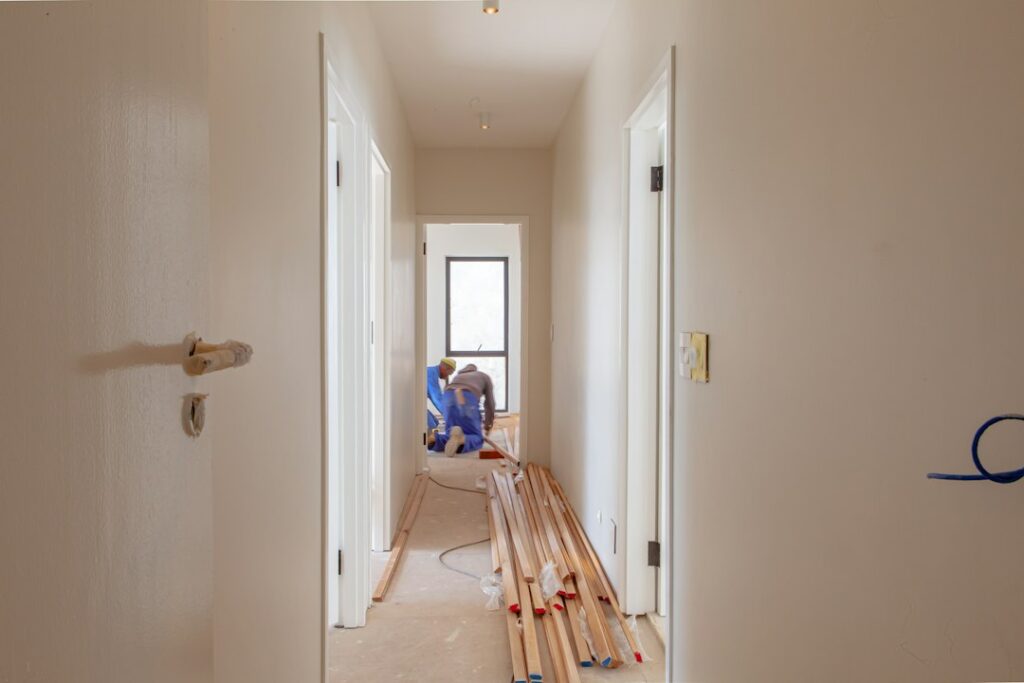
- Interior access: Removing and replacing finished basement drywall, flooring, or cabinets can add $2,000 to $8,000.
- Exterior restoration: Replacing patios, walkways, shrubs, and sod disturbed by excavation often costs $500 to $5,000.
- Plumbing repairs: Lifting a slab can stress drain lines. A plumbing test before and after lifting runs $250 to $600.
- Cosmetic repairs upstairs: Drywall cracks, sticking doors, and tile grout lines may need patching or re-hanging once the house is stabilized.
- Gutters and grading: Downspout extensions and regrading soil away from the house at a 6-inch drop over 10 feet cost $500 to $3,000 but prevent repeat damage.
Flooring is often affected too. Hardwood that cupped over a sinking section or tile that cracked along a settlement line will usually need repair only after the foundation is stable.
When to Call a Licensed Professional
Online estimates are a planning tool, not a diagnosis. Call a licensed structural engineer promptly if you see horizontal cracks in a basement wall, cracks wider than 1/4 inch, stair-step cracks in block or brick, walls bowing more than 1 inch, floors sloping more than 1 inch over 10 feet, or doors and windows that suddenly jam. These can indicate active movement that may worsen quickly and can affect structural safety.
Do not attempt to jack a house, install piers, or excavate next to a footing yourself. Improper lifting can crack slabs, break plumbing, and destabilize bearing walls. Structural work should be performed by a licensed, insured foundation contractor following an engineer’s plan, with permits pulled where required. An independent engineer who does not sell repairs gives you an unbiased scope that contractors can bid against.
Comparing Quotes and Controlling Costs
Once you have an engineer’s report, request at least three bids built to that same scope. Compare them line by line using your own calculator figures:
- Confirm the pier type, number of piers, and target depth or load-bearing stratum.
- Ask whether the price includes permits, engineering sign-off, and restoration.
- Check the warranty length and whether it transfers to a future buyer; lifetime transferable warranties add resale value.
- Get payment terms in writing, and avoid paying more than 10 to 30 percent upfront.
To keep costs down, fix drainage issues early, maintain consistent soil moisture around the house during drought in clay regions, and act on small cracks before they grow. Financing is common, and some homeowners insurance policies cover sudden damage from a burst pipe, though they typically exclude gradual settlement. With realistic numbers from a foundation repair cost calculator and an engineer’s report in hand, you can negotiate confidently and protect the largest investment most families own.
Why the Average Cost of Foundation Repair Can Mislead You
The average cost of foundation repair is useful as a reality check, but it blends very different jobs into one number. Sealing a hairline crack and stabilizing a sinking corner both count as foundation repair, yet they sit at opposite ends of the scale. Most homeowners land in the $2,500 to $8,000 range, while pier-based stabilization commonly runs $10,000 to $25,000 or more. Knowing which group your house falls into matters more than any national figure.
Start With a Structural Engineer
Before collecting contractor quotes, have an independent structural engineer inspect the house. The engineer identifies whether the movement is active or old, what is causing it and which repair method fits, then writes a scope that every bidder has to price. Without that scope, one contractor may quote a few piers while another quotes a full perimeter system, and the averages you read online cannot tell you which one is right.
What Moves Your Project Up or Down the Range
- Type of problem: cosmetic cracks, bowing walls and settlement each call for different methods with very different labor.
- Extent of movement: a short section of settling footing needs fewer support points than a whole side of the house.
- Soil and water: expansive clay and poor drainage often require deeper supports plus drainage work to keep the repair from failing.
- Access and finishes: finished basements, decks, patios and landscaping near the footing add removal and restoration time.
- Local rules: some areas require permits, engineer sign-off and inspections that add steps to the schedule.
Where Your Estimate Should Land
Once the engineer’s report is in hand, place your project in a tier. Non-structural crack sealing with good drainage usually belongs near the lower end of the typical range. Wall stabilization and partial pier work tend toward the upper portion of that range or into pier-level pricing. Whole-house settlement, repeated movement or combined structural and water problems belong in the higher band and sometimes beyond it.
Protecting the Money You Spend
A repair holds only if the cause is addressed. Ask every bidder how they will handle downspouts, grading and any water under the slab, and confirm the engineer will review the finished work. Get the scope, warranty terms and what counts as restoration in writing. Hold off on replacing damaged flooring, drywall or tile until the structure is stable and the engineer has signed off, so you do not pay for those finishes twice.
Red Flags in a Low Quote
Be cautious of bids that skip the engineer, promise to lift the house fully level on any schedule, leave out permits or ignore drainage. A price well under the others often means a smaller scope, not a better deal.
Frequently Asked Questions
What is the average cost of foundation repair?
Most US homeowners pay between $2,500 and $8,000, while pier-based stabilization projects commonly run $10,000 to $25,000 or more.
Does homeowners insurance cover foundation repair?
Usually not for settling or soil movement. Coverage may apply when damage results from a sudden covered event such as a burst pipe.
How accurate is a foundation repair cost calculator?
It is a planning estimate that is typically within 20 to 30 percent. An engineer’s inspection and written bids set the actual price.