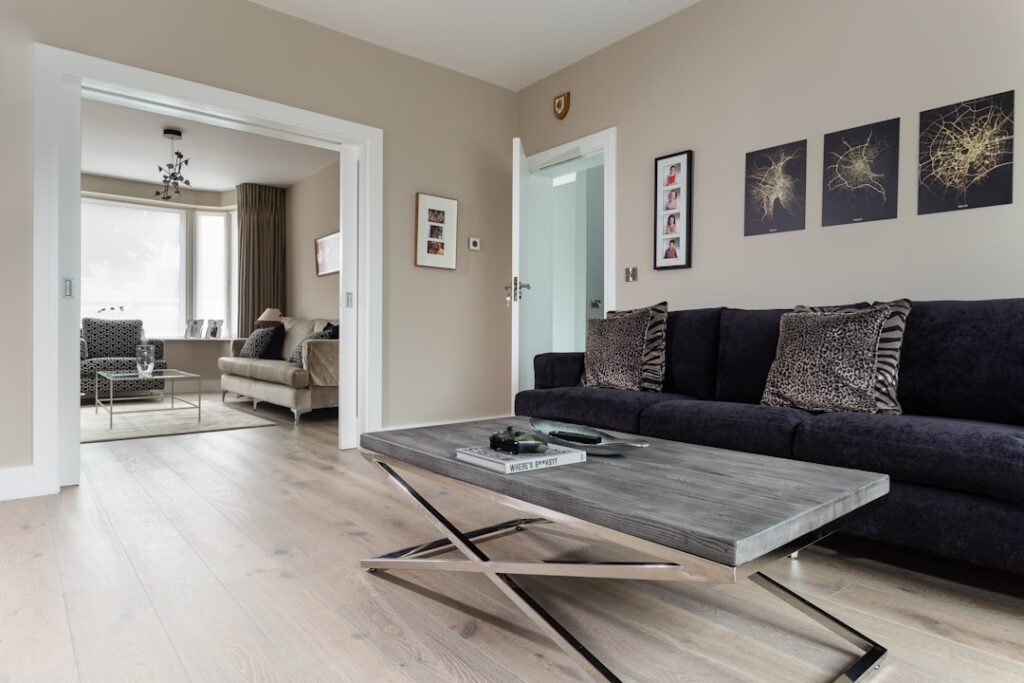
Walk through any building demolition site on a Saturday and you will see contractors hauling perfectly good laminate flooring to the dumpster because the homeowner wanted hardwood instead. The same scene plays out on Craigslist and Facebook Marketplace every week, with hundreds of square feet of barely-used laminate listed for $0 in cities across the United States. Free laminate flooring is a real category of acquisition strategy, not a scam, but the reality involves trade-offs around brand mismatch, condition, and installation challenges that determine whether the savings actually translate to a usable floor.
Where Free Laminate Actually Comes From
Five legitimate channels regularly produce free or near-free laminate flooring. Habitat for Humanity ReStores sell donated leftover boxes from completed jobs at 50% to 80% below retail, and occasionally give away open boxes or mixed lots. Contractor remnants are often offered free at the end of jobs to clear job-site clutter. Craigslist and Facebook Marketplace listings from homeowners replacing their floors frequently include unused boxes. New construction job sites sometimes have full boxes left over that the builder cannot return. Demolition contractors will often let DIYers haul away used laminate before it hits the dumpster.
The volume varies dramatically by region. Metro Phoenix, Atlanta, Dallas, and other high-growth construction markets produce the most surplus laminate. Slower-growth markets like Detroit or Cleveland produce less. Big-city Craigslist listings on Saturdays often include 5 to 15 active offers of free flooring at any given time.
The Real Benefits
Beyond the obvious zero-cost material, three real benefits emerge. First, the planks are often premium brands. The same Pergo TimberCraft or Mohawk RevWood Plus that retails for $3.50 to $4.50 per square foot at Lowe’s often appears on Marketplace because a homeowner ordered too much or changed their mind on color. Second, the planks usually come with original boxes and manufacturer documentation, which preserves warranty rights and gives you the AC rating, wear layer spec, and color code for matching.
Third, sustainability. Diverting flooring from landfill keeps a real product in service and reduces the embodied carbon of your project. A 500-square-foot install of free laminate instead of new product saves roughly 700 to 1,200 pounds of CO2 equivalent in manufacturing and shipping emissions.
The Honest Drawbacks
Free laminate is rarely free of complications. Three issues come up repeatedly. First, quantity. Most free listings include 50 to 200 square feet, not the 1,000-plus you need for whole-home installations. Mixing multiple lots of “compatible” laminate from different brands rarely produces a matching floor because color batches vary even within the same SKU.
Second, condition. Used laminate that has been installed and removed almost always has damaged tongue-and-groove edges, which prevents the locking joints from sealing properly. Even unused boxes that were stored in a damp garage may have warped or expanded slightly, which causes installation problems.
Third, age. A laminate plank manufactured in 2015 and stored in someone’s basement for nine years is still useable, but the AC rating may have degraded and the warranty has long expired. Color matching with newer product from the same brand is nearly impossible because manufacturers change formulations every few years.
Brand Spotlight: Habitat for Humanity ReStore
Habitat for Humanity operates more than 900 ReStore locations across North America and is the most reliable channel for finding quality used and surplus laminate flooring at deep discount or free. The stores accept donations of unused and gently used flooring from homeowners, contractors, and manufacturers (Mohawk, Shaw, and Pergo all donate discontinued stock regularly). Pricing at ReStores typically runs $0.25 to $0.75 per square foot for genuinely used product, $0.50 to $1.50 per square foot for unopened surplus boxes, and occasionally free for short-quantity remnants. Most ReStores accept advance phone calls to check current inventory, which saves a wasted trip. Proceeds fund Habitat’s home-building mission, so the purchase doubles as a charitable contribution.
How to Vet a Free Listing Before You Drive
Four questions filter the good listings from the bad. First, what is the brand and product line (Pergo Outlast+ or Mohawk RevWood Plus or unknown big-box generic)? Second, what is the total square footage including all boxes plus loose planks? Third, has the flooring been installed before or is it new in box? Fourth, what is the storage condition (climate-controlled basement is fine, damp garage or outdoor shed is a problem)? A seller who cannot answer these or sends evasive responses is not worth the drive.
- Verify the box labels for brand, SKU, color name, and lot number
- Inspect at least three boxes for visible warping or damage
- Confirm the planks lock together cleanly before loading the truck
- Ask about storage history (humidity is the silent killer)
- Check expansion gaps on previously installed planks for crushed edges
When Free Actually Makes Sense
Three scenarios make free laminate flooring genuinely worthwhile. First, small rooms where the project is 100 to 250 square feet and color uniformity matters less. A laundry room, a closet, or a basement workshop can absorb mixed lots without the floor looking patchworked. Second, rental properties or flip houses where lifespan only needs to reach 5 to 10 years before the next turnover or sale. Third, temporary installations like a garage workshop floor that you accept will get destroyed within a few years anyway.
When Free Costs More Than It Saves
For main living areas of a primary residence, free laminate rarely makes economic sense. The installation labor cost ($2 to $4 per square foot) does not change whether the planks are free or $5 each. A damaged edge that surfaces at month 12 means tearing up and replacing sections of the floor, which costs more in labor than the original material savings ever recouped. Whole-house installs benefit from buying new product in a single dye lot from a single source, with documented warranty coverage.
The Smarter Middle Path
For most homeowners, the optimal strategy is not free flooring but deeply discounted flooring. Habitat ReStores, manufacturer overstock sales (Pergo, Mohawk, and Shaw all run quarterly factory clearance events), and Floor & Decor’s discontinued section all offer brand-name laminate at 40% to 70% below standard retail with full quantities, full warranties, and full color matching. A 1,200-square-foot install at $1.99 per square foot from a clearance source saves $2,400 versus retail without any of the headaches of mixing free lots. That is the path that actually works for whole-home projects.
Prefer to explore on your own?
See how new flooring looks in your actual room in seconds — free, no signup.
Try the free Floor Studio →