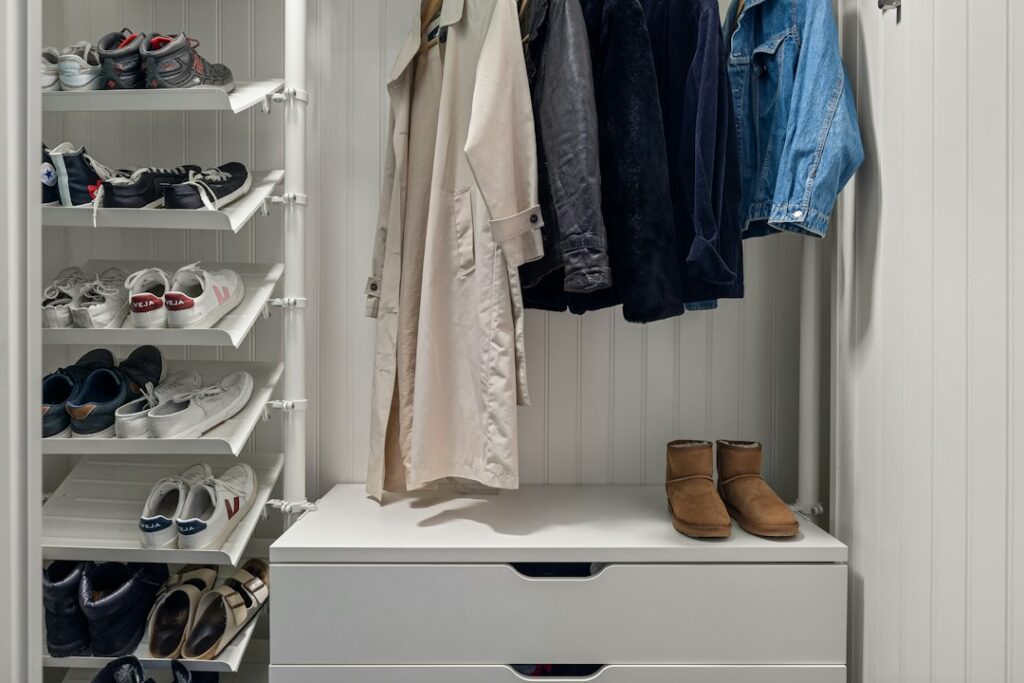
Not every home comes with the walk-in closet of your dreams, and not every renter can drill a wall-mounted organizer into place. A freestanding closet system solves both problems by giving you a full wardrobe of hanging space, shelves, and drawers that stands on its own feet, requiring no permanent attachment to the wall. Whether you’re outfitting a bedroom with a shallow reach-in closet, adding storage to a spare room, or building a boutique-style wardrobe in a rental, a freestanding system delivers flexible, movable storage that you can reconfigure or take with you when you move.
- What Sets Freestanding Systems Apart
- The Main Types of Freestanding Systems
- Materials and What They Mean for Durability
- Planning Your Layout
- Weight Limits and Stability
- Best Uses for a Freestanding System
- What It Costs
- Assembly and Setup Tips
- Freestanding Versus Wall-Mounted Systems
- Maximizing a Small Space
- Choosing the Right System for You
What Sets Freestanding Systems Apart
Traditional closet organizers mount to the wall studs, which means drilling, precise leveling, and holes you’ll have to patch later. A freestanding system stands independently, supported by its own frame or posts, so it can sit against a wall without being anchored to it, or even divide a room as a partition. This makes it ideal for renters, for homes where you don’t want to commit to permanent changes, and for anyone who likes to rearrange their space.
The trade-off is stability. Because it isn’t screwed to the wall, a freestanding unit relies on a wide base, good weight distribution, or an optional anti-tip strap for safety. Most quality systems handle a full wardrobe’s weight easily, but you’ll want to load heavy items low and consider tipping risk in homes with children.
The Main Types of Freestanding Systems
These systems come in several forms, each suited to a different need and budget.
Wire and Post Systems
Adjustable steel-post systems use tension or floor-standing uprights holding wire or laminate shelves and hanging rods. They’re highly configurable, letting you add shelves, drawers, and rods wherever you want, and expand as your needs grow.
Wardrobe Cabinets (Armoires)
A classic standalone armoire or wardrobe is a fully enclosed piece of furniture with doors, a hanging section, and drawers. It offers a finished, dust-free look and doubles as a decor piece but is heavier and harder to reconfigure.
Modular Cube and Shelf Units
Modular systems built from stackable cubes, shelves, and hanging modules let you customize the layout and are often the most affordable route. Many are sold as expandable kits.
Garment Racks
The simplest and cheapest option, an open garment rack on wheels provides hanging space with minimal structure, great for temporary or budget setups but offering little enclosed storage.
Materials and What They Mean for Durability
Material affects both looks and how much the system can hold. Your choices generally include:
- Steel and metal: the strongest for hanging heavy clothes, used in post systems and racks; look for a rust-resistant coated finish
- Engineered wood (MDF/particleboard with laminate): gives a furniture-like finished look at moderate cost, common in wardrobes and cube units
- Solid wood: the most durable and attractive but heaviest and most expensive
- Fabric-covered frames: lightweight and cheap portable wardrobes, best for light-duty or temporary use
For a wardrobe you’ll pack full of coats and jeans, prioritize a steel frame or solid engineered-wood construction. Flimsy fabric wardrobes sag and lean under a heavy load, so reserve those for lightweight or short-term needs.
Planning Your Layout
Before you buy, map out what you actually store. A good freestanding system balances hanging space, shelving, and drawers to fit your wardrobe. Consider these guidelines:
- Long-hanging space (dresses, coats) needs about 66 to 72 inches of vertical clearance
- Double-hanging rods for shirts and folded-length items double your hanging capacity in the same footprint
- Shelves suit folded sweaters, bags, and shoes; adjustable shelves add flexibility
- Drawers or bins keep small items and undergarments tidy and out of sight
- Measure your available floor space and ceiling height before choosing a unit
Mixing double-hang, long-hang, and shelving in one system maximizes what you can fit. Many post-based systems let you split the layout so half is double-hung for tops and half is long-hang for dresses and coats.
Weight Limits and Stability
Because these units aren’t anchored, stability deserves real attention. Check the manufacturer’s weight rating for both the rods and the overall unit before loading it up. Distribute weight sensibly: put heavy items like winter coats and shoes on lower shelves and rods, keeping the center of gravity low so the unit resists tipping. For freestanding wardrobes and taller units, most makers include or recommend an anti-tip strap or bracket, and using it is wise even if the unit isn’t wall-mounted, especially around children. A wide base and rubber feet on a level floor go a long way toward keeping everything steady.
Best Uses for a Freestanding System
These systems shine in specific situations:
- Rentals where you can’t drill into walls or want to take the storage with you
- Rooms with no closet, like older homes, basements, or converted spaces
- Supplementing a small reach-in closet that can’t hold everything
- Room dividers, where a double-sided unit separates a studio or shared space
- Temporary setups during a move or renovation
What It Costs
Freestanding storage spans a wide price range depending on type and quality. A basic garment rack runs $30 to $80, a fabric portable wardrobe $50 to $150, a modular cube or post system $150 to $600, and a solid wardrobe or high-end configurable system $400 to $1,500 or more. Compared to a custom built-in closet, which can run $1,500 to $5,000 professionally installed, a freestanding system delivers substantial storage at a fraction of the cost with no installation labor and no permanent changes to the home.
Assembly and Setup Tips
Most freestanding systems ship flat and require assembly, which is well within DIY reach with basic tools. A few tips smooth the process: assemble on the floor where the unit will stand to avoid moving a heavy finished piece, level the feet on uneven floors so shelves sit true and the unit doesn’t rock, and load it gradually while checking stability. If the system is expandable, leave room to add modules later as your storage needs grow. Keep the instructions and any spare hardware in case you reconfigure it down the road.
Freestanding Versus Wall-Mounted Systems
It’s worth understanding what you trade when you choose freestanding over a wall-mounted closet organizer. Wall-mounted systems bolt to the studs, which lets them float off the floor for easy cleaning, hold more weight securely, and free up the entire floor beneath the hanging sections. They’re the stronger, more permanent option and often look more built-in. The catch is that they require drilling, precise leveling, and finding studs, and they leave holes to patch if you ever remove them, which makes them a poor fit for renters.
Freestanding systems give up some of that maximum load capacity and the floating-off-the-floor look in exchange for total flexibility: no drilling, no wall damage, easy reconfiguration, and the ability to pack up and take the whole thing when you move. For renters, for finished walls you don’t want to touch, and for anyone who likes to rearrange, freestanding is the clear winner. If you own your home and want the sturdiest, most integrated result in a permanent closet, a wall-mounted system may serve you better. Many people even combine the two, using a wall-mounted core with freestanding pieces to fill in.
Maximizing a Small Space
When floor space is tight, a few strategies help a freestanding system punch above its footprint. Go vertical: choose a taller unit and use the full height with top shelves for out-of-season storage and seldom-used items, keeping daily pieces at eye and waist level. Double-hang rods effectively double your capacity for shirts, pants, and skirts by stacking two rows of hanging space where one long-hang section would sit.
Add storage accessories to squeeze more from every inch: hanging shelf organizers for folded sweaters, slim non-slip velvet hangers that fit more garments per foot of rod, over-the-rod hooks for bags and belts, and clear bins on the top shelf so you can see what’s stored. A backless or open-frame system keeps a small room feeling airy, while a mirrored wardrobe door does double duty as a full-length mirror and visually expands the space. With smart accessories and vertical thinking, even a compact freestanding unit can hold a surprisingly full wardrobe.
Choosing the Right System for You
A freestanding closet system is the flexible, renter-friendly answer to storage in any room that lacks a proper closet or needs more space than it has. Match the type to your needs, a sturdy post system or wardrobe for a full wardrobe, a simple rack for light or temporary use, choose a material strong enough for your load, plan a layout that mixes hanging and shelving, and keep it stable with low-loaded weight and an anti-tip strap. With the right pick, you’ll add a wardrobe’s worth of organized storage without a single hole in the wall.