Most US municipalities cap front yard fences at 3 to 4 feet tall, while backyard fences can run 6 feet or higher. That single rule is why privacy is harder to achieve in front, and why so many homeowners get stuck. The good news is that clever front yard fence ideas for privacy use layering, screening plants, angled slats, and strategic placement to block sightlines without breaking height limits or making your home feel like a fortress. This guide covers the fence styles that work within code, the materials and their real costs per linear foot, and the planting combinations that turn a short fence into genuine privacy.
Part of our Decks & Outdoor guide — explore the full guide →
- Know Your Height Limits Before You Design
- Fence Styles That Deliver Privacy Within the Rules
- Materials and Cost Per Linear Foot
- Layering Plants for Privacy a Short Fence Can't Provide
- Design Tricks to Keep It Welcoming
- Installation Basics That Prevent Regret
- Combining Materials for a Custom Look
- Budgeting the Whole Project
- Frequently Asked Questions
Know Your Height Limits Before You Design
Front yard fence height is almost always restricted for traffic-visibility and neighborhood-character reasons. Typical rules land at 3 to 4 feet for the area between the house and the street, sometimes 4.5 feet. Corner lots often face even tighter “sight triangle” rules that keep fences low near intersections. Homeowner associations frequently add their own restrictions on style, color, and material on top of city code.
Call your local planning department and, if you have one, your HOA, before you buy anything. A rejected fence you have to tear out is the most expensive privacy mistake you can make. Ask specifically about height, setback from the property line and sidewalk, and any material bans.
Fence Styles That Deliver Privacy Within the Rules
Because you often cannot go tall, you win privacy through density, angle, and layering instead. These designs consistently work:
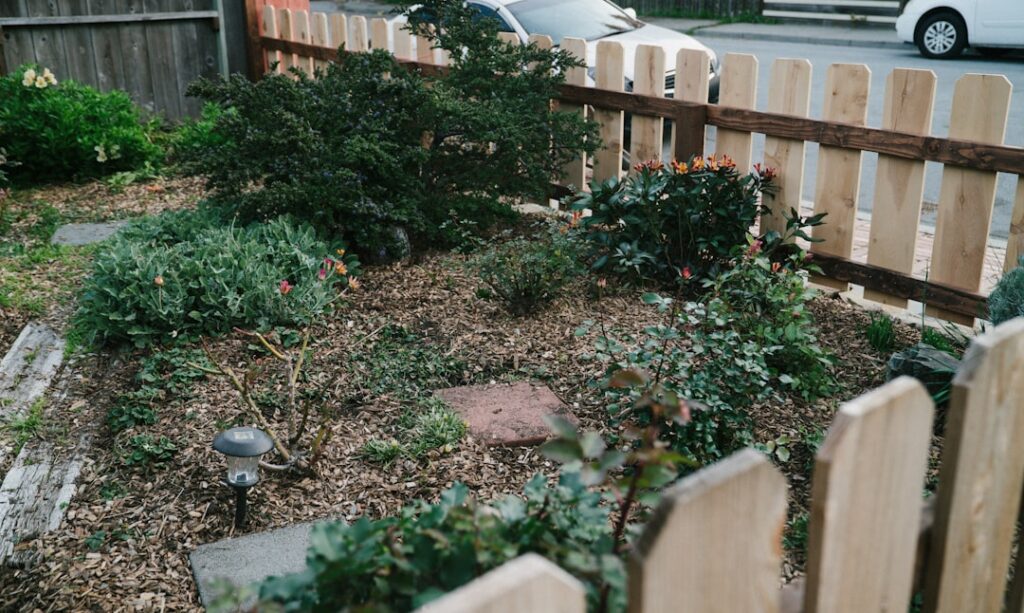
- Horizontal slat fence: Tight-spaced horizontal boards read modern and block angled sightlines better than vertical pickets. At 4 feet with a planted bed behind, they screen a seated patio well.
- Louvered or angled-slat fence: Boards set at 45 degrees block the view from the street while letting light and breeze through. This is the single best trick for privacy at a legal height.
- Lattice-topped picket: A 3-foot solid base with a foot of lattice on top gains height where allowed and supports climbing vines for a living screen.
- Board-on-board (shadowbox): Overlapping boards on alternating sides look finished from both directions and leave no gaps to peer through.
- Gabion wall: Wire cages filled with stone create a solid, modern, and durable low wall that doubles as a planter cap.
- Living fence: A row of columnar arborvitae or a clipped hedge behind a low decorative fence gives real height that plant material, not the fence, provides.
Materials and Cost Per Linear Foot
Your material choice drives both look and budget. Installed prices in most US markets fall roughly here:
- Pressure-treated wood: $15 to $30 per linear foot installed. Affordable and easy to customize, but needs staining every few years.
- Cedar: $20 to $40 per linear foot. Naturally rot-resistant with a warmer tone that weathers to silver-gray.
- Vinyl (PVC): $25 to $45 per linear foot. Zero maintenance and comes in privacy panels, though the color range is limited.
- Composite: $30 to $60 per linear foot. Wood look without the upkeep, at a premium price.
- Aluminum or steel with infill: $30 to $55 per linear foot, often paired with planting for privacy since metal alone is see-through.
- Gabion: $40 to $70 per linear foot depending on stone, but essentially permanent.
For a 60-foot front run, a mid-range cedar horizontal fence lands around $1,500 to $2,400 installed, or roughly half that as a capable DIY project.
Layering Plants for Privacy a Short Fence Can’t Provide
The most effective front-yard privacy almost always combines a legal-height fence with planting. The fence anchors the ground plane and the plants add the height code will not let the fence reach. Reliable choices:
- Emerald Green arborvitae: Grows 12 to 15 feet tall but only 3 to 4 feet wide, forming a dense evergreen wall. Plant 3 feet on center.
- Clumping bamboo: Fast, tall, and non-invasive if you choose a clumping variety like Bambusa, not running bamboo.
- Boxwood or privet hedge: Classic clipped screen, though privet grows fast and needs regular shearing.
- Climbing vines: Clematis, star jasmine, or climbing hydrangea on a trellis panel add a green layer within a season.
- Ornamental grasses: Feather reed grass or miscanthus gives soft, seasonal screening 5 to 6 feet tall for a fraction of shrub cost.
Set taller plantings just behind the fence line so the fence and greenery read as one layered feature rather than two separate elements.
Design Tricks to Keep It Welcoming
A front-yard privacy screen should still say “come in,” not “keep out.” A few moves keep it friendly:
- Break up long runs with a gate, a planting pocket, or a change in slat direction so the fence never reads as a solid barrier.
- Frame the entry with an arbor or a wider gate to draw the eye and signal welcome.
- Match the home’s style — horizontal slats for modern, pickets for cottage, board-on-board for craftsman.
- Add lighting with low-voltage post caps or path lights so the fence looks intentional at night.
- Leave a planting strip between the fence and sidewalk for flowers that soften the street view.
Installation Basics That Prevent Regret
Set posts at least a third of their above-ground height into the ground and below your frost line, which can reach 42 inches in northern states. Use concrete footings for wood and vinyl posts. Confirm your property line with a survey or the plat map before digging; building even a few inches over the line is a legal headache. Call 811 for utility locates two to three business days before you dig, every time, no exceptions. Check that gates swing clear and latch at a comfortable height.
Combining Materials for a Custom Look
Some of the most striking front-yard fences mix two materials, which also lets you balance cost and durability. A common pairing is metal or aluminum posts with horizontal wood infill, giving you rot-resistant structure and warm wood privacy panels. Stone or brick pillars every 8 to 10 feet with wood or metal panels between them read upscale and last for decades, though masonry pillars add $200 to $500 each. Gabion columns filled with stone paired with cedar slat panels create a modern, textural look. Mixing materials this way keeps a long fence run from feeling monotonous and lets you spend on durable elements where it counts, like posts and the base course, while using less costly infill for the spans between.
Budgeting the Whole Project
Beyond the per-foot material cost, plan for the extras that catch DIYers off guard. Concrete for post footings runs about $5 to $7 per 50-pound bag, and you will use one to two bags per post. Gates cost more than an equivalent length of fence, typically $150 to $500 each depending on material and hardware, because they need reinforced framing and a latch. Post caps, decorative brackets, and stain or paint add up too; budget an extra 15 to 20 percent over your raw material estimate. If you plan to add screening plants, factor $30 to $80 per shrub and remember they take one to three seasons to fill in, so the fence carries the privacy load at first.
Frequently Asked Questions
How tall can a front yard privacy fence be?
Most cities limit front yard fences to 3 to 4 feet, sometimes 4.5 feet, while rear yards allow 6 feet or more. Always verify with your local planning department and HOA before building.
How do I get privacy with a short front fence?
Combine a legal-height fence with angled louvered slats and a layer of evergreen shrubs or columnar arborvitae planted just behind it. The plants supply the height the fence cannot, and the angled slats block street-level sightlines.
What is the cheapest privacy fence for a front yard?
Pressure-treated wood at $15 to $30 per linear foot installed is the most budget-friendly. Pairing a low DIY wood fence with fast-growing shrubs stretches the privacy budget even further.
Do I need a permit for a front yard fence?
Many jurisdictions require a permit for any fence, and nearly all regulate front-yard height and setback. Check locally; permit costs are usually modest, but skipping one can force a costly teardown.
Privacy in the front yard is a layering problem, not a height problem. Work within your local limits, pick a fence style that blocks angled sightlines, and back it with evergreen or climbing plants that supply the screening a short fence cannot. Handle setbacks, utility locates, and HOA approval up front, and you end up with a private, welcoming yard that adds curb appeal instead of walling it off.