Figuring out your furnace filter location is the first hurdle for anyone trying to keep their heating and cooling system running clean. The frustrating part is that there is no single universal spot; the furnace filter location depends on how your furnace is oriented and how your home’s ductwork was designed. Some filters live tucked inside the furnace itself, while others sit behind a grille on a wall or ceiling clear across the house.
This walkthrough covers every place a filter can hide, how to identify which setup you have, and how to access, size, and reinstall it correctly. Once you have found it, changing it takes about two minutes.
- The Three Places Filters Live
- Find It by Furnace Orientation
- Step by Step: Locating and Accessing It
- Reading the Size Printed on the Frame
- Getting the Airflow Arrow Right
- How Often to Change It
- Pro Tips for Multiple-Return Homes
- Return Grille or Furnace: How to Tell Which You Have
- Safety and Tools You Might Need
- When You Simply Cannot Find It
The Three Places Filters Live
Nearly every residential filter sits in one of three spots:
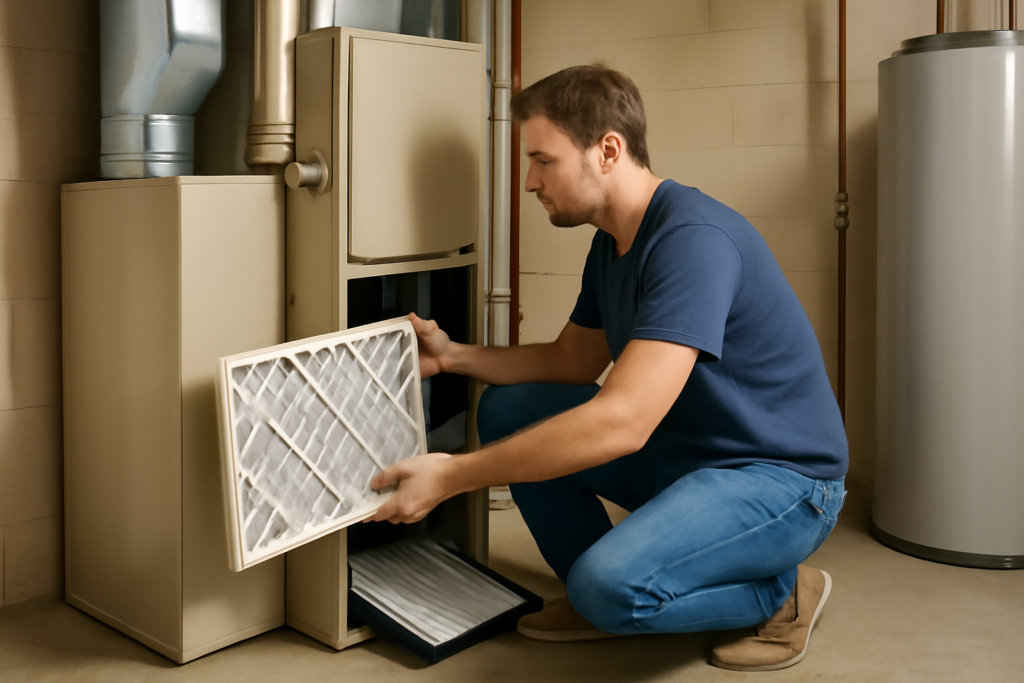
- In the blower compartment. There is a slot where the large return duct meets the furnace cabinet, right beside or below the blower fan. This is the most common location on older and mid-range systems.
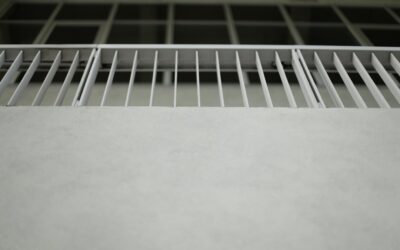
- Behind a return-air grille. In many homes the filter sits behind a large vent cover on a wall, ceiling, or hallway. These grilles are noticeably bigger than supply registers and have a hinged or screwed-on cover.
- In a dedicated filter cabinet. Higher-end systems use a sealed box, often a media filter cabinet, bolted to the return side of the furnace. These hold thick 4- to 5-inch filters and have a removable door.
Some larger homes have more than one filter, often one at the furnace and one or more at return grilles. If your home is over about 2,000 square feet or has two return grilles, assume you may have multiple filters to check.
Find It by Furnace Orientation
Your furnace’s airflow direction is the biggest clue. There are three configurations:
Upflow furnace. Common in basements and closets, it pulls cool air in at the bottom and pushes warm air up. The filter slot sits at the bottom, in the return duct feeding into the base of the unit. Look low, near where the big rectangular duct connects.
Downflow furnace. Often found in homes with ductwork in a crawlspace or slab, it takes air in at the top and sends it down. The filter is up top, where the return duct meets the upper portion of the cabinet.
Horizontal furnace. Installed on its side in attics and crawlspaces, air moves sideways through it. The filter sits in a slot on the intake end, usually on the side where the return duct attaches. In attics, the filter is frequently at a ceiling return grille instead, since crawling up there monthly is impractical.
Step by Step: Locating and Accessing It
Here is a routine for an unfamiliar home:
- Turn the system off at the thermostat first. You never want the blower running while the filter is out.
- Find the furnace and identify the two ducts. The larger return duct is where the filter hides; the smaller supply ducts carry conditioned air away.
- Look for a removable slot cover, a small access panel, or a hinged door where the return duct meets the cabinet. Many slots are covered by a thin metal cap that lifts or slides off with no tools.
- If you see no filter at the furnace, hunt for the largest vent grille in your home. That return grille almost certainly holds the filter behind it.
- Open the grille by flipping the latches, or removing two screws, and lower the hinged cover.
- Slide the old filter straight out. Take a phone photo of the arrow and size before it is gone.
Reading the Size Printed on the Frame
Every filter has its dimensions stamped right on the cardboard or metal edge, printed as length by width by thickness in inches. Common sizes include 16x25x1, 20x25x1, 16x20x1, and thicker media sizes like 20x25x4 or 20x25x5. That printed number is the nominal size, which runs slightly larger than the actual measured size, so always buy by the printed figure rather than measuring with a tape.
If the old filter is too filthy to read or missing entirely, measure the slot opening and round to the nearest standard size. A snug fit matters. Even a half-inch gap lets dusty air slip past unfiltered and coat your blower and coil.
Getting the Airflow Arrow Right
Look on the frame for a printed arrow labeled “airflow.” That arrow must always point in the direction the air travels, which is toward the furnace and blower, away from the return duct. In an upflow basement furnace, the arrow points up into the unit. At a wall or ceiling return grille, the arrow points into the wall or ceiling, toward the ductwork.
Getting this backward is the single most common mistake. A reversed filter loses much of its rated efficiency and can collapse or whistle under pressure. When in doubt, remember air moves from the room, through the filter, into the furnace.
How Often to Change It
Once you know your furnace filter location, set a reminder to check it regularly. A basic 1-inch filter should be swapped every one to three months. Homes with shedding pets, smokers, or ongoing renovation dust may need a fresh one monthly. Thick 4- to 5-inch media filters in dedicated cabinets last much longer, typically 6 to 12 months, because of their larger surface area.
Hold the filter up to a light after a month. If you cannot see light through it, it is overdue. A clogged filter starves airflow, strains the blower motor, drives up your energy bill, and in summer can freeze the AC coil solid.
Pro Tips for Multiple-Return Homes
Bigger homes often route return air through several grilles, each with its own filter. If you only ever change the one at the furnace and ignore two dusty ceiling grilles, you are still pulling unfiltered air into the system. Walk your home once and map every large return grille, then label each with the correct filter size using a marker on the frame of the duct. It turns a confusing hunt into a quick monthly loop. Keep a small stock of each size on a shelf near the furnace so you are never tempted to run the system with an empty slot.
Return Grille or Furnace: How to Tell Which You Have
Homeowners often ask why some houses filter at the furnace and others at the wall. The answer comes down to duct design. Systems with a single, large central return usually place one big filter right at that return grille, which is convenient because it sits at eye level in a hallway instead of down in a dark basement. Systems with return ducts routed through several rooms tend to filter at the furnace cabinet, where all those ducts converge before the blower.
A quick test: stand at a suspected return grille while the system runs and hold a tissue up to it. If the tissue pulls toward the grille, it is a return, and there is very likely a filter behind it. Supply registers, by contrast, blow air out and push the tissue away. Return grilles are also almost always larger than supply registers and lack the adjustable louvers you use to aim airflow.
Safety and Tools You Might Need
Most filter slots open with no tools at all, but return grilles are often held by two to four screws or spring clips, so keep a Phillips screwdriver handy. Wear a light dust mask if you are pulling a filter that has not been changed in six months, because that first tug releases a cloud of trapped debris. If your furnace is in an attic or crawlspace, bring a flashlight and watch your footing on the joists.
Never run the system with the filter removed, even for a day. Without it, dust and hair coat the evaporator coil and blower wheel, and cleaning a fouled coil later can cost $200 to $400. If you are between filters, turn the system off until the new one arrives rather than running it bare.
When You Simply Cannot Find It
Occasionally a system stumps even seasoned pros because a previous owner sealed a slot or the filter lives in an unexpected media cabinet. If you have checked the furnace cabinet, every large return grille, and any attached filter box and still come up empty, pull the furnace’s front access panel with the power off. Some compact and high-efficiency units house the filter internally, right at the blower intake. As a last resort, the model and serial number on the furnace door lets you look up the manufacturer’s installation manual, which diagrams the exact filter slot for your unit. Ten minutes with that document beats another hour of guessing.