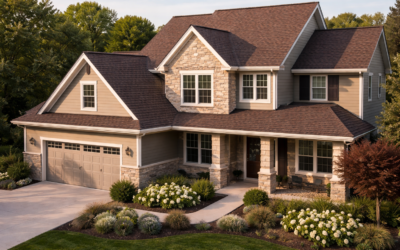
If you want a roof that recalls weathered cedar shakes without the upkeep of real wood, GAF Shakewood shingles are one of the first colors to look at. Shakewood is a warm blend of browns, tans and gold granules in the Timberline HDZ architectural shingle line, and it is one of the nine High Definition colors GAF sells nationwide. On a roof it reads as a lighter, sunnier brown than most of the lineup, with enough variation to look textured rather than flat.
Part of our Roofing guide — explore the full guide →
Its neighbors in the wood-tone family are Barkwood and Hickory, and those three get compared constantly. Shakewood is the lightest and warmest of the group. That makes it a natural match for beige, tan, cream and clay siding, as well as warm brick and stone, and it can also set off deeper accent colors like forest green or burgundy. The sections that follow cover the comparison, house pairings, which lines carry it, warranty points and safety.
- GAF Shakewood Shingles vs Barkwood and Hickory
- How Shakewood Looks on a Real Roof
- House Pairings: Siding, Brick and Trim
- Which Lines Carry Shakewood
- Features and Warranty Points
- Installation Notes and Ladder Safety
- Picking Trim, Gutters and Accent Colors
- Troubleshooting and Care
- Cost Ranges
- When to Call a Pro
- Frequently Asked Questions
GAF Shakewood Shingles vs Barkwood and Hickory
GAF’s color pages do not rank the browns by darkness, so the table is descriptive. Use it to narrow your list, then look at full-size shingles and finished roofs outdoors.
| Timberline HDZ color | Overall depth | Blend and undertone | Pairs well with |
|---|---|---|---|
| Shakewood | Light to medium | Warm tan, brown and gold; cedar-shake look | Beige, cream, clay, sage, warm brick, stone |
| Barkwood | Medium | Deeper warm brown, a touch darker than Shakewood | Tan, cream, brown, red and orange brick |
| Hickory | Medium to dark | Rich brown with more red-brown warmth | Warm brick, tan siding, wood accents |
| Weathered Wood | Medium | Brown-gray blend, cooler and more neutral | Gray, white, blue and most siding colors |
Shakewood sits at the light end of the browns. Choose it when you want warmth and brightness; choose Barkwood or Hickory when you want the roof to feel more grounded. If your siding leans gray or blue, Weathered Wood usually bridges the gap better than any of the warm browns.
How Shakewood Looks on a Real Roof
Timberline HDZ shingles are laminated, with layers that create shadow lines and depth. In Shakewood, the mix of light tan and darker brown granules plus those shadow bands gives the cedar-shake impression from the street. Close up, you see individual granule colors; from the curb, the roof blends into a warm, honey-brown texture.
Lighting shifts the color. Midday sun pulls out the gold and tan, making Shakewood look lighter and almost golden. On overcast days or in shade it looks more like a mid brown. North-facing slopes can look noticeably darker than south-facing ones on the same house. Drive past finished Shakewood roofs at different times of day before committing, and ask your contractor for addresses nearby.
House Pairings: Siding, Brick and Trim
- Beige, tan and cream siding: the classic match. Shakewood keeps the house warm and cohesive. Add white or cream trim for contrast.
- Clay, terracotta and warm stucco: Shakewood picks up the warm tones without competing.
- Sage and olive green: a natural, woodsy combination that suits cottages, craftsman homes and wooded lots.
- Burgundy or deep red accents: works well for doors and shutters against a neutral body color.
- Warm red, orange or buff brick: Shakewood’s gold and tan pick up brick tones. Hold a shingle against the brick to check undertones.
- Stone veneer: fieldstone or stacked stone with tan and brown flecks pairs well.
- Cool gray or blue siding: possible but tricky; the warm roof can clash. Weathered Wood or a gray blend usually suits these better.
A roof shingle color sample kit or full sample shingles from your contractor make this far easier. Lean them against the siding at eye level in daylight; a small swatch on a screen or brochure is not a reliable guide.
Which Lines Carry Shakewood
The gaf timberline hdz shakewood combination is the version most homeowners are quoted, since Timberline HDZ is GAF’s mainstream architectural shingle and Shakewood is one of its nationwide colors. GAF offers other shingle lines, including premium and designer styles, with their own color palettes. Whether Shakewood is offered on those other lines varies, and availability of any color can depend on region and plant. Confirm with a local GAF-certified contractor or distributor before you fall for a sample, and get the exact product line and color written on the contract.
Features and Warranty Points
| Feature | What GAF describes | What it means for you |
|---|---|---|
| LayerLock Technology | Mechanically fused shingle layers | Helps keep layers together during nailing |
| StrikeZone nailing area | A wide target for nails | Easier for crews to nail in the right place |
| WindProven limited wind warranty | 15 years, no maximum wind speed limit, with required GAF accessories | Confirm the full accessory system is on the quote |
| StainGuard Plus algae protection | 25-year limited warranty on packages bearing the logo | Helps resist dark streaks in humid climates |
The WindProven coverage applies only when the roof uses qualifying GAF accessories: starter strips, ridge cap shingles, roof deck protection, and leak barrier or attic ventilation. Older listings that show a miles-per-hour cap reflect older coverage. Warranty lengths, accessory requirements and registration rules change and can depend on the contractor’s certification level, so ask for the current warranty document and read it before signing.
Installation Notes and Ladder Safety
Roofing is dangerous work. Falls from ladders and roofs cause serious injuries every year. If you climb to look at an existing roof, set an extension ladder on firm, level ground at about a 4 to 1 angle (one foot out for every four feet up), extend it at least three feet above the roof edge, secure it, and keep three points of contact. Do not walk on steep, wet, icy or frosty roofs, and never work on a roof alone.
For any two-story home and for any full replacement, hire a licensed, insured roofing contractor who uses fall protection, pulls the required permit, and installs per the manufacturer’s instructions. Correct nailing, starter courses and ventilation all affect both performance and warranty eligibility.
Picking Trim, Gutters and Accent Colors
The roof is the largest single color surface on most houses, so it steers every smaller choice. With GAF Shakewood shingles overhead, warm whites, cream and almond trim look natural, while a stark blue-white can look slightly cold against the gold in the blend. Bronze, brown or almond gutters and downspouts disappear into the roofline; white gutters outline the eaves more sharply, which suits cottages and colonials.
For front doors and shutters, deep greens, burgundy, navy with warm undertones and natural stained wood all work. Black accents can look sharp on a modern farmhouse with tan siding, but test them beside a sample shingle first, because black can make a light brown roof look washed out. If you are repainting at the same time as reroofing, choose the shingle first. Paint has thousands of options and can be matched to the roof, while the roof is a decision you live with for decades.
Metal flashing, vent pipes and ridge vents should also be considered. Many contractors can supply flashing in a brown that blends with Shakewood, which keeps bright aluminum from catching the eye on an otherwise warm roof.
Troubleshooting and Care
- Color looks uneven after install: minor shading differences between bundles are normal at first and blend over time. Crews should mix bundles during installation to avoid patches.
- Dark streaks: usually blue-green algae. StainGuard Plus packages are designed to resist it; a gentle cleaner made for roofs can help, but never pressure-wash shingles.
- Granules in gutters: some loose granules after a new install are normal. Heavy, ongoing loss on an older roof signals wear.
- Lifted tabs after a storm: call the installer promptly; wind damage can let water in.
Cost Ranges
Shakewood is not a premium color, so it typically costs the same as other Timberline HDZ colors. Total roof cost depends on roof size, pitch, number of layers torn off, decking repairs, local labor and accessories. Architectural asphalt roofs are commonly quoted in the range of several dollars per square foot installed. Get at least three quotes and compare the exact line, accessories and warranty level, not just the bottom number.
When to Call a Pro
Shingle replacement is best left to licensed roofers. Call a pro for any replacement, storm damage, leaks, soft spots in the decking, or any work on a two-story roof or a steep pitch. A certified installer can also register the warranty and confirm color availability in your area.
Frequently Asked Questions
What color is GAF Shakewood?
Shakewood is a warm blend of tan, brown and gold granules designed to recall cedar shakes. It is one of the lighter browns in the Timberline HDZ lineup.
Is Shakewood lighter than Barkwood?
Yes. Shakewood is lighter and warmer, with more tan and gold. Barkwood is a deeper brown and Hickory deeper still with more red-brown warmth.
What siding goes with Shakewood shingles?
Beige, tan, cream, clay and sage siding pair well, along with warm brick and stone. Cool gray or blue siding is harder to match.
Is Shakewood available everywhere?
GAF lists Shakewood as a nationwide Timberline HDZ color, but stock can vary locally. Confirm availability with a nearby contractor or distributor.
Does Shakewood cost more than other colors?
No, color does not usually change the price within Timberline HDZ. The product line, accessories and labor drive the cost.