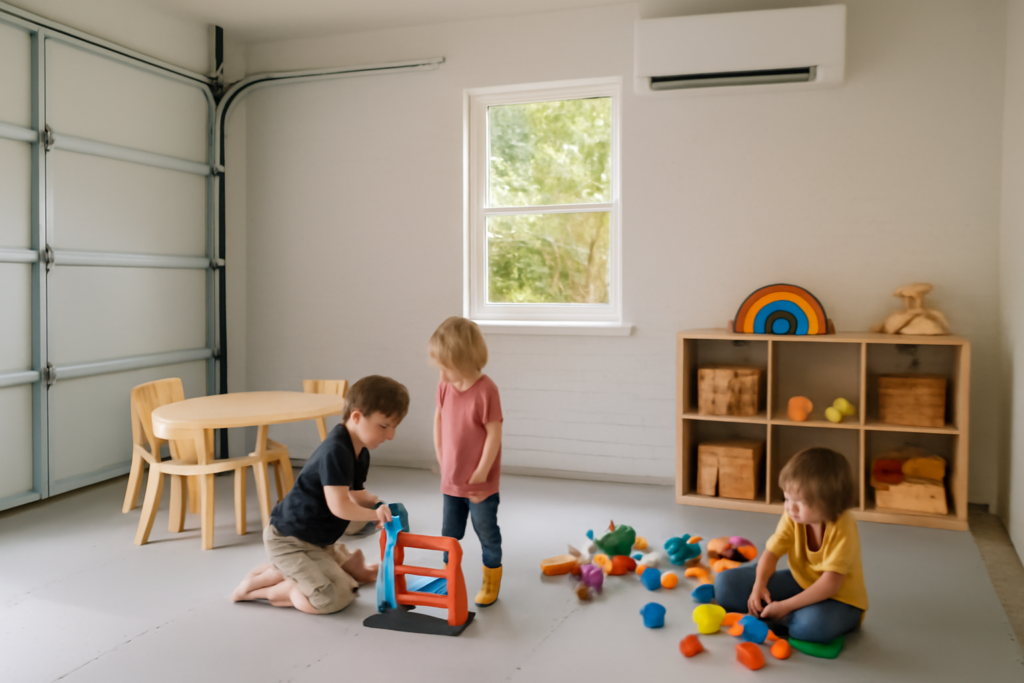
A garage has a cold concrete floor, a door that weighs a few hundred pounds, and shelves full of products no child should touch. That is why plans to convert garage to playroom space start with safety, not paint colors. The work comes down to four jobs: separate the play area from vehicles and chemicals, put a soft and warm floor over the slab, make the room comfortable year round, and lock down the electrical and the door.
Most families can turn a garage into playroom space for a fraction of the cost of an addition, especially if the car moves out for good. If the garage will still park a vehicle or hold a mower, the plan needs a solid physical barrier and strict rules about fumes, which this walkthrough covers in detail.
- How to Convert Garage to Playroom Space Safely
- Clearing Out Chemicals and Storing Tools Out of Reach
- Flooring Over a Cold Concrete Slab
- Insulation, Heating and Cooling
- Electrical Safety: Outlets, Lighting and Wiring
- Garage Door and Entry Safety
- Cost Ranges and Troubleshooting
- When to Call a Licensed Professional
- Frequently Asked Questions
Decor ideas come last. Get the shell right first, and any theme, rug or art wall you add later will sit on a room that is warm, dry and safe.
How to Convert Garage to Playroom Space Safely
Start by deciding whether the garage stops being a garage. If you can relocate cars, fuel cans, lawn equipment and chemicals completely, the job is simple. If not, never run vehicles or store fuel near the play area. Engines, mowers, generators and gas cans release carbon monoxide and fumes that drift into any open space, and children breathe faster and closer to the floor than adults do.
- Remove fuel sources: gasoline, propane cylinders, mowers, trimmers and generators belong in a detached shed or outdoor storage, not beside toys.
- Never idle a vehicle in an attached garage, even with the door open, and never with children in an adjoining room.
- Install CO alarms: put a carbon monoxide alarm in the playroom and on every level of the house, plus near sleeping areas, and test them monthly.
- Check fuel-burning appliances: if a furnace or water heater lives in the garage, keep it enclosed, properly vented and inspected, with clearances maintained per the manual.
If part of the space must stay a working garage, build a full-height framed and drywalled wall between the two zones with a solid, self-closing door, and seal every gap. A curtain or shelving unit is not a barrier.
Clearing Out Chemicals and Storing Tools Out of Reach
Garages collect pesticides, pool chemicals, antifreeze, paint thinners, cleaners and fertilizer. Move all of them out of the playroom. Store anything that stays on the property in a locked metal cabinet in a separate, ventilated area, in original labeled containers, and never mix products when consolidating them.
Tools need the same treatment. Saws, blades, nail guns and battery packs go into locked cabinets or onto high wall rails that kids cannot climb to reach. Anchor every shelf and cabinet to wall studs so it cannot tip if a child pulls on it. Lithium batteries and chargers should live away from the play zone on a hard, nonflammable surface.
Flooring Over a Cold Concrete Slab
The slab is the biggest comfort problem. Concrete pulls heat from small bodies and feels hard on knees and heads. Before any flooring goes down, check for moisture: tape a square of plastic sheet to the slab for 24 to 48 hours. Darkened concrete or droplets underneath mean you need a vapor barrier or moisture-tolerant system.
Good floor options for a garage playroom
- Interlocking foam floor tiles: the fastest, cheapest kid-friendly choice. Thick tiles cushion falls, add some insulation and lift out for cleaning. Pick tiles at least 1/2 inch thick for play areas.
- Insulated subfloor panels plus carpet or vinyl: dimpled or foam-backed panels create an air gap above the slab and raise floor temperature noticeably, then accept carpet tiles or floating vinyl plank.
- Rubber flooring: durable and cushioned, good for active play, but choose low-odor products and air out new rolls before use.
- Carpet tiles over a pad: warm and replaceable one square at a time after spills.
Many garage floors slope toward the door for drainage. Small slopes are fine under foam tiles. A steeper slope may need a self-leveling compound or sleepers, which changes the door threshold height, so plan that transition so nobody trips.
Finishes, adhesives and ventilation
Paints, floor adhesives, sealers and new flooring can release fumes. Choose low-VOC or zero-VOC products, follow every label for ventilation, wear gloves, eye protection and the respirator the label calls for, and keep children out until the room has aired out fully, usually several days for adhesives and coatings. Keep flammable products well away from any pilot light or water heater while you work.
Insulation, Heating and Cooling
Most garages have uninsulated walls, a thin ceiling and a big leaky door, so they swing hot and cold. A comfortable playroom needs a real envelope:
- Insulate walls: fill open stud bays with batts or mineral wool, then cover with drywall. Drywall also protects insulation from little hands.
- Insulate the ceiling: add insulation in the attic above or in the joist bays.
- Deal with the door: the best option is replacing the garage door with an insulated framed wall and a window. If the door stays, use an insulated door with good perimeter seals.
- Heat and cool safely: a ductless mini split or extending the home’s HVAC (sized by an HVAC contractor) works best. Avoid fuel-burning unvented heaters in a play space. If you use a portable electric heater temporarily, plug it directly into a wall outlet, keep 3 feet of clearance, choose one with tip-over and overheat shut-off, and never leave it on unattended.
Never extend the house’s return ducts into a garage that still holds vehicles or fuel, because that can pull fumes into the whole home.
Electrical Safety: Outlets, Lighting and Wiring
Garages often have just one or two outlets and a bare bulb. For a playroom, more outlets mean fewer extension cords on the floor. New circuits and new outlets are a job for a licensed electrician, who will also add GFCI and tamper-resistant protection where required.
- Cover what is exposed: use tamper-resistant receptacles or sliding outlet covers on every reachable outlet.
- Before any fixture swap: turn off the breaker and confirm power is off with a non-contact voltage tester before touching wires. Never test on live circuits.
- Manage cords: route TV and lamp cords behind furniture or in cord covers, and never run them under rugs.
- Light it well: replace bare bulbs with enclosed ceiling fixtures so balls and toys cannot shatter them.
Garage Door and Entry Safety
If the overhead door stays, it is the most dangerous object in the room. Confirm the automatic reverse works by placing a block of wood under the door; it should reverse on contact. Make sure the photo-eye sensors are aligned and set no higher than about 6 inches off the floor. Mount wall buttons at least 5 feet high and keep remotes away from children. Better still, disable the opener or lock the door if the car no longer uses it.
Check the step between the house and the garage, which is often steep. Add a handrail, a proper landing, or a small set of stairs with a gate so toddlers cannot tumble down it.
Cost Ranges and Troubleshooting
A light conversion with foam tiles, paint and storage can stay in the low thousands. Adding insulation, drywall, an insulated door or a wall in its place, a mini split, and electrician work commonly brings a full garage into playroom project into the several-thousand to low five-figure range, depending on size and region.
- Musty smell: moisture coming through the slab. Lift flooring, dry the area, and add a vapor barrier.
- Exhaust odor: gaps in the shared wall or ceiling. Seal them and recheck your CO alarms.
- Room too cold: uninsulated door or ceiling. Address the biggest surface first.
- Foam tiles curling: heat from sun or a heater. Keep heat sources away and shade windows.
When to Call a Licensed Professional
Turning a garage into living space may need a permit, especially if you add walls, change the door, alter heating or add circuits. Your building department may also want the house-to-garage separation maintained. Use a licensed electrician for new outlets and circuits, a licensed HVAC contractor for heating and cooling, and a licensed plumber or gas fitter for anything involving water or fuel lines. If you are unsure whether a fuel-burning appliance is safe near the play area, have it inspected before kids move in.
Frequently Asked Questions
Do I need a permit to convert garage to playroom use?
Often yes when you add walls, wiring, heating or remove the garage door. Simple flooring and paint usually do not need one, but check with your local building department.
What is the safest flooring for a garage playroom?
Thick interlocking foam tiles or carpet tiles over an insulated subfloor panel are soft, warm and easy to clean, which makes them good choices over a concrete slab.
Can I keep a car in half of the garage?
Only with a full, sealed wall and solid self-closing door between the two areas, CO alarms in the playroom, and a firm rule that the car never idles inside.
How do I heat a garage playroom?
A ductless mini split or properly sized extension of your home system works best. Avoid unvented fuel heaters in a play space.