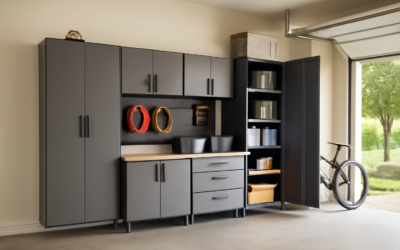
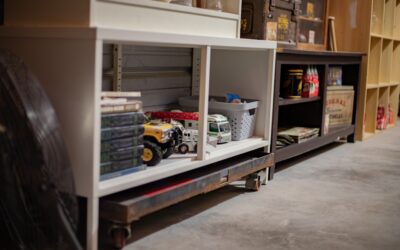
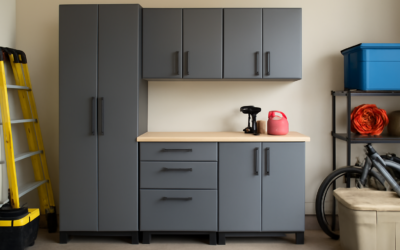
The fastest way to reclaim a cluttered garage is not more shelves but garage storage cabinets with doors, because doors hide the visual chaos, keep dust and pests off your gear, and let you lock away chemicals and power tools from curious kids. Open shelving looks tidy for a week; closed cabinets stay looking clean for years. The trick is matching cabinet material, mounting style, and load rating to what you actually store, whether that’s paint cans, a chop saw, or camping gear. Prices span $150 for a single resin cabinet to $2,000-plus for a modular steel system.
Part of our Kitchen Remodeling guide — explore the full guide →
- Material Choices That Matter
- Wall-Mounted vs. Floor-Standing
- Load Ratings and Build Quality
- Top Brands Worth Knowing
- Locking and Security Features
- Planning Your Layout and Installation
- Organizing the Interior for Real Use
- Cabinets vs. Other Garage Storage
- Climate Considerations for Your Garage
- Assembly and What to Expect
- Budgeting a Full Garage System
- Getting the Most for Your Money
Material Choices That Matter
The material determines durability, capacity, and price. Three dominate the market:
- Steel: the premium choice, holding the most weight and shrugging off impacts. Powder-coated steel cabinets from Gladiator, NewAge, or Husky resist rust and look sharp. Expect $200 to $600 per cabinet.
- Resin/plastic: affordable, waterproof, and rustproof, ideal for humid or coastal garages. Brands like Rubbermaid and Suncast run $150 to $300. Lower weight capacity but no corrosion, ever.
- Wood/MDF: less common in garages because moisture swells MDF, but solid-wood or marine-grade plywood cabinets look furniture-grade. Best in climate-controlled garages.
For a working garage with heavy tools, steel wins. For a damp garage storing lighter goods, resin is the smarter, worry-free pick.
Wall-Mounted vs. Floor-Standing
Where the cabinet lives changes how you use the space:
- Wall-mounted cabinets free the floor for parking, sweeping, and a shop vac. They must anchor into studs and typically hold 50 to 100 pounds. Great for lighter items you want off the ground.
- Floor cabinets handle serious weight, 200 to 400 pounds for steel units, and often include casters for mobility. Ideal for heavy power tools, batteries, and bulk supplies.
- Tall storage lockers combine both, giving full-height enclosed space for rakes, ladders, and long items.
Many homeowners run a base row of floor cabinets with a matching row of wall cabinets above, leaving a workbench-height gap in between, the classic pro-shop layout.
Load Ratings and Build Quality
Read the weight rating, and read it skeptically. Manufacturers state per-shelf and total-cabinet capacities separately. A cabinet may hold 600 pounds total but only 75 pounds per adjustable shelf. For a cabinet storing a table saw or car batteries, look for:
- Heavy-gauge steel (18 to 24 gauge; lower number is thicker and stronger).
- Welded rather than bolted frames on premium units.
- Adjustable shelves so you can fit tall items.
- Leveling feet to keep doors aligned on an uneven slab.
- Full-length piano hinges or heavy hinges that won’t sag.
Top Brands Worth Knowing
A few names consistently deliver:
- Gladiator (a Whirlpool brand): rugged steel modular systems, GearBox and Premier lines, with a strong warranty.
- NewAge Products: sleek powder-coated steel with a premium, garage-showroom look; the Bold and Pro series are popular.
- Husky (Home Depot): excellent value steel cabinets with heavy load ratings.
- Rubbermaid and Suncast: the resin leaders for budget, waterproof storage.
Locking and Security Features
If you store solvents, sharp tools, or a firearm, lockable doors matter. Most steel cabinets include a keyed or padlock-ready latch. For homes with young kids, lockable cabinets keep pesticides, automotive fluids, and blades safely out of reach, which is reason enough to choose doors over open shelving.
Planning Your Layout and Installation
Before buying, measure your wall length, ceiling height, and the swing clearance the doors need so they don’t hit a parked car. Sketch the run. For wall-mounted units, locate studs and use the included French-cleat or lag-bolt system; never trust drywall anchors alone with loaded cabinets. Floor cabinets need only leveling on the slab. A typical two-cabinet install takes an afternoon with a stud finder, level, and drill.
Organizing the Interior for Real Use
Buying the cabinet is only half the job; how you organize inside it determines whether the garage stays tidy. Group items by category and zone, cleaning supplies in one cabinet, automotive fluids and tools in another, seasonal and camping gear in a tall locker. Store what you use most at waist to eye height and reserve the high and low shelves for occasional items.
Add interior accessories to multiply capacity: adjustable shelves let you fit tall bottles and short cans efficiently, small bins corral loose hardware and rags, and door-mounted racks use the otherwise wasted inside face of the door for spray bottles and small tools. Bins with labels turn a deep shelf from a black hole into a findable system. The goal is that everything has a home, so putting things away is faster than leaving them out.
Cabinets vs. Other Garage Storage
Closed cabinets are not the only option, and the best garages combine systems. Compared with the alternatives:
- Open shelving is cheaper and puts everything in view, but it collects dust and looks cluttered; best for bulk items in a utility zone.
- Slatwall and pegboard excel at hanging hand tools and lawn gear vertically, freeing cabinets for the things you want hidden.
- Overhead ceiling racks swallow seasonal totes and luggage in dead space above the cars.
- Cabinets with doors hide the mess, lock away hazards, and protect contents from dust and moisture.
A smart layout pairs a run of cabinets for the items you want concealed and secured with slatwall above a workbench for daily-use tools and overhead racks for long-term storage.
Climate Considerations for Your Garage
Your garage environment should steer your material choice. An unconditioned garage swings through big temperature and humidity changes, and in humid or coastal regions, that moisture rusts unprotected steel and swells MDF. In those conditions, powder-coated steel or, better yet, waterproof resin cabinets hold up far longer than particleboard or bare metal.
In a dry climate or a conditioned garage, you have more freedom, and even wood or MDF cabinets can last. Regardless of climate, keep cabinets a fraction of an inch off a concrete slab that can wick moisture, which is why leveling feet matter, and avoid storing anything moisture-sensitive, like paper goods or electronics, in a garage that is not climate-controlled. Match the cabinet to the environment and it will still look sharp a decade from now.
Assembly and What to Expect
Most garage storage cabinets with doors arrive flat-packed and require assembly, so set expectations before the boxes land. A single steel cabinet typically takes 30 to 60 minutes to assemble with a drill and the included hardware, while a full modular wall system can consume a weekend. Read the instructions fully before starting and sort the hardware into cups so you are not hunting for a bolt mid-build.
Doors almost always need adjustment after assembly to close flush and even. Most quality cabinets include adjustable hinges or leveling feet precisely for this, since garage slabs are rarely perfectly flat. Take the extra ten minutes to level the cabinet and dial in the door gaps; a cabinet that sits level closes cleanly and keeps its doors from sagging over time. If you are wall-mounting, have a helper hold the cabinet while you drive the anchors into studs, and never rely on drywall anchors alone to carry a loaded cabinet.
Budgeting a Full Garage System
Planning the whole garage at once helps you budget and buy a matched system rather than a mismatched patchwork. Rough costs to guide you:
- Entry setup: one or two resin or budget-steel cabinets, $150 to $500 total, corrals the worst clutter.
- Mid-range setup: a matched run of steel base and wall cabinets from Husky or Gladiator, $800 to $1,500.
- Premium setup: a full NewAge or Gladiator modular system with workbench, overhead racks, and slatwall, $2,000 to $5,000-plus.
Because most systems are modular, you can start with a base of cabinets and expand over time as budget allows, which spreads the cost and lets you refine the layout as you learn how you actually use the space.
Getting the Most for Your Money
Start with a single tall or double base cabinet to corral the worst clutter, then expand as budget allows; most systems are modular by design. Buy one grade heavier than you think you need, because garage gear only accumulates. Well-chosen garage storage cabinets with doors turn a chaotic, dusty space into an organized, lockable, showroom-clean workshop, and unlike open shelving, they keep it that way season after season.