That small chrome cylinder poking up behind your kitchen faucet is not decorative, and it is not a soap dispenser. It is a garbage disposal air gap, a simple but critical plumbing device that keeps contaminated water from your sink drain and disposal from siphoning back into your dishwasher. Most homeowners ignore it until it starts spitting water onto the counter, at which point they learn how it works the hard way. Understanding this little fitting helps you keep your dishwasher sanitary, meet local code, and fix the common gurgling and leaking it can develop.
What an Air Gap Actually Does
An air gap prevents backflow through a physical break in the drain line. The dishwasher’s drain hose runs up to the air gap, and a second hose runs from the air gap down to the disposal or sink drain. Between them sits a gap of open air inside the fitting. If the sink drain ever clogs and dirty water backs up, that water cannot climb up and over the air gap into the clean dishwasher, because the air break interrupts any siphon. In short, it protects your dishes and your drinking-adjacent appliance from being contaminated by drain water.
How Water Flows Through It
The path is straightforward once you picture it. When the dishwasher pumps out at the end of a cycle, water pushes up through the smaller inlet hose into the air gap. Gravity and the pump pressure then carry it down the larger outlet hose into the disposal’s dishwasher inlet or the sink drain. The open air chamber in the middle means there is never a continuous sealed tube from the dishwasher to the sewer, which is precisely what stops backflow. When everything is clear, the water moves through silently and you never notice it.
Air Gap vs. High Loop
Not every region requires a countertop air gap, and there is an alternative worth knowing. A high loop simply routes the dishwasher drain hose up as high as possible under the counter, secured near the underside of the countertop, before running down to the disposal. This creates a similar anti-siphon effect without a visible fitting. However, many building codes, and California in particular, specifically require a physical air gap rather than a high loop. Check your local code before choosing, because an inspector may flag a high loop where an air gap is mandated.
Signs Your Air Gap Needs Attention
The air gap announces its problems clearly if you know the symptoms:
- Water spraying or bubbling from the top — usually a clog in the outlet hose or the disposal inlet.
- Gurgling during the drain cycle — partial blockage restricting flow.
- Standing water in the dishwasher — the drain path through the air gap is obstructed.
- Slow draining — buildup in the hoses or the disposal knockout.
Nearly all of these trace to the same root cause: a clog somewhere between the air gap and the drain, often at the disposal’s dishwasher inlet.
Cleaning a Clogged Air Gap
Clearing an air gap is a quick, satisfying fix you can usually do yourself. Follow these steps:
- Lift off the decorative chrome cap and unscrew the plastic cover cap beneath it.
- Inspect the chamber for debris and remove any food or gunk you can see.
- Disconnect the larger outlet hose below the sink and check it for a clog, clearing it with a bottle brush or a stiff wire.
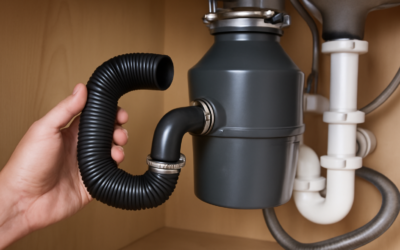
- Check the disposal’s dishwasher inlet, especially if the disposal is new, since the knockout plug is a frequent culprit.
- Reassemble, run the dishwasher on a short cycle, and confirm water flows through without spraying.
If you recently installed a new disposal and water backs up out of the air gap, the number-one cause is a forgotten knockout plug inside the disposal’s dishwasher inlet, which must be punched out before the drain can flow.
Installation Basics
Installing an air gap during a sink or dishwasher project is simple. The fitting mounts through a hole in the countertop or sink deck, often a pre-drilled accessory hole. The dishwasher drain hose connects to the smaller inlet barb, and a length of larger hose runs from the outlet barb down to the disposal’s dishwasher inlet or a dedicated drain fitting. Secure both hoses with clamps and route them to avoid low sags where water could pool. If your sink lacks an open hole, you will need to drill one, which is easiest in stainless steel and requires care in stone or solid-surface counters.
Code and Why It Matters
Air gaps exist because of a genuine public-health concern: cross-contamination between wastewater and clean dishes. That is why plumbing codes in many jurisdictions require them, and why home inspectors check for them during a sale. Even where a high loop is permitted, the air gap remains the most foolproof backflow protection because it relies on physics rather than hose routing that can sag over time. Keeping yours clean and functional is a small task with an outsized benefit to sanitation.
The Takeaway
A garbage disposal air gap is a tiny device doing an important job: keeping dirty drain water from siphoning back into your dishwasher. If it sprays, gurgles, or leaves standing water, the fix is almost always clearing a clog in the outlet hose or the disposal inlet, a ten-minute job you can handle yourself. Know your local code on air gaps versus high loops, keep the chamber clean, and this humble fitting will quietly protect your kitchen for the life of your dishwasher.