A cold shower at 6 a.m. is how most people discover the problem, and the cause is usually smaller than they fear. When your gas hot water heater not working situation traces back to a pilot light or a $15 thermocouple, you can often restore hot water in under an hour without a service call. That said, gas appliances demand respect. Some fixes are squarely homeowner territory, while others belong to a licensed plumber or gas technician, and knowing the difference protects both your wallet and your family.
- Safety First: If You Smell Gas, Stop Everything
- Start With the Obvious Checks
- Relighting the Pilot Light
- Pilot Won't Stay Lit? Suspect the Thermocouple
- Igniter Clicks but Nothing Happens
- Not Enough Hot Water, or Water That Smells and Pops
- Jobs That Require a Licensed Pro, No Exceptions
- Repair or Replace: The 8-to-12-Year Question
Safety First: If You Smell Gas, Stop Everything
Before you touch a single valve, do a smell test near the water heater. Natural gas has a rotten-egg odor added specifically so you can detect a leak. If you smell it, do not flip light switches, do not unplug anything, and do not try to find the leak yourself. Leave the house immediately, and call your gas utility’s emergency line from outside or from a neighbor’s home. Utilities respond to leak calls around the clock, and there is no charge for coming out to check.
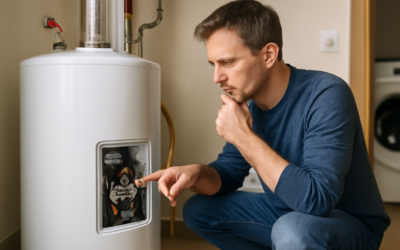
Assuming there is no gas odor, you can proceed with basic troubleshooting. Keep flammables at least 18 inches away from the unit, and make sure the area is ventilated. Most residential gas water heaters are 30 to 50 gallon tanks with a burner at the bottom, a gas control valve on the front, and a sight glass for viewing the pilot flame. Take 30 seconds to read the lighting instruction label on your specific tank, because relight procedures vary slightly between brands.
Start With the Obvious Checks
Roughly a quarter of no-hot-water calls end with a technician turning a knob the homeowner could have turned. Work through this list before anything else:
- Gas control knob: Confirm it is set to “On,” not “Pilot” or “Off.” Knobs get bumped in tight utility closets more often than you would think.
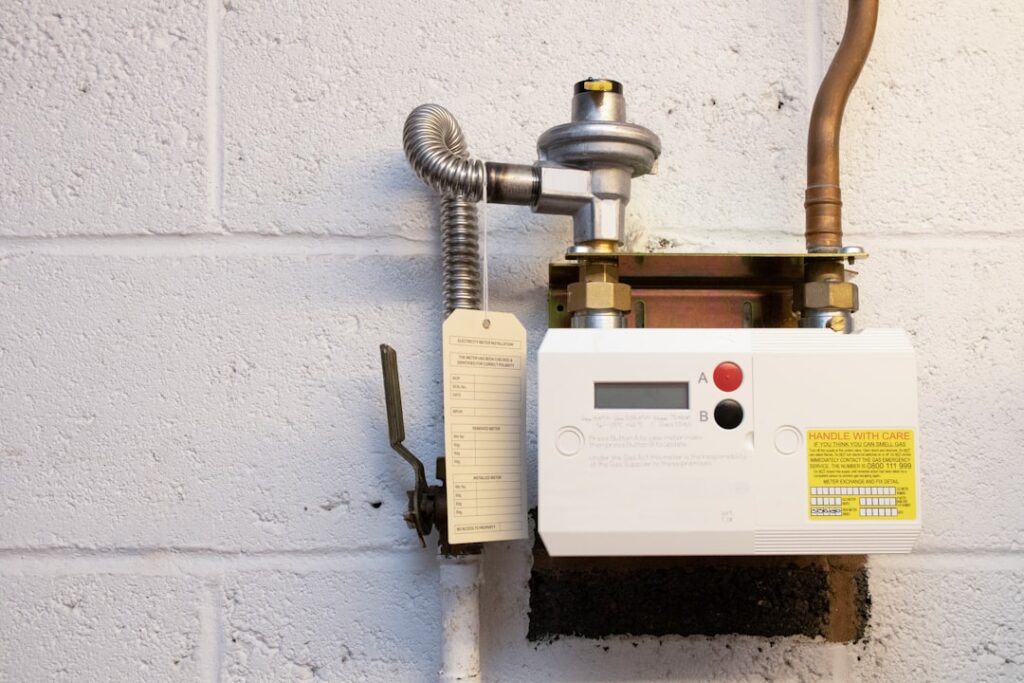
- Gas shutoff valve: The valve on the supply line should be parallel to the pipe. Perpendicular means closed.
- Thermostat dial: Someone may have turned it down. The factory-recommended setting is 120°F; “Hot” on most dials corresponds to roughly that temperature.
- Other gas appliances: If your stove or furnace is also dead, the problem is your gas supply or meter, not the water heater. Call the utility.
- Recent flooding: If the burner compartment got wet, do not attempt a relight. Water-damaged gas valves are a replacement job for a pro.
Also give the tank time. A 40-gallon heater that just refilled after heavy use needs 30 to 45 minutes to recover. Lukewarm water after back-to-back showers is normal recovery lag, not a malfunction.
Relighting the Pilot Light
A blown-out pilot is the single most common reason a gas water heater stops making hot water. Drafts, a brief gas interruption, or a dirty pilot orifice can all snuff the flame. Relighting is a normal homeowner task, and the exact steps are printed on the label near the gas control valve. The general sequence on most modern sealed-combustion units goes like this: turn the control knob to “Off” and wait a full five minutes for any residual gas to clear. Then turn the knob to “Pilot,” press and hold it down, and click the piezo igniter button repeatedly while watching through the sight glass.
Once the pilot catches, keep holding the knob down for 30 to 60 seconds before releasing. This gives the thermocouple time to heat up and signal the gas valve to keep the pilot’s gas flowing. Finally, turn the knob to “On” and set your temperature. If the burner whooshes to life, you are done. Older tanks without a sealed chamber may require lighting the pilot with a long-reach lighter, but never remove sealed combustion panels on newer units to get flame access. If the pilot refuses to light after three or four attempts, stop and move on to diagnosing why.
Pilot Won’t Stay Lit? Suspect the Thermocouple
When the pilot lights but dies the moment you release the knob, the thermocouple is the prime suspect. This copper-tipped sensor sits in the pilot flame and generates a tiny electrical current that holds the gas valve open. When it wears out or drifts out of position, the valve assumes the flame is out and shuts the gas as a safety measure. The part itself costs about $10 to $20 at any hardware store, and on older open-combustion heaters, a handy homeowner can swap it in 30 minutes with a wrench.
Two caveats matter here. First, many water heaters built after 2003 use a sealed burner assembly where the thermocouple (or thermopile) comes as part of a manifold kit, and the manufacturer intends it to be serviced as a unit. Second, if you have any hesitation about disconnecting fittings on a gas line, hire a plumber. A service call for a thermocouple replacement typically runs $150 to $250, which is cheap insurance compared to a poorly reassembled gas connection. Never use thread sealant rated for water on gas fittings, and always leak-test with soapy water, never a flame.
Igniter Clicks but Nothing Happens
The piezo igniter is the red or black button that creates a spark at the pilot. If you press it and hear no click, or you click endlessly with no spark visible through the sight glass, the igniter or its electrode wire may have failed. Check that the wire is seated firmly on the back of the button. A visible spark that still will not light the pilot usually points elsewhere: air in the gas line after utility work (keep clicking through several 30-second attempts, with 5-minute waits between), a clogged pilot orifice, or a partially closed supply valve.
Newer power-vent and electronic-ignition models skip the standing pilot entirely and use a hot surface igniter controlled by a circuit board. These units flash diagnostic error codes on an LED. Note the blink pattern, look it up on the label or in the manual, and reset the unit once by unplugging it for 60 seconds. If the code returns, that repair involves the control system and belongs to a technician.
Not Enough Hot Water, or Water That Smells and Pops
Sometimes the heater technically works but performs badly, and sediment is usually the culprit. Minerals settle on the tank bottom, insulating the water from the burner. The telltale sign is a popping or rumbling sound as steam bubbles fight through the sediment layer. Flushing the tank once a year through the drain valve restores efficiency and quiets the noise. Attach a garden hose, shut off the cold inlet, open a hot faucet upstairs, and drain until the water runs clear.
Water that is scalding hot, then cold, can indicate a failing gas control valve thermostat. A rotten-egg smell in the hot water only (not at the tank) points to a reacting anode rod rather than a gas leak, which is a maintenance item. And if you see water pooling under the tank from the tank body itself, no repair will save it; internal tank corrosion means replacement.
Jobs That Require a Licensed Pro, No Exceptions
Draw a hard line at the gas control valve, the burner assembly, and anything involving venting. These are the repairs where mistakes cause fires, explosions, or carbon monoxide poisoning:
- Gas control valve replacement: Roughly $150 to $500 installed. Improper installation risks uncontrolled gas flow.
- Burner assembly cleaning or replacement: Soot, yellow lazy flames, or scorch marks around the access panel signal combustion problems a pro must diagnose.
- Venting and draft issues: Backdrafting flue gases carry carbon monoxide into your home. Corroded, disconnected, or improperly sloped vent pipes are urgent professional repairs.
- Gas line modifications: Moving, extending, or re-piping supply lines requires a permit in most jurisdictions.
Install a carbon monoxide detector on every floor with a gas appliance regardless. CO is odorless, and a $25 detector is the only warning you get.
Repair or Replace: The 8-to-12-Year Question
A conventional gas tank water heater lasts 8 to 12 years on average, and the serial number on the data plate encodes the manufacture date. Once a unit crosses the 10-year mark, sink repair money into it reluctantly. A $400 gas valve on a 11-year-old tank rarely makes sense when a new 40-gallon unit runs $600 to $900 for the heater plus $500 to $1,200 for professional installation. Newer units also carry better insulation and higher efficiency ratings, trimming $30 to $80 a year off gas bills compared to a 2010-era tank.
Use a simple rule: if the repair costs more than half the price of replacement and the tank is past year eight, replace it. If your gas hot water heater not working episode turns out to be a pilot light or thermocouple on a five-year-old unit, fix it and move on. Either way, schedule an annual flush and a quick pilot-flame check every fall. Ten minutes of maintenance is the cheapest hot water you will ever buy.