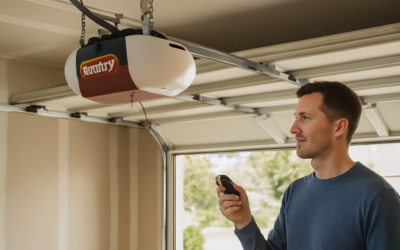
When your Genie remote stops working from across the driveway but fires from three feet away, you almost never have an opener problem. A weak Genie garage door opener battery in the remote is the culprit roughly nine times out of ten, and swapping it costs a couple of dollars and two minutes. Genie systems actually use several kinds of batteries: a coin cell or AAA in the handheld remote, a AAA in the wall keypad, and in many newer units a rechargeable backup battery inside the motor head that runs the door during a power outage. Knowing which one is failing saves you an unnecessary service call.
Part of our Garage Doors guide — explore the full guide →
Identifying the Right Battery
Start by pinpointing which device has died. If a single remote is weak but the wall button works, the remote battery is the issue. If nothing operates and the ceiling unit is dark, check your household power first, then the backup battery.
- Handheld remotes: Most Genie remotes use a CR2032 coin cell or a single AAA. Older Intellicode remotes often take a 12-volt A23 battery.
- Wireless keypads: Genie keypads typically run on a 9-volt or a pair of AAA batteries.
- Backup battery (motor head): Battery-backup Genie openers use a sealed 12-volt rechargeable pack, often labeled GBB-BX or similar, that keeps the door working when the grid goes down.
Check the label inside the battery compartment or your owner’s manual to confirm the exact type before buying a replacement.
Replacing the Remote Battery
This is the most common fix and requires no tools beyond a small coin or screwdriver. Slide open or unscrew the back cover of the remote. Note the orientation of the old battery, positive side usually facing up, then pop it out. Insert the fresh battery the same way, close the cover, and test. A quality CR2032 costs about $1 to $2 and lasts one to two years with typical use.
If the remote still fails after a fresh battery, it may simply need reprogramming to the opener. Genie’s Intellicode system occasionally loses sync. Press the learn button on the motor head, then the remote button within 30 seconds until the door lights flash or the door responds, confirming the code has re-paired.
Replacing the Keypad Battery
A wireless entry keypad mounted outside the garage runs on its own battery. Remove the keypad from its bracket, open the battery door on the back, and replace the 9-volt or AAA cells. Because keypads sit outside in the weather, their batteries drain faster in extreme cold, so a keypad that works fine in summer may go sluggish in a January cold snap. After replacing, re-enter your PIN to confirm the keypad still communicates with the opener.
Replacing the Backup Battery
Genie openers with battery backup, marked by a red or green status light and often a chirping alert when the battery weakens, use a rechargeable pack that lasts one to two years before it can no longer hold a full charge. A steady chirp or a flashing battery indicator light is your signal to replace it.
- Unplug the opener from the outlet for safety.
- Locate the battery cover on the side or back of the motor head and remove the screws.
- Disconnect the wiring harness from the old battery, noting which color connects where.
- Lift out the old pack and set it aside for proper recycling, since it contains lead or lithium.
- Install the new Genie-approved battery, reconnect the harness, replace the cover, and plug the unit back in.
Let the new backup battery charge fully, usually 20 to 24 hours, before relying on it during an outage. Use only a Genie-specified replacement, since off-brand packs can trip fault codes or fail to charge correctly.
Common Battery Problems
A few recurring issues have simple explanations. If a brand-new remote battery does nothing, check that the contacts are clean; corrosion or a fingerprint of grease can block the connection. Wipe the terminals with a dry cloth or a pencil eraser. If the backup battery drains within days, the charging circuit or the pack itself has failed and needs attention. And if the opener beeps periodically even on grid power, that is the low-backup-battery warning, not a malfunction.
Temperature is the hidden variable. Cold weather reduces battery voltage temporarily, so a remote that seems dead on a freezing morning may revive once warmed. Keep a spare CR2032 in a kitchen drawer so a dead remote never traps a car in the garage.
Extending Battery Life
A few habits stretch the interval between replacements. Store spare remotes out of direct sunlight and extreme heat, which degrade cells faster. For keypads exposed to weather, choose lithium 9-volt or AAA batteries, which tolerate cold far better than standard alkaline and can last twice as long outdoors. Keep the backup battery’s ventilation slots clear of dust so it charges and cools properly.
Do not mix old and new cells in a two-battery keypad, since the weaker cell drags down the pair. Replace both at once. And if you are away for months, remove remote batteries from any spare units to prevent slow drain and corrosion.
When to Call for Service
Most Genie garage door opener battery issues are DIY jobs, but a few warrant a technician. If the backup battery is new and fully charged yet the door still will not run on battery power, the charging board or logic board may be faulty. Repeated fault codes, burning smells, or a battery that swells or leaks all call for professional attention and safe disposal.
For everyday drops in remote range or a chirping backup alert, though, the fix is squarely in your hands. Match the correct battery type, mind the polarity, reprogram if needed, and you will keep your Genie opener responding reliably in every season.
Where to Buy the Right Replacement Battery
Sourcing the correct battery is easy once you know the type. Coin cells like the CR2032 and cylindrical A23 batteries are stocked at any hardware store, pharmacy, or big-box retailer, usually for a couple of dollars. Buy a name brand rather than the cheapest bulk pack, since quality cells hold their voltage longer and are less prone to leaking, which can corrode and ruin a remote.
Backup batteries for the motor head are more specialized. Look for a Genie-branded replacement pack or a compatible model listed for your specific opener, available from Genie directly, home improvement stores, or online retailers. Have your opener’s model number handy, printed on the motor housing, to confirm compatibility before you order. Avoid generic no-name backup packs, which frequently fail to charge properly and keep the low-battery alert chirping even when new.
Recycling Old Batteries Safely
Do not toss old batteries in the household trash. Coin cells and the rechargeable backup packs contain materials that require proper disposal. Most hardware stores and home centers have battery recycling drop-off bins near the entrance, and many municipalities run household hazardous waste collection for larger rechargeable packs. Recycling keeps toxic materials out of landfills and is often legally required for rechargeable batteries in certain states.
Store spare and dead batteries separately and keep terminals from touching metal objects or each other, which can cause a short. A piece of tape over the terminals of a used 9-volt or A23 battery prevents accidental discharge or a fire risk in a junk drawer.
Frequently Asked Questions
What battery does a Genie garage door remote use?
Most Genie handheld remotes use a CR2032 coin cell or a single AAA, while older Intellicode remotes often take a 12-volt A23 battery. Check the label inside the battery compartment to confirm the exact type before buying.
Why does my Genie opener keep beeping?
A periodic chirp usually means the rechargeable backup battery in the motor head is weak and needs replacing. A flashing battery indicator light confirms it. Once you install a fresh, fully charged Genie-approved backup battery, the beeping stops.
How long do Genie garage door batteries last?
A remote’s coin-cell battery lasts one to two years with typical use. The rechargeable backup battery in the motor head lasts one to two years before it can no longer hold a full charge and begins signaling for replacement.
My remote works up close but not from my car. What is wrong?
Reduced range almost always means a weak battery. Replace it first. If the problem persists, check that the antenna wire on the motor head hangs down freely and that LED bulbs in the opener are not causing radio interference.