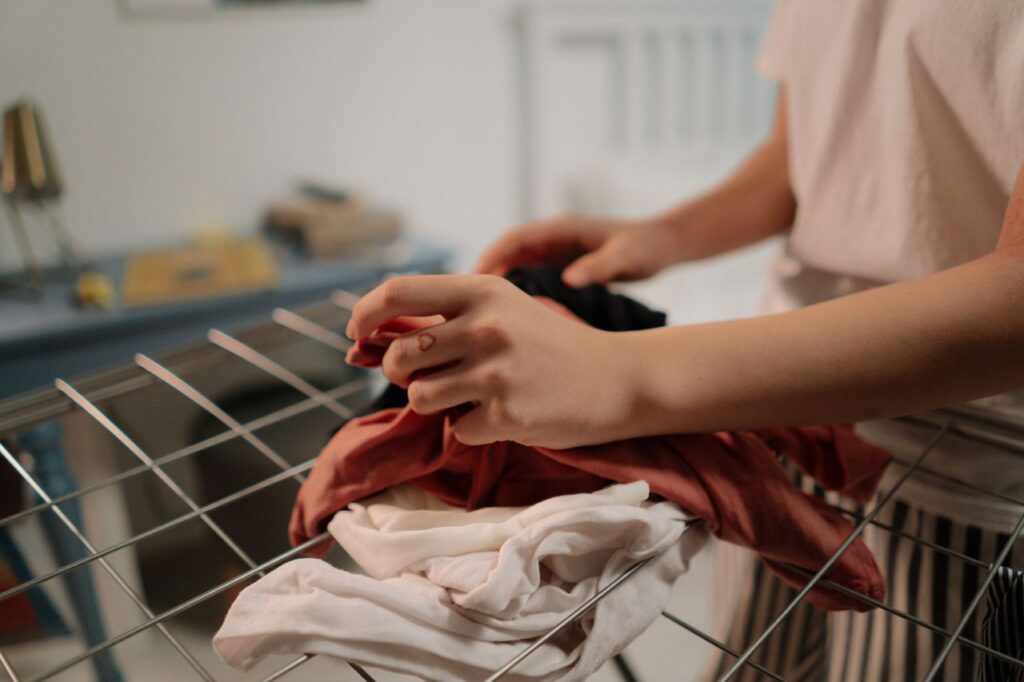
The single biggest mistake people make is tossing a stained shirt into a hot dryer. Heat sets most stains permanently, which means getting stains out of clothes becomes nearly impossible once they bake at 130°F. The good news is that almost every common stain can be lifted if you treat it correctly and quickly. Different stains respond to different chemistry, and matching the method to the spill is what separates a saved garment from a ruined one.
- Act Fast and Blot, Never Rub
- Grease and Oil Stains
- Protein Stains: Blood, Sweat, and Dairy
- Wine, Coffee, and Tannin Stains
- Ink, Marker, and Dye Stains
- Grass, Mud, and Outdoor Stains
- A Reliable Stain-Removal Toolkit
- Reading the Care Label First
- Common Mistakes That Set Stains for Good
- Verify Before You Dry
Act Fast and Blot, Never Rub
Time is your most valuable tool. A fresh stain treated within the first 10 minutes comes out far more reliably than one that has dried for a day. Blot the spill with a clean white cloth or paper towel, working from the outside edge inward so you don’t spread it. Rubbing grinds the stain deeper into the fibers and can fray the fabric.
Flush the back of the fabric with cold water before applying any product. Pushing water through from behind forces the stain out the way it came in rather than driving it further into the weave. Save hot water for grease and protein stains where it genuinely helps.
Grease and Oil Stains
Cooking oil, butter, salad dressing, and motor grease all need a degreaser. Cover the spot with dish soap such as Dawn, which is formulated to cut grease, and work it in with your fingers or an old toothbrush. Let it sit for 5 to 10 minutes, then rinse with the hottest water the fabric allows.
For set-in grease, sprinkle cornstarch or baby powder over the mark and let it absorb the oil for 15 minutes before brushing it off and laundering. A small dab of WD-40 can re-wet old, dried oil stains so the dish soap has something to grab onto. Always check the care label first.
Protein Stains: Blood, Sweat, and Dairy
Blood, egg, milk, and sweat are protein-based, and the rule here is simple: cold water only. Hot water cooks the protein into the fibers like a fried egg, locking it in. Soak the garment in cold water, then work in a few drops of hydrogen peroxide on white or colorfast fabrics, where it fizzes the stain loose within a couple of minutes.
An enzyme-based detergent such as Tide or Persil targets protein directly. For stubborn sweat stains and yellow underarm marks, make a paste of baking soda and water, scrub it in, and let it sit for 30 minutes before washing. White vinegar diluted 1 part to 4 parts water helps break down the salts that cause yellowing.
Wine, Coffee, and Tannin Stains
Red wine, coffee, tea, and fruit juice are tannin stains that cling to cotton and linen. Do not reach for bar soap or a soap-based product first, because soap can actually set tannins. Instead, stretch the fabric over a bowl, pour boiling water through the stain from a height of about 8 inches, and watch much of the color flush away.
For red wine that has already dried, saturate the area with a mix of one part dish soap and three parts hydrogen peroxide, let it sit for 20 to 30 minutes, then launder. The old salt trick only works while the wine is still wet, absorbing the liquid before it bonds to the fibers.
Ink, Marker, and Dye Stains
Ballpoint ink responds to isopropyl alcohol or, in a pinch, alcohol-based hand sanitizer. Place a paper towel under the stain to catch the dissolved ink, then dab the alcohol on from the top so the ink transfers down into the towel rather than spreading sideways. Replace the towel as it picks up color.
Permanent marker is tougher but often surrenders to repeated alcohol treatment or a non-oily hairspray that contains alcohol. For washable dye bleed, where a red sock has tinted a load pink, rewash everything immediately with detergent and oxygen bleach before the items dry, since drying sets the transferred dye.
Grass, Mud, and Outdoor Stains
Grass stains combine chlorophyll and protein, so they need an enzyme detergent plus a little patience. Pretreat with a paste of detergent and a splash of white vinegar, let it stand for 15 minutes, and scrub gently. For dried mud, resist the urge to wet it right away. Let the mud dry completely, brush off the crumbling dirt with a stiff brush, and only then pretreat and wash the remaining shadow.
A Reliable Stain-Removal Toolkit
Keep these inexpensive supplies on hand and you can tackle nearly any spill:
- Dish soap (Dawn): the workhorse for grease and oil, under $4 a bottle
- Hydrogen peroxide 3%: a mild oxygen bleach for blood, wine, and sweat on whites
- White vinegar: cuts mineral deposits, deodorizes, and helps with coffee and grass
- Baking soda: absorbs odor and lifts underarm yellowing
- Isopropyl alcohol 70%: dissolves ink and many synthetic dyes
- Enzyme detergent: Tide or Persil for protein and food stains
- An old toothbrush: for working products into the weave without damaging fibers
Reading the Care Label First
Every treatment decision starts with the little tag inside the collar or seam. A garment marked “dry clean only” should go to a professional rather than into your home stain-removal routine, because water and solvents can shrink wool, bleed silk, or pucker structured fabrics. The care symbols also tell you the maximum safe water temperature, which matters when you are choosing between cold flushing and a boiling-water pour.
Delicate fabrics like silk, wool, acetate, and rayon need the gentlest possible approach. Test any product on a hidden seam or inside hem first, dabbing a small amount and waiting a few minutes to check for color change or damage. What lifts a coffee stain from a cotton T-shirt may dissolve the dye in a silk blouse, so the hidden-spot test is never optional on anything you care about.
Common Mistakes That Set Stains for Good
A few habits ruin more clothes than the original spills. Drying a garment before the stain is fully gone bakes it in permanently, since the heat of the dryer chemically bonds many stains to the fibers. Scrubbing aggressively frays the weave and spreads the stain wider than it started. Mixing bleach with ammonia-based cleaners creates toxic fumes and should never happen.
Reaching for the wrong chemistry backfires too: hot water on blood, soap on tannins, or chlorine bleach on a protein stain can all make the mark harder to remove. When in doubt, start with the gentlest method, cold water and a mild detergent, and escalate only if the stain resists. Patience and the correct sequence beat brute force every time.
Verify Before You Dry
The final step matters as much as the first. After treating and washing, look at the garment in good light while it is still wet, because a wet stain can look gone and then reappear once dry. If you can still see a shadow, repeat the treatment and wash again. Only when the fabric is genuinely clean should it go in the dryer. Master that one habit and getting stains out of clothes stops being a gamble and becomes a routine you can trust.