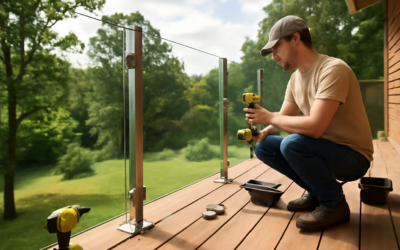
Glass deck railing has become the go-to choice for homeowners who want to protect their deck without blocking the view they built it for. Whether you look out over water, mountains, a golf course, or just a well-kept backyard, glass panels provide code-required safety while keeping sightlines wide open. The clean, modern look also boosts curb appeal and property value, making it one of the most desirable upgrades in outdoor living.
Part of our Decks & Outdoor guide — explore the full guide →
This guide covers the main railing systems, glass types and safety, framed versus frameless designs, code requirements, installation basics, maintenance, and realistic costs so you can decide whether glass railing is right for your deck.
Why Choose Glass Railing
The appeal starts with the unobstructed view. Traditional balusters, whether wood, metal, or cable, break up sightlines, while glass provides a nearly invisible barrier. Glass also blocks wind, creating a more comfortable deck on breezy days, which cable and picket railings cannot do. It resists weather, never needs painting or staining, and gives decks a contemporary, high-end appearance. For elevated decks and balconies with a great outlook, no other railing preserves the view as completely.
Framed vs. Frameless Systems
The biggest design decision is how the glass is held, and it shapes both the look and the price.
- Framed glass railing: Each glass panel sits inside a metal frame, usually aluminum, with a top rail, bottom rail, and posts. It is the most affordable and structurally forgiving option, and the frame does much of the load-bearing work.
- Semi-frameless: Uses posts and a top rail but no bottom rail or side frames, so the glass edges are more exposed for a cleaner look while posts still provide support.
- Frameless glass railing: The glass panels themselves are the structure, anchored at the base by spigots, a channel shoe, or standoffs, with no posts between panels. This gives the most seamless, uninterrupted view but costs the most and requires thicker, stronger glass.
Frameless delivers the ultimate view but demands precise installation and heavier tempered or laminated glass to carry loads safely. Framed systems are the practical choice for most residential budgets.
Glass Types and Safety
Safety glass is non-negotiable in a railing. Two types dominate. Tempered glass is heat-treated to be several times stronger than regular glass, and if it does break it shatters into small, relatively harmless pebbles rather than sharp shards. Laminated glass bonds two layers with a plastic interlayer, so if it breaks it holds together in place rather than falling out, which is why it is often required or preferred for frameless and elevated applications. The best frameless systems use laminated-tempered glass, combining strength with the fail-safe of staying intact. Panel thickness typically ranges from 8 to 12 millimeters for framed systems and 12 millimeters or more for frameless.
Code Requirements
Deck railings are life-safety features governed by building code, and glass is no exception. Most U.S. residential codes require a railing height of at least 36 inches for decks, and 42 inches in some jurisdictions and for commercial use. The railing and its infill must resist a specified load, and any gaps must be small enough that a 4-inch sphere cannot pass through, which glass panels satisfy easily since they are solid. Frameless systems must have their anchoring engineered to carry the code-mandated horizontal load. Always confirm requirements with your local building department and pull a permit, because a railing that fails inspection or, worse, fails in use is a serious liability.
Installation Basics
Glass railing installation ranges from moderate to demanding depending on the system.
- Confirm the deck framing and rim joists are solid enough to anchor posts or base shoes, adding blocking if needed.
- Lay out and set posts (framed) or base anchors and spigots (frameless) plumb and evenly spaced.
- For framed systems, install the bottom and top rails, then set each tempered panel into the gaskets.
- For frameless, insert panels into the base channel or spigots, level each one, and lock with the setting blocks and clamps.
- Install the top cap or handrail where required and seal any penetrations against water.
Framed kits are within reach of a skilled DIYer, but frameless systems, with their heavy panels and structural anchoring, are usually best left to professional installers who can guarantee the engineering and handle the glass safely.
Maintenance
Glass railing is low-maintenance but not no-maintenance. The panels show water spots, dust, and fingerprints more than solid railings, so plan to clean them periodically with glass cleaner or a vinegar-and-water solution and a squeegee. The aluminum frames and stainless hardware need only an occasional wipe-down and a check that fasteners and clamps stay tight. In coastal areas, rinse salt off the hardware to prevent corrosion. There is no painting, staining, or sealing, which is a major advantage over wood railings.
What Glass Deck Railing Costs
Glass railing is a premium product. Framed aluminum-and-glass systems run roughly $150 to $250 per linear foot installed. Frameless systems, with their heavier glass and precise anchoring, typically run $250 to $500 or more per linear foot installed. DIY framed kits lower the cost by cutting labor, landing materials around $80 to $180 per linear foot. For a typical 40-foot deck run, expect a wide range from about $4,000 for DIY framed to well over $15,000 for professional frameless. The view and the resale appeal often justify the premium for the right home.
Glass Railing vs. Cable and Metal Railings
Glass is not the only view-preserving railing option, so it helps to compare it against the alternatives. Cable railing uses thin horizontal stainless cables between posts, which keeps sightlines fairly open at lower cost than glass, but the cables still create visible lines, offer no wind protection, and require periodic tensioning to prevent sagging. Aluminum or steel picket railing is durable and affordable but breaks up the view the most. Glass alone provides a nearly invisible barrier that also blocks wind, making the deck usable on gusty days.
The tradeoffs are cost and cleaning. Glass is the most expensive of the three and shows spots and fingerprints, while cable and metal hide dirt better and cost less. If your priority is the clearest possible view combined with wind protection, glass wins. If budget is tight and you can accept some visual interruption, cable railing is a reasonable middle ground. Weigh how much the unobstructed, wind-blocking view is worth against the higher price and cleaning commitment of glass.
Privacy, Wind, and Practical Benefits
Beyond the view, glass railing delivers practical advantages that are easy to underestimate until you live with them. The solid panels act as a windbreak, calming the gusts that can make an exposed or elevated deck uncomfortable, which extends the season you can actually enjoy outside. On a waterfront or hilltop deck, that wind protection alone can be the deciding factor.
Frosted, tinted, or textured glass options add a measure of privacy where a deck overlooks a neighbor or a street, screening the lower body while keeping the upper view open. Glass also reflects light, helping a shaded deck feel brighter, and it keeps small items and pets contained safely without the gaps that cable and wide-baluster railings leave. These everyday benefits, comfort in wind, optional privacy, brightness, and containment, are part of why homeowners who choose glass rarely regret it despite the premium price.
Is Glass Railing Right for You
Glass deck railing makes the most sense when you have a view worth preserving and a budget for a premium finish. Choose framed systems for value and easier installation, frameless for the ultimate seamless look, and always specify tempered or laminated safety glass that meets your local code. Budget for periodic cleaning to keep the panels clear, confirm your deck framing can carry the loads, and permit the work. Get those pieces right and glass railing delivers safety, wind protection, and an open, modern outlook that transforms how you enjoy your deck.