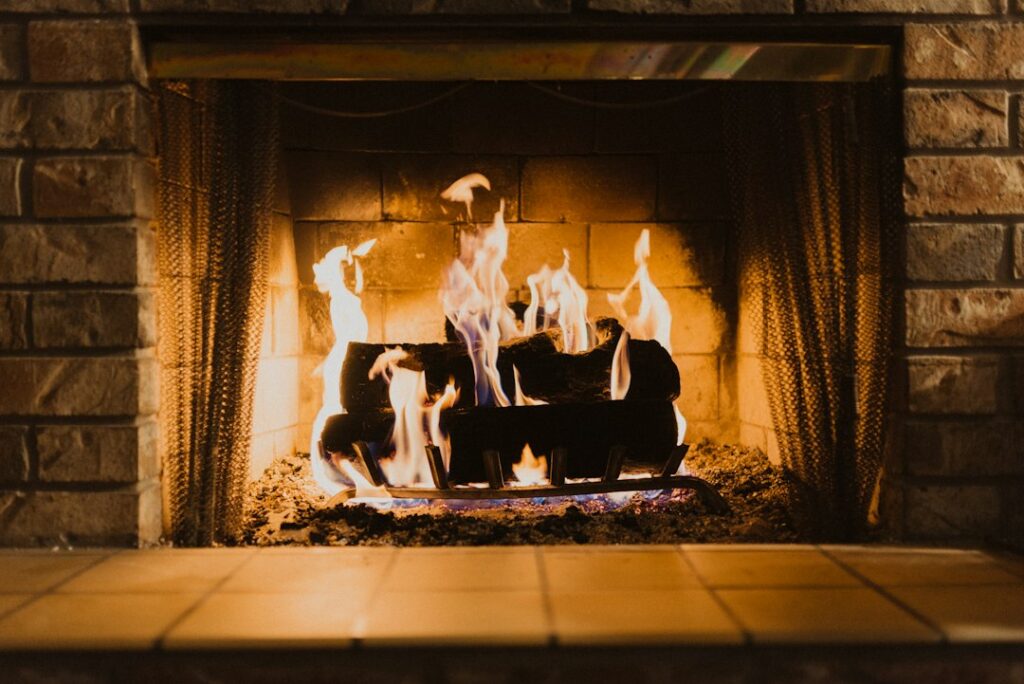
Mesh screens do their job, but they put a dark grid between you and the fire. A glass fireplace screen stops sparks and popping embers while leaving the flames in full view, and it also keeps toddlers and pets from getting close to the heat. The tradeoff is heat: glass holds back more radiant warmth than mesh, and the wrong type of glass can crack if it sits too close to a roaring fire.
For most wood-burning fireplaces, a freestanding screen with tempered glass panels works well if it stands 3 to 6 inches in front of the opening. If you like big, hot fires or want the screen right up against the firebox, choose ceramic glass, which tolerates far higher temperatures. Expect roughly $100 to $250 for a tempered glass panel screen and $300 to $700 for ceramic glass or large custom sizes.
- How a Glass Fireplace Screen Works
- Tempered Glass vs Ceramic Glass
- Glass Screen vs Mesh Screen: Which Is Better?
- Frame Styles and Finishes
- Sizing and Placement
- Handling and Installing Glass Panels Safely
- How to Clean Soot Off a Glass Fireplace Screen
- Troubleshooting Common Issues
- Fire Safety Reminders
- When to Call a Pro
- Frequently Asked Questions
Glass screens are freestanding pieces that sit on the hearth. They are different from glass doors, which mount to the fireplace opening with a frame, and from inserts, which are sealed heating units.
How a Glass Fireplace Screen Works
Most models use one wide panel or three hinged panels set in a metal frame. Flat single-panel styles sit square in front of the opening. Three-panel styles wrap around the sides, which closes the gaps where embers often escape. Some have a small mesh strip at the top or bottom so heat and air can still move.
Because glass is solid, it blocks almost all sparks, ash, and flying bits of bark. Many people search for a fireplace glass firescreen when they want the look of a sealed fireplace without paying for custom doors. It also reduces the drafty feeling some open fireplaces create, since less room air rushes toward the opening.
Tempered Glass vs Ceramic Glass
| Feature | Tempered Glass | Ceramic Glass |
|---|---|---|
| Heat tolerance | About 400 to 500°F sustained | About 1,200 to 1,400°F sustained |
| Clarity | Very clear | Clear with a faint amber tint |
| Cost | Lower | Two to three times higher |
| Best use | Screens set a few inches from the opening | Close placement, hot fires, glass in direct radiant heat |
Tempered fireplace glass is heat-treated safety glass. It is strong and, if it breaks, it crumbles into small blunt pieces instead of sharp shards. It does not handle extreme heat well, and a sudden temperature swing (like a splash of cold water on a hot panel) can shatter it.
Ceramic glass is technically a glass-ceramic that barely expands with heat. It is the material used in wood stove windows and handles direct flame contact. If your screen will sit right at the opening, or you burn large hardwood fires, ceramic glass is the safer bet.
Glass Screen vs Mesh Screen: Which Is Better?
Glass wins when visibility, child safety, and spark control matter most. Mesh wins when you want maximum heat in the room.
- Choose glass if you have kids or pets, if you burn wood that pops a lot (like pine or cedar kindling), if your hearth is close to rugs or flooring, or if you mostly enjoy the fire for ambiance.
- Choose mesh if the fireplace is a real heat source for the room, if you burn very large fires, or if you are on a tight budget.
- Consider a hybrid with a glass center panel and mesh sides if you want a balance of view and heat.
A glass screen is not a sealed fireplace cover screen. Air still flows around it, so it does not stop warm room air from going up the chimney when the fire dies down. Glass doors or a tight damper do that job better.
Frame Styles and Finishes
Frames come in flat black powder coat, wrought iron, brushed nickel, and brass tones. Powder coat is the easiest to live with because it hides soot and resists chipping. Wrought iron frames are heavier, which helps stability, and they suit rustic stone surrounds. Bright metal finishes show fingerprints and heat discoloration faster, so plan to wipe them down more often.
Some screens add a decorative arch, an etched pattern, or a frosted border on the glass. Etching and frosting look nice but can make soot more noticeable at the edges. A plain clear panel keeps the fire as the focal point. If you want a tempered glass fireplace screen that blends into a modern room, a frameless or thin-edge design with small corner clips looks the cleanest, though it needs a very stable base.
Sizing and Placement
- Measure the opening. Record the width and height of the fireplace opening at its widest points.
- Add overlap. Pick a screen at least 2 to 4 inches wider than the opening on each side and at least as tall as the opening. Three-panel screens should cover the sides when angled in.
- Check hearth depth. The screen’s feet need a flat, noncombustible surface. Most need 6 to 10 inches of hearth depth.
- Set the gap. Place tempered glass screens 3 to 6 inches in front of the opening so the panels are not in direct flame heat. Follow the manufacturer’s minimum distance.
- Confirm stability. Wide feet or a weighted base keep the screen from tipping if bumped.
Handling and Installing Glass Panels Safely
Glass screens are heavier than they look, and big panels can be awkward. Wear gloves and safety glasses when unboxing and assembling. Carry large screens with two people, holding the frame rather than the glass. Never flex a panel or rest it on a corner or edge against a hard floor, since edge impacts are the most common way tempered glass shatters. Set the screen down gently on a towel or the hearth surface, not on concrete or stone with a thump.
If a panel ever chips, cracks, or shows a star-shaped impact mark, stop using the screen. Damaged tempered glass can fail without warning once it heats up. Replacement panels are available for many screens, but they need to match the original thickness and glass type.
How to Clean Soot Off a Glass Fireplace Screen
Glass gets a brown or gray haze from wood smoke. Clean only when the fire is out and the glass is completely cool, which can take several hours.
- Move the screen to a towel or drop cloth.
- Wipe off loose ash with a dry microfiber cloth.
- Apply a fireplace glass cleaner, or make a paste from wood ash and water, and rub gently with a damp newspaper or soft cloth. Fine ash is a mild abrasive that lifts soot without scratching.
- Rinse with a damp cloth and dry with a clean microfiber cloth.
- For stubborn creosote, repeat or use a dedicated stove glass cleaner. Never use steel wool, razor blades on ceramic glass, or harsh scouring pads.
Heavy staining usually means the wood is wet or the fire is smoldering. Burn dry hardwood with under 20 percent moisture and give the fire enough air to burn bright.
Troubleshooting Common Issues
- Glass cracked from heat: The screen was too close or the glass was tempered when the fire needed ceramic. Move the screen out or upgrade the glass.
- Room feels cooler: Glass reflects radiant heat. Try a hybrid screen with mesh sides, or open the side panels slightly when the fire is attended.
- Screen fogs or streaks: Cleaner residue. Rinse thoroughly and buff dry.
- Frame discolors: Normal on painted steel near heat. Choose a powder-coated or wrought iron frame for durability.
Fire Safety Reminders
A glass screen is a spark barrier, not a reason to leave a fire unattended. Keep furniture, rugs, and decor at least 3 feet from the opening. Never close yourself out of the room with a fire burning, and never go to bed with active flames. Keep CO and smoke alarms working on every level of the home. Have the chimney inspected annually so creosote and blockages do not become a hidden hazard. Let ashes cool in a lidded metal bucket outdoors, well away from the house.
When to Call a Pro
Freestanding screens need no installation. Call a chimney sweep if you see heavy soot on the glass after every fire, since that can point to a draft problem or a partially blocked flue. If your fireplace has an unusual or very large opening, a hearth specialist can recommend or fabricate a custom screen. If you want a sealed, framed solution instead, a fireplace pro can measure for glass doors.
Frequently Asked Questions
Are glass fireplace screens safe?
Yes, when used as directed. Tempered glass screens should sit a few inches from the opening so the panels stay within their heat limits. Ceramic glass handles much higher temperatures and can sit closer.
Does a glass fireplace screen reduce heat?
It does reduce radiant heat compared to mesh, since glass reflects and absorbs part of the warmth. If you depend on the fireplace for heat, a mesh or hybrid screen will keep more warmth in the room.
Is a glass screen the same as a fireplace glass insert?
No. A screen is a freestanding barrier on the hearth. An insert is a sealed, closed-combustion heating unit installed inside the firebox, and it needs professional installation.
How often should I clean the glass?
Clean it whenever soot blocks the view, often every few fires. Always wait until the glass is completely cool to avoid thermal shock and burns.
Can I replace a broken panel?
Many screens have replacement panels. Match the original glass type and thickness, and never use regular window glass, which can shatter from heat.