Most people spend weeks choosing a granite slab and then pick the edge profile in about thirty seconds, which is a shame because that little detail shapes how the whole counter looks and feels. Granite countertop edges range from clean and modern to ornate and traditional, and the profile you choose affects the style, the price, how comfortable the edge is to lean against, and even how easy it is to keep clean. This guide walks through the most common edge profiles, what each one costs and communicates, and how to pick the right one for your kitchen.
Part of our Countertops guide — explore the full guide →
Why the Edge Profile Matters
The edge is the part of the countertop you see and touch most, at eye level along the perimeter and under your hands every time you work at the counter. A simple, squared edge reads modern and minimal, while a curved or layered edge reads traditional and formal. The profile also influences practical things: rounded edges are gentler if you bump into them and easier to wipe, while sharp corners look crisp but can chip and catch.
Edge profiles also carry cost differences. Simple edges are usually included in the base fabrication price, while more elaborate profiles require extra grinding, shaping, and polishing time, which adds to the per-linear-foot cost. Understanding both the look and the price of each profile helps you choose wisely.
Simple, Modern Edges
These clean profiles suit contemporary and transitional kitchens and are typically the most affordable, often included in the standard price.
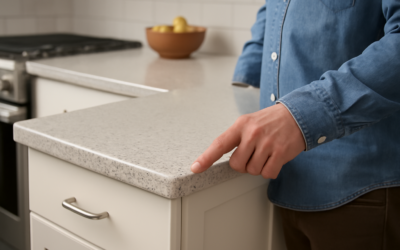
- Eased edge: a nearly square edge with the sharp top corner slightly softened so it’s not razor-sharp; clean, modern, and the most common choice
- Straight or square edge: a crisp squared profile for a bold, geometric, ultra-modern look, though the corners are more prone to chipping
- Beveled edge: a flat, angled cut across the top corner, usually at 45 degrees, adding a subtle facet without much cost
The eased edge is the workhorse of modern kitchens. It looks clean, resists chipping better than a fully square edge because the corner is softened, and it’s easy to keep clean. If you want simple and timeless, it’s hard to beat.
Rounded Edges
Rounded profiles soften the look and feel of the counter and are gentle on hips and hands, which makes them a favorite in family kitchens.
- Bullnose: a fully rounded edge with a smooth, continuous curve from top to bottom, comfortable and easy to clean
- Half bullnose: rounds only the top half of the edge, keeping a flat bottom for a slightly more substantial look
- Demi or quarter round: softens just the top corner into a gentle curve, a middle ground between eased and full bullnose
Bullnose edges have no sharp corners at all, so they’re forgiving in busy households and simple to wipe down. Some people feel a full bullnose reads a bit dated compared to a crisp eased edge, so the half bullnose has become popular as a softer look that still feels current. Rounded edges also let water run off more easily, which some homeowners prefer near sinks.
Ornate, Traditional Edges
For traditional, formal, and luxury kitchens, layered and decorative profiles add elegance, though they cost more because of the extra shaping involved.
- Ogee: a graceful S-shaped curve that’s the classic choice for elegant, traditional kitchens
- Double ogee or stacked profiles: two S-curves for an even more dramatic, ornate edge
- Cove, waterfall, and other decorative cuts: various sculpted profiles that emphasize a custom, high-end feel
- Laminated or built-up edges: two pieces of granite bonded to create a thicker, more substantial edge that showcases the stone
The ogee is the signature traditional edge, prized for its elegant curve, though its recessed groove can collect a bit more grime and needs a little more attention when cleaning. Built-up or laminated edges make the counter look thicker and more luxurious, but they add material and labor, so they sit at the higher end of the price range.
How Edge Profiles Affect Cost
Edge pricing is usually quoted per linear foot on top of the base countertop price. Simple profiles like eased and beveled are commonly included at no extra charge or a minimal upcharge. As profiles get more elaborate, the price climbs because each foot of edge requires more fabrication time to grind, shape, and polish the detail. Ogee, double ogee, and laminated built-up edges land at the top of the range.
Because pricing varies by fabricator, region, and stone, ask for the edge cost per linear foot up front and multiply by the total length of your finished edges. On a large island and perimeter, an upgrade from a standard eased edge to an ornate laminated ogee can add up quickly, so it pays to know the number before you decide.
Matching the Edge to Your Style
The best edge is the one that fits your kitchen’s overall style. For modern, contemporary, and minimalist kitchens, stick with eased, straight, or beveled edges that emphasize clean lines. For transitional kitchens that blend modern and traditional, a half bullnose or a subtle beveled edge bridges both worlds nicely. For traditional, formal, and classic kitchens, an ogee or built-up edge reinforces the elegant, timeless feel.
Also consider the thickness of your slab. Standard granite is commonly about 3 centimeters (roughly 1.25 inches) thick, and a built-up laminated edge can make it look 4 to 5 centimeters or more for a heftier appearance. Thinner 2-centimeter slabs are sometimes laminated at the edge to look thicker. The interplay of slab thickness and edge profile shapes the final impression.
Practical Considerations Beyond Looks
Style isn’t the only factor. Think about who uses the kitchen. If you have young children or people frequently lean against the counter, rounded edges like a bullnose or half bullnose are safer and more comfortable than a sharp square edge. If you cook and clean constantly, a simple eased edge with no grooves is the easiest to wipe, while an ogee’s recess needs a little extra swipe.
Durability plays in too. Very sharp square corners are the most prone to chipping if something heavy hits them, while softened and rounded edges are more forgiving. Granite is a hard, durable stone, but the edge is its most exposed and vulnerable point, so a slightly softened profile can be the more practical long-term choice.
Edge Profiles Near Sinks and Cooktops
The area around the sink and cooktop deserves special thought when choosing an edge. Near the sink, water constantly runs over the front edge, so a profile that sheds water and cleans easily, like an eased edge or a bullnose, is practical. A deeply grooved ogee right at the sink can trap water and soap film, meaning a little more wiping to keep it looking sharp. It’s a small thing, but it’s the part of the counter that gets wet dozens of times a day.
Corners matter too. Wherever a countertop has an exposed outside corner, such as at the end of a run or the corner of an island, a slightly rounded or eased corner resists chipping far better than a knife-sharp point. Many fabricators will soften an exposed corner slightly even on a square-edge profile, both for safety and durability. Ask how your fabricator handles corners so you’re not surprised by a sharp point at hip height where people walk past.
Consistency Across Your Whole Kitchen
Once you pick an edge profile, use it consistently on every granite surface in the room, from the perimeter counters to the island to any granite windowsill or backsplash ledge. Mixing profiles in the same kitchen reads as unplanned and can make the space feel disjointed. A single, well-chosen edge that repeats everywhere gives the kitchen a cohesive, intentional look.
If you have granite elsewhere in the home, such as a bathroom vanity or a bar area, matching the edge profile there too creates a subtle sense of continuity throughout the house. It’s the kind of detail most guests won’t consciously notice, but it contributes to a home that feels thoughtfully finished. When you approve your countertop layout with the fabricator, confirm the edge profile is specified for every piece so nothing gets fabricated with the wrong detail by mistake.
Making Your Choice
Choosing among the many granite countertop edges comes down to balancing style, budget, comfort, and cleaning. An eased edge is the safe, modern, budget-friendly default, a half bullnose softens things without looking dated, and an ogee or built-up edge brings traditional elegance at a premium. Ask your fabricator to show you physical edge samples, run your hand along them, and picture each against your slab and cabinets. That small hands-on step ensures the edge you pick looks and feels exactly right every day you use your new counters.