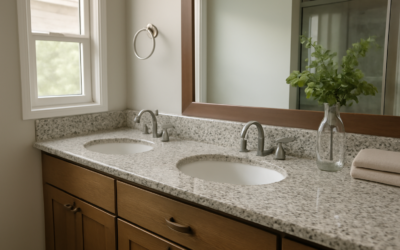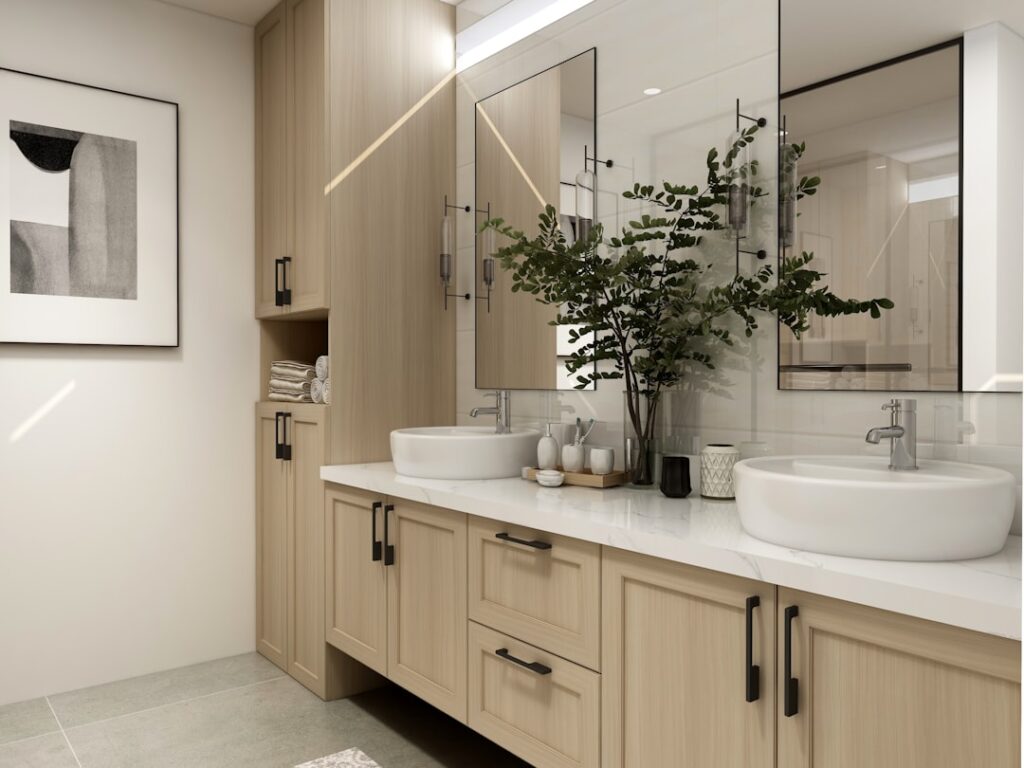
Granite vanity tops turn an ordinary bathroom into something that feels finished and high-end, and they do it with a material that handles daily abuse better than almost anything else you can put on a vanity. Granite is an igneous stone, formed under heat and pressure, which gives it the hardness to shrug off the heat of a styling tool and the scratches of jewelry and faucets. Before you order a slab, it pays to understand how granite behaves, what affects the price, and the small amount of care it needs.
Part of our Countertops guide — explore the full guide →
Why Choose Granite for a Vanity
Bathrooms expose surfaces to water, cosmetics, toothpaste, and the occasional hot curling iron. Granite handles all of it. Each slab is unique, with mineral patterns and color movement no manufactured surface can copy exactly. For homeowners who want natural character rather than the uniform look of solid-surface or laminate, that one-of-a-kind quality is the main draw.
Granite is also dense and, once sealed, resists staining well. It does not melt, scorch, or warp, and it adds tangible resale appeal in a bathroom remodel.
Popular Colors and Patterns
Granite ranges from near-white to deep black, with movement that varies from subtle speckling to bold veining. Common choices for vanities include:
- White and gray granites — bright, neutral, easy to pair with most cabinets.
- Beige and tan tones — warm and forgiving of dust and water spots.
- Black granites — dramatic and modern, though they show water spots and dust more readily.
- Multicolor and exotic slabs — blues, golds, and reds that act as a focal point.
Because every slab differs, always view the actual stone before purchase rather than relying on a small sample. Lighting in your bathroom can shift how the color reads.
Sizes, Edges, and Sink Options
Standard vanity tops come in widths around 25, 31, 37, 43, 49, and 61 inches, with a typical depth near 22 inches. Many fabricators sell pre-fabricated tops with the backsplash and sink cutout already finished, which lowers cost for standard sizes. Custom slabs are cut to your exact dimensions.
Edge profiles change both the look and the price. A simple eased or straight edge is most affordable, while ogee, bullnose, and beveled edges cost more for the extra fabrication. For sinks, you can choose an undermount for easy counter wiping, a drop-in for lower cost, or a vessel sink that sits on top for a contemporary statement.
What Affects Granite Vanity Top Cost
Pricing depends on several factors rather than a single number. Installed granite vanity tops generally fall in the low-to-mid range among stone options, often more affordable per square foot than on a large kitchen because vanities are small. Cost drivers include:
- Slab grade and rarity — common colors cost far less than exotic imports.
- Thickness — 3 cm slabs cost more than 2 cm but feel more substantial.
- Edge profile and cutouts — fancy edges and double-sink cutouts add labor.
- Prefab vs. custom — prefab tops save money on standard sizes.
For an accurate figure, get quotes from local fabricators with your measurements, since regional labor and stone availability move prices.
Sealing Granite Vanity Tops
Granite is porous, so a penetrating sealer is the key to keeping it stain-free. Most new installations are sealed at fabrication, but sealer wears off over time. Test whether yours needs resealing with a simple water test: drop a few tablespoons of water on the surface and wait 10 to 15 minutes. If the stone darkens where the water sat, it has absorbed moisture and is ready for a fresh coat.
To reseal, clean and dry the surface, apply an impregnating stone sealer per the product directions, let it dwell, then wipe off the excess before it hazes. Depending on the stone and use, vanities typically need resealing every one to three years. Lighter and more porous granites may need it more often.
Daily Care and Cleaning
Granite is low-maintenance, but acidic and abrasive products shorten its life. Follow these practices:
- Wipe daily with warm water and a soft cloth, or a cleaner labeled safe for natural stone.
- Avoid vinegar, lemon, bleach, and ammonia, which can dull the polish and degrade the sealer.
- Blot spills from colored products like nail polish remover and hair dye quickly.
- Skip abrasive scrub pads that can scratch the finish.
With routine wiping and periodic sealing, the surface stays glossy and hygienic for years.
Granite vs. Other Vanity Materials
Compared with quartz, granite needs sealing but offers natural patterning that quartz mimics rather than matches. Against marble, granite is far more stain- and etch-resistant, a real advantage near acidic bathroom products. Laminate and cultured marble cost less up front but lack granite’s heat resistance and longevity. For a bathroom surface meant to last the life of the remodel, granite remains a strong, sensible choice.
Prefab vs. Custom Slab Tops
For a vanity, you usually choose between a prefabricated top and a custom-cut slab. Prefab tops are mass-produced in standard widths with the backsplash and sink area already finished, which makes them affordable and quick to install for common sizes. Custom slabs are cut from a full piece of granite to your exact dimensions, allowing unusual sizes, double sinks, and a continuous backsplash, but at a higher cost. For a standard single-sink vanity, a prefab top often delivers excellent value. For a large double vanity or an irregular layout, a custom slab is the way to go.
Removing Stains From Granite
Even sealed granite can occasionally take a stain, and the fix depends on what caused it. For an oil-based stain such as a cosmetic or lotion, a poultice made of baking soda and water, applied, covered, and left to draw out the oil over a day, often lifts it. For organic stains, a poultice with a small amount of hydrogen peroxide may help on lighter stones, though test first. Avoid harsh acids and abrasives that can etch or dull the surface. If a stain resists home methods, a professional stone restoration service can usually address it without damaging the finish.
Final Thoughts
Granite vanity tops combine durability, natural beauty, and reasonable cost in a small footprint where a little splurge goes a long way. Choose a slab you love in person, decide between prefab and custom for your layout, pick an edge that suits your style and budget, and commit to occasional sealing and gentle cleaning. Do that, and your vanity will look as good in a decade as it did the day it was installed.