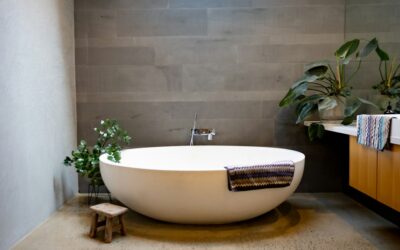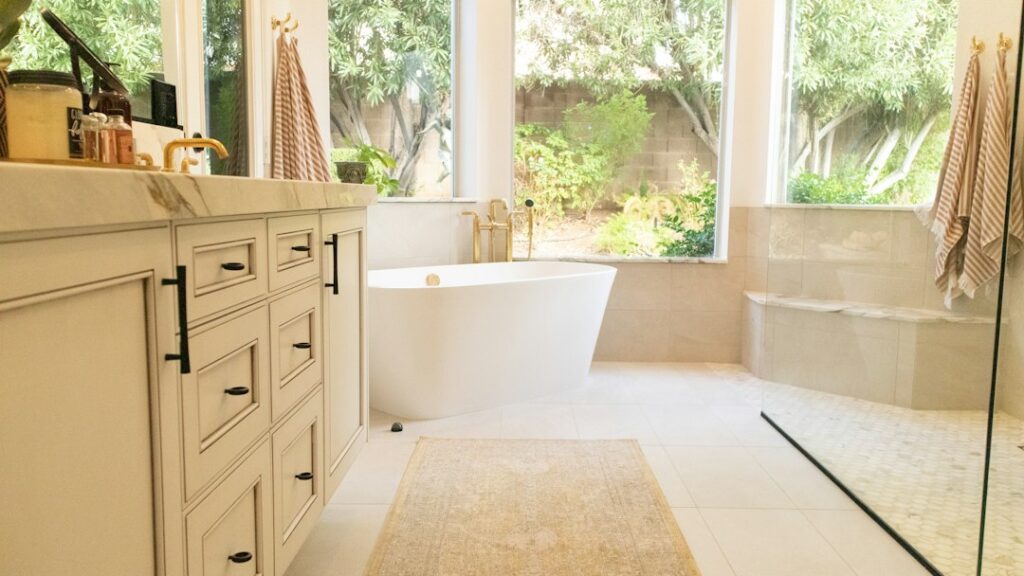
Grey hides water spots, lint and everyday wear better than white, and it sits comfortably next to white tile, wood-look vinyl or marble. That is why a grey bathroom rug is one of the safest choices for a busy bath. The trick is choosing the right material for how the room is used, sizing it to the vanity or tub, and getting backing that actually grips a wet floor. A rug that slides or curls is worse than no rug at all.
Part of our Bathroom Remodeling & Flooring guide — explore the full guide →
Choose the fiber first, then the size, then the backing. Color and texture come last, because almost every shade of grey works once the function is right.
Choosing a Grey Bathroom Rug by Material
Each material handles water, comfort and washing differently. A grey bathroom rug made from the wrong fiber will stay damp, smell musty or flatten within months.
Memory foam
Memory foam rugs feel plush and cushion your feet when you stand at the sink. They usually have a microfiber or velvet top over a foam core. They absorb water quickly but dry slowly, so they suit bathrooms with good ventilation or ones used once a day. A memory foam bath rug in front of the vanity is a comfortable upgrade, but avoid putting one in front of a shower used several times a day unless the room has a strong exhaust fan.
Cotton
Cotton rugs, often tufted or woven, absorb well, wash easily and dry faster than foam. They are a classic choice in front of the tub. Look for heavy cotton (higher pile weight means more absorbency) and a backing that survives the dryer. Lighter grey cotton shows fewer lint specks than charcoal.
Chenille and microfiber
Chenille has soft, noodle-like loops that grab water and dry quickly. Microfiber chenille is especially absorbent and lightweight, which makes it easy to wash weekly. Its texture also catches light, so a grey chenille rug looks richer than flat cotton.
Other options
- Bamboo or teak mats: Wood slat mats drain instead of absorb and dry in minutes. They are great by showers but hard on bare feet in winter.
- Diatomaceous earth mats: Stone-like boards that wick water quickly. They are firm, not soft, and need sanding to refresh.
- Polyester shag: Inexpensive and fluffy, but it can mat down and trap moisture.
Sizing the Rug to the Vanity and Tub
Size by the fixture, not by the room. A rug that is too small looks like a forgotten towel, while one that runs into the toilet base or door swing collects grime.
- Single vanity (24 to 36 inches): A 17 by 24 inch or 20 by 32 inch rug, a few inches narrower than the vanity on each side.
- Double vanity (60 to 72 inches): A runner around 24 by 60 inches, or two small rugs centered on each sink.
- Standard tub (60 inches): A 21 by 34 inch rug or a 24 by 40 inch rug at the center of the tub opening.
- Walk-in shower: A rug about as wide as the opening, typically 20 by 30 inches, placed just outside the step.
- Contour rug: A U-shaped rug fits around the toilet base, but it traps moisture and germs, so wash it often or skip it.
Leave 2 to 4 inches of floor visible between rug edges and walls, cabinets and the tub. That gap keeps the rug from looking crammed and lets you see the floor. Check that the door can swing over the rug without catching. Most bathroom doors need at least 3/4 inch of clearance over the finished floor for a thick rug.
Non-Slip Backing and Trip Safety
Bathrooms are among the most common places for falls at home. A wet floor plus a sliding rug is a real hazard, especially for kids and older adults. Look for:
- Rubber or TPR backing: Thermoplastic rubber grips tile and vinyl well and tolerates washing on gentle cycles.
- Hot-melt or latex dots: Grip well initially but can break down in hot dryers.
- Rug pads: If your favorite rug has no backing, add a thin non-slip pad cut 1 inch smaller than the rug on all sides.
Keep edges flat. A curled corner is a trip hazard. Low-profile rugs (under 3/4 inch thick) are safer near doorways. If anyone in the home uses a walker or has balance issues, choose thin rugs with beveled edges, or a slat mat that stays put. Replace rugs once the backing cracks or flakes, since it loses grip and can leave residue that makes the floor slicker.
Wash Care and Drying
A bath rug lives in a damp room, so it needs regular washing to stay fresh. Most cotton, chenille and microfiber rugs can be washed weekly or every two weeks.
- Shake the rug outdoors to remove hair and grit.
- Wash in cold or warm water on a gentle cycle with a mild detergent. Skip bleach on grey shades, which can blotch.
- Avoid fabric softener, which reduces absorbency.
- Tumble dry on low or hang to dry. High heat damages rubber backing.
- For memory foam, check the label; many need gentle washing and air-drying only.
Between washes, hang the rug over the tub edge after showers so air reaches both sides. This keeps mildew from forming under the backing and protects your floor finish. On hardwood or laminate floors, a damp rug left in place can cause cupping or discoloration over time.
Styling Grey in Your Bathroom
Grey ranges from silvery pale tones to deep charcoal, and from cool blue-greys to warm greige. Match the undertone to the room:
- White and marble baths: Light dove grey or silver chenille keeps the space bright.
- Wood vanities and warm tile: Warm greige or taupe-grey ties into wood tones.
- Black fixtures: Charcoal rugs add contrast and hide dirt in family baths.
- Navy or green walls: Medium grey bridges the color with white fixtures.
Texture matters as much as color. Stripes, ribbing or a two-tone heather adds depth to a plain grey floor. Pair the rug with towels a shade lighter or darker rather than an exact match, which tends to look flat. Two rugs of the same material in a large bath look more cohesive than mixed styles.
How Many Rugs a Bathroom Needs
Small powder rooms usually need one rug at most, centered in front of the sink, and many look cleaner with none at all. A full bath with a tub and a single vanity typically gets two rugs: one where you step out of the tub or shower and one at the sink. Large primary baths with a double vanity, a separate shower and a freestanding tub can carry three, but resist the urge to cover every open patch of tile. Bare floor between rugs makes the room feel larger and is easier to clean.
Buy rugs in pairs when you can. Having a second set means one can be in the wash while the other is on the floor, so you never leave a wet floor bare after a shower. Matching sets in the same grey also keep the room looking coordinated, and rotating them evens out wear and fading so neither set looks noticeably older than the other.
Troubleshooting Common Rug Problems
- Musty smell: The rug is not drying between uses. Wash it, improve ventilation and hang it after showers.
- Sliding on tile: Backing has worn out. Add a pad or replace the rug.
- Yellow stains on the floor under the rug: Latex backing can discolor vinyl. Switch to a rubber or TPR backing labeled safe for vinyl floors.
- Flattened pile: Memory foam and shag compress over time. Fluff in the dryer on low, or replace.
- Fading: Wash in cold water and keep out of direct sun from a skylight or window.
Cost Ranges and When to Upgrade the Floor
Basic grey bath mats often cost under the price of a nice towel set, while larger runners, heavy cotton and premium memory foam rugs cost more. Wood slat and stone mats tend to sit in the middle. If you find yourself stacking rugs to hide a cold, cracked or slippery floor, it may be time to look at slip-resistant tile, textured vinyl or a heated floor system. A flooring pro can evaluate subfloor damage and recommend a surface with better traction.
Frequently Asked Questions
What is the best material for a grey bathroom rug?
Microfiber chenille and heavy cotton absorb well and dry fastest for everyday use. Memory foam is more comfortable but dries slower, so it suits ventilated bathrooms.
What size bath rug goes in front of a vanity?
Choose a rug a few inches narrower than the vanity on each side, such as 20 by 32 inches for a 36-inch vanity or a runner for a double vanity.
How do I stop my bathroom rug from slipping?
Choose rubber or TPR backing, or add a non-slip pad cut slightly smaller than the rug. Replace rugs once the backing cracks.
How often should I wash a bathroom rug?
Every one to two weeks for most homes. Busy family baths may need weekly washing. Dry on low heat or air-dry to protect the backing.
Does a grey rug show dirt?
Medium greys and heathered patterns hide lint and spots well. Very light silver shows hair, and very dark charcoal can show lint and soap residue.
Prefer to explore on your own?
See how new flooring looks in your actual room in seconds — free, no signup.
Try the free Floor Studio →