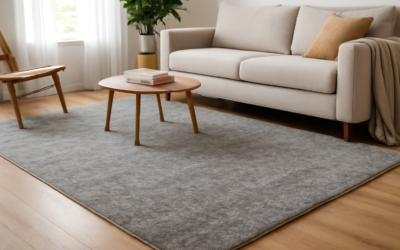
There is a reason designers reach for it again and again: a well-chosen grey rug works in almost any room, with almost any palette, and hides everyday foot traffic better than nearly any other neutral. Grey reads as calm and modern without the starkness of pure white or the heaviness of black. Whether you are grounding a busy living room or softening a minimalist bedroom, the right grey rug pulls a space together quietly and effectively.
Why Grey Is So Versatile
Grey sits comfortably between warm and cool, so it pairs with everything from creamy beiges to crisp navies. It lets bold furniture and art take center stage while still adding texture and warmth underfoot. Practically, mid-tone greys disguise dust, crumbs, and pet hair far better than light cream or dark charcoal, which makes them a smart pick for high-traffic areas and busy households.
Choosing the Right Shade of Grey
Not all greys are equal, and the undertone matters more than most shoppers expect. Cool greys lean blue or green and feel sleek and contemporary. Warm greys, sometimes called greige, carry a hint of beige or taupe and feel softer and cozier. Match the undertone to your room: cool greys flatter modern spaces with white and chrome, while warm greys complement wood tones, leather, and earthy palettes.
- Light grey: opens up small rooms and feels airy, but shows dirt more readily
- Mid grey: the most forgiving and flexible, hides wear well
- Charcoal grey: dramatic and grounding, anchors light furniture beautifully
Picking the Correct Size
Size is where many rooms go wrong. A rug that is too small makes furniture look like it is floating. In a living room, aim to fit at least the front legs of your sofa and chairs on the rug, and ideally all the legs in larger spaces. Common sizes and their typical uses:
- 5×7 feet: bedrooms, small living rooms, under a coffee table
- 8×10 feet: standard living rooms, fitting front legs of seating
- 9×12 feet: large living and dining rooms, all furniture legs on the rug
- Runners (2×8 feet): hallways and kitchen galleys
Material and Pile Options
Material affects feel, durability, and price. Wool is soft, naturally stain-resistant, and long-lasting, but costs more. Synthetic fibers like polypropylene and polyester are budget-friendly, easy to clean, and great for high-traffic or pet-heavy homes. Natural fibers such as jute or wool blends add texture. Pile height matters too: low-pile and flatweave rugs suit dining rooms and entries where chairs slide, while plush high-pile rugs feel luxurious in bedrooms and lounges.
What a Grey Rug Costs
Prices span a wide range. A synthetic 5×7 rug can start around $60 to $150, while a comparable wool rug runs $200 to $600 or more. Large 9×12 wool or hand-knotted rugs reach well into the thousands. Set your budget around the size, material, and how much wear the rug will see, and remember that a quality rug in a high-traffic room is often worth the higher upfront cost.
Styling a Grey Rug
Grey is a backdrop, so let it support your accent colors. Mustard yellow, blush pink, emerald green, and deep teal all pop beautifully against grey. For a layered, sophisticated look, mix textures rather than colors, pairing a grey rug with linen, velvet, and wood. If you want subtle interest, choose a grey rug with a tonal pattern or geometric design that adds movement without competing with the rest of the room.
Care and Maintenance
Vacuum regularly to keep dirt from settling into the fibers, and rotate the rug a couple of times a year so it wears evenly and fades uniformly in sunlight. Blot spills immediately rather than rubbing, and treat stains with a cleaner appropriate to the fiber. Always use a rug pad underneath; it prevents slipping, cushions footsteps, and extends the life of the rug by reducing friction against the floor.
Layering and Pattern Options
Grey is a perfect base for layering, a trick designers use to add depth and warmth. Place a smaller patterned rug or a natural-fiber jute rug partly over a large grey rug to break up an expanse of solid color and define a seating zone. Patterned grey rugs work too, from subtle tonal damasks to bold geometric and abstract designs. A patterned grey rug hides spills and wear even better than a solid, which makes it ideal for dining rooms and family spaces. If your furniture is already busy, keep the rug solid or low-contrast; if your room is mostly solids, a patterned grey rug adds welcome visual interest.
Matching Grey to Your Wall Color
Coordinate the rug with your walls by paying attention to undertones. A cool grey rug looks crisp against white or pale blue walls, while a warm greige rug feels harmonious with cream, taupe, or soft green walls. If your walls are already grey, choose a rug a few shades lighter or darker to create contrast rather than a flat, monochrome look. In rooms with lots of natural wood, a warm grey rug bridges the wood tones and any cooler accents. When unsure, bring a paint chip or a photo of the room when you shop so you can compare undertones side by side.
The Bottom Line
A grey rug is one of the safest, most rewarding decorating choices you can make. Pick the undertone that matches your room, size it generously, and choose a material suited to your traffic and budget. Do that, and a grey rug will quietly anchor your space and adapt gracefully as your style evolves over the years.
Grey Rugs in Different Rooms
The beauty of grey is that it adapts to the function of each room. In a living room, a plush mid-grey rug invites bare feet and softens the space while hiding the wear of daily traffic. In a dining room, a flatweave grey rug lets chairs slide and shrugs off the occasional dropped crumb or spill. Bedrooms call for something soft underfoot, so a high-pile grey rug beside or under the bed feels luxurious on a morning step out of bed. In a home office or entryway, a low-pile grey rug stands up to rolling chairs and foot traffic. Because grey reads as neutral, the same color family works throughout the house while you tailor the pile height and material to how each room is actually used.