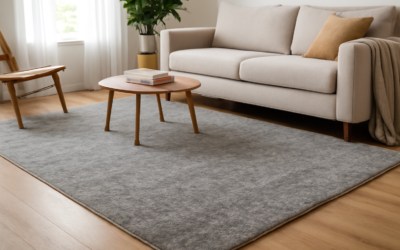
Few decor pieces are as quietly useful as a good gray rug. It grounds a seating area, hides everyday dirt better than cream or white, and plays nicely with almost every wall color, sofa, and wood tone you already own. That is why a modern grey rug has become the default neutral in living rooms and bedrooms across the country. But gray is not one color, and modern is not one style, so choosing the right one takes a little more thought than grabbing the first gray rug you see. This guide breaks down the shades, styles, sizes, and materials so you land on a rug that actually fits your space.
Why Gray Works in Modern Rooms
Gray sits perfectly between warm and cool, which is exactly why designers lean on it. It reads as calm and contemporary without feeling cold, and it lets your bolder pieces, like a colorful sofa, artwork, or accent pillows, take center stage. A gray rug also does practical work: mid-tone grays camouflage crumbs, pet hair, and foot traffic far better than pale neutrals, so the floor still looks clean between vacuums. For open-plan homes, a shared gray palette across rooms creates a cohesive, flowing look that feels intentional and current.
Understanding Gray Shades
Not all grays behave the same, and the undertone is what determines whether a rug feels right in your room:
- Cool grays with blue or slate undertones feel crisp and contemporary, pairing well with white, navy, and cool wall colors.
- Warm grays and greige lean toward taupe or beige, softening a room and complementing warm woods and cream tones.
- Charcoal and deep gray add drama and anchor a light room, though they show lint and pet hair more.
- Light and silver grays keep a space airy and open, ideal for small rooms, but reveal dirt more readily.
Always test a sample against your flooring and walls, because a gray that looks neutral in the store can pull noticeably blue or brown under your home’s lighting.
Popular Modern Styles
Modern covers a wide range of looks, so the pattern and texture matter as much as the color. Solid low-pile grays give the cleanest, most minimalist result and let furniture shine. Abstract and watercolor designs blend multiple gray tones for depth without a busy pattern. Geometric rugs, with lines, grids, or trellis motifs, feel distinctly contemporary and add subtle interest. High-low and carved textures create dimension through the pile height rather than color. For a warmer take, a gray shag or plush rug brings softness to a modern bedroom. Match the style to how much visual activity your room can handle: busy spaces want a calmer rug, while minimal rooms can carry a bolder pattern.
Choosing the Right Size
Size is where most rug purchases go wrong. A rug that is too small makes a room feel disjointed, with furniture floating on the floor. General guidelines:
- Living rooms: aim for at least the front legs of all seating on the rug; an 8×10 or 9×12 works for most spaces.
- Under a dining table: the rug should extend about 24 inches beyond the table edge so chairs stay on it when pulled out.
- Bedrooms: a large rug under the lower two-thirds of the bed, or a runner on each side, keeps your feet on softness.
- Small rooms and entries: a 5×7 or 5×8 defines a compact seating zone or landing spot.
Measure the space and tape out the rug footprint on the floor before buying so you can see how it relates to your furniture.
Materials and Durability
The fiber determines how the rug feels, how long it lasts, and how easy it is to clean. Wool is the premium choice, naturally durable, soft, and stain-resistant, and it holds its gray color well over time. Polypropylene and other synthetics are budget-friendly, stain-resistant, and often machine washable, making them ideal for high-traffic rooms and homes with kids and pets. Viscose and other silky fibers look luxurious and add sheen but are delicate and hard to clean, best reserved for low-traffic bedrooms. Cotton flatweaves are washable and casual. For a family room, a washable synthetic or a tough wool blend usually makes the most sense.
Styling a Modern Grey Rug
Because gray is a neutral, it gives you enormous freedom. Layer in warm accents like camel, mustard, or terracotta pillows to keep a gray room from feeling flat, or lean into a monochrome scheme with black, white, and charcoal for a sleek, modern edge. Natural wood furniture and greenery warm up cool grays beautifully. In a bedroom, pair a soft gray rug with white bedding and one bold accent color. The rug’s neutrality means you can refresh the whole look later just by swapping pillows and throws, without buying a new rug, which is a big part of its long-term value.
Care and Maintenance
Keeping a gray rug looking sharp is straightforward. Vacuum regularly to lift grit and keep the pile upright, and rotate the rug every few months so traffic wear and sun fading stay even. Blot spills immediately rather than rubbing them in. Always use a non-slip rug pad underneath, which keeps the rug in place, adds cushioning, and extends its life on both hard floors and carpet. For washable rugs, a periodic trip through the machine keeps colors fresh. With basic upkeep, a quality gray rug easily lasts many years. Watch out for direct sunlight, which can fade even a gray rug unevenly over time, leaving a lighter band where the sun hits daily; rotating the rug and using window coverings during peak hours slows that fading considerably. If you have pets, a mid-tone gray hides hair better than either a very light or very dark shade, one more reason it has become the practical default in busy family rooms.
The Bottom Line
A modern grey rug is one of the most flexible, forgiving decor investments you can make. Its neutral base works with nearly any color scheme, mid-tones hide daily mess, and the huge range of shades, patterns, and textures means there is a version for every style from minimalist to cozy. Nail down the undertone that suits your lighting, buy a size generous enough to anchor your furniture, and choose a fiber matched to your traffic, and your gray rug will tie the room together for years to come.