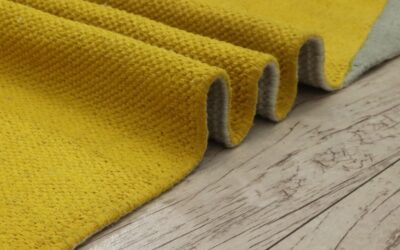
Pairing a cool neutral with a jolt of sunshine is one of the safest bold moves in decorating, which is why the combination keeps coming back year after year. A grey and yellow rug gives you the best of both worlds: gray grounds the room and hides everyday dirt, while yellow injects warmth and energy that a plain neutral floor could never deliver. The trick is choosing the right proportions of each color, matching the yellow’s tone to your room’s light, and picking a material tough enough for where the rug will live. Get those three things right and this classic pairing looks fresh rather than dated.
Here is how to make the combination work, from choosing shades to styling the rest of the room around it.
Why Grey and Yellow Works So Well
Color theory backs up what your eye already senses. Gray is a neutral with no strong temperature of its own, so it lets a warm accent like yellow shine without competing. Yellow sits opposite purple-blue on the color wheel and reads as an energizing, optimistic hue. Together they create contrast without chaos, sophisticated but cheerful.
The combination also flatters a wide range of styles. In a Scandinavian room it feels light and airy; in a mid-century space it nods to vintage mustard-and-charcoal palettes; in a contemporary room a graphic gray-and-yellow pattern becomes the star. Few color pairs are this flexible.
Choosing the Right Shade of Yellow
Yellow is not one color, and the version you pick sets the entire mood. Match the undertone to your room’s lighting and existing finishes.
- Mustard and ochre: Warm, earthy, and forgiving; pairs with wood tones and works in low-light rooms.
- Bright lemon: Punchy and modern; best in sunny rooms where it will not feel garish.
- Soft butter or pale yellow: Gentle and calming; good for bedrooms and softer palettes.
- Golden and amber: Rich and luxurious; complements brass and warm metals.
North-facing rooms with cool light do best with warm mustard or gold, which counteract the blue cast. South-facing rooms flooded with warm light can handle a cooler lemon without it going brassy.
Getting the Gray Right, Too
The gray matters just as much. A cool blue-gray pairs crisply with lemon yellow for a modern look, while a warm greige leans cozy and works beautifully with mustard and ochre. Charcoal grounds a bright yellow dramatically; a light dove gray keeps the whole scheme soft and airy.
Look at the proportion of each color in the rug. A predominantly gray rug with yellow accents is easy to live with and easy to build a room around. A boldly split fifty-fifty pattern makes a strong statement but demands more restraint everywhere else in the room.
Styling the Rest of the Room
Once the rug is down, let it lead. Pull the yellow into a few small accents, throw pillows, a vase, a piece of art, so the color feels intentional and repeated rather than isolated on the floor. Two or three touches of yellow around the room tie everything together.
Keep the larger pieces neutral. A gray, white, or natural-wood sofa lets the rug do the talking, while walls in soft white or pale gray keep the space from feeling busy. If you want more warmth, add wood furniture and woven textures like a jute basket or rattan chair, which bridge beautifully to mustard and ochre tones.
Best Rooms for a Grey and Yellow Rug
This palette earns its keep in social, daytime spaces where its energy is welcome. It is a natural fit in a living room, a home office where the yellow keeps things upbeat, or a sunroom. In a nursery or child’s room, soft gray with cheerful yellow is a classic gender-neutral scheme.
Be a little more careful in bedrooms meant for rest; a bright lemon can feel too stimulating, so lean toward buttery or muted mustard tones there. In a kitchen or entryway, a gray-and-yellow flatweave adds a pop of cheer, just choose a washable material for those messy zones.
Material and Durability
Match the fiber to the traffic. For a living room or office, a wool or high-quality polypropylene rug holds its color and bounces back from foot traffic. For a kitchen or entry, a washable, low-pile synthetic handles spills and mud.
- Wool: Naturally stain-resistant and long-lasting, $200 to $600 for an 8×10; keeps yellow tones rich.
- Polypropylene: Budget-friendly and fade-resistant, $80 to $250; great for sunny rooms.
- Washable cotton or chenille: Easy care for kitchens and kids’ spaces, machine-washable in sizes up to about 5×7.
If the rug sits in direct sun, choose a fade-resistant synthetic or a solution-dyed fiber, because cheap yellows are among the first colors to bleach out under UV exposure.
Avoiding the Dated Look
Gray and yellow had a big moment years ago, and a poorly chosen version can feel stuck in that era. Sidestep that by choosing a modern pattern, an organic abstract, a subtle geometric, or a hand-drawn motif, rather than the boxy chevrons that flooded the market. Muted, sophisticated yellows also age better than a flat primary yellow.
Keep the surrounding palette current with plenty of warm neutrals and natural materials, and the rug will read as timeless rather than trendy. It is the difference between a color combination that looks intentional and one that looks like a leftover.
Pattern Styles and What They Signal
The pattern on a gray-and-yellow rug does as much work as the colors. A large-scale abstract or brushstroke design feels artful and contemporary, and it lets the two colors blend and bleed into each other for a soft, painterly effect. A tight geometric, diamonds, grids, or a Moroccan trellis, reads more structured and modern, giving the room a crisp, tailored edge.
For a cozier, collected look, consider a distressed or vintage-style rug that renders the yellow as a faded ochre against a mottled gray ground. These worn patterns hide dirt and foot traffic exceptionally well and pair naturally with warm woods and layered textiles. If your room already has a lot going on, busy wallpaper or patterned upholstery, choose a simpler gray-and-yellow rug, perhaps a solid gray with a single yellow border, so the floor calms the space rather than adding to the visual noise.
The Bottom Line
A grey and yellow rug is a reliable way to warm up and energize a neutral room without overwhelming it. Match the yellow’s undertone to your light, pick a gray that supports rather than competes, echo the yellow in a few small accents, and choose a fiber suited to the room’s traffic. Do that, and you get a cheerful, grounded floor that carries a room’s personality while remaining easy to live with for years. Buy a rug pad sized an inch smaller than the rug on each side to keep it flat and planted, and vacuum regularly so the pale yellow tones stay bright rather than dulling under trapped grit, small habits that keep the combination looking crisp long after the initial thrill of a new rug wears off.