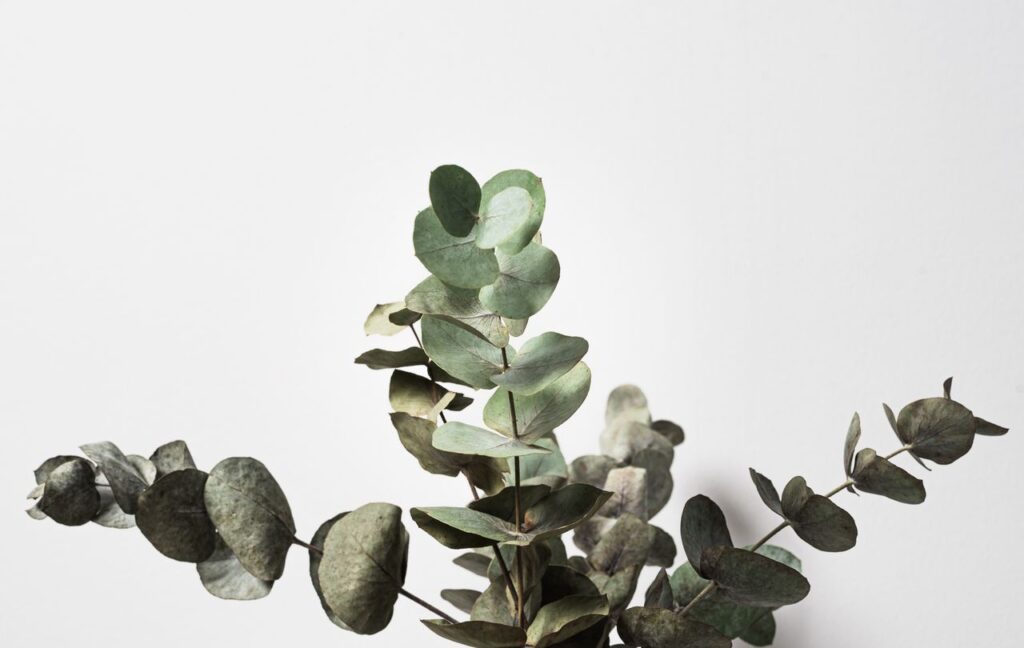
That fragrant eucalyptus bouquet from Trader Joe’s looks effortless until you try to keep a live plant on the kitchen counter for more than three weeks. Growing eucalyptus indoors is genuinely possible, but it is the opposite of growing a pothos — eucalyptus is a fast-growing outdoor tree being asked to live in a pot under artificial conditions, and that compromise has rules. Get the variety, light, and watering right and you can keep a healthy 3-to-5-foot specimen alive for years. Get any one of those wrong and the plant turns crispy in a month. This guide covers what actually works after years of trial and error with eucalyptus as a houseplant.
Part of our Windows & Doors guide — explore the full guide →
Choose the Right Variety
Not every eucalyptus belongs indoors. Most species sold as garden trees grow to 60 feet in five years and resent any pot, no matter how big. The varieties that work as houseplants stay smaller and tolerate root restriction better.
- Eucalyptus gunnii (Cider Gum): The classic silver-blue rounded leaves, can be kept at 4 to 6 feet indoors with annual pruning
- Eucalyptus polyanthemos (Silver Dollar): Heart-shaped leaves popular in cut bouquets, good for bright sunny rooms
- Eucalyptus pulverulenta “Baby Blue”: Compact, slower-growing, the easiest indoor variety
- Eucalyptus cinerea: Florist favorite for round leaves, but needs the most light
Avoid Eucalyptus globulus (Blue Gum), the species commonly sold as outdoor specimens — it grows too fast and too tall to manage in a pot.
Light Is Non-Negotiable
Eucalyptus is a full-sun plant. In nature it grows in open Australian landscape with 8-plus hours of direct sunlight per day. Indoors, it needs the brightest spot in the house — typically a south-facing window with no curtains or obstructions.
If your home does not have a south-facing window with full exposure, a grow light is mandatory. Use a full-spectrum LED at 30 to 50 watts within 12 inches of the plant for 12 to 14 hours per day. Without enough light, eucalyptus drops its lower leaves, the new growth comes in pale, and the entire plant collapses within months.
Pot and Soil Requirements
Eucalyptus has aggressive roots that need depth, drainage, and air. Standard houseplant potting mix kills these plants by holding too much water around the rootball.
- Choose a terracotta pot at least 12 inches deep, with drainage holes
- Mix soil 50 percent quality potting mix, 30 percent perlite, 20 percent coarse sand
- Add a 1-inch layer of crushed gravel or pumice at the bottom for drainage
- Plant at the same depth as the nursery container — never deeper
- Top-dress with 1/2 inch of pea gravel to prevent fungus gnats and reflect light
Repotting happens every 18 to 24 months in spring, going up one pot size at a time. Going too big at once causes the unused soil to stay wet and rot the roots.
Watering Without Killing It
Overwatering is the number-one cause of eucalyptus failure indoors. The rule is to let the top 2 inches of soil dry completely between waterings.
Stick a finger in the soil. If it feels dry to the second knuckle, water thoroughly until water runs from the drainage holes. Empty any saucer within 10 minutes — the roots cannot sit in standing water for more than a few hours without rotting. In summer this might mean watering every 4 to 7 days. In winter, every 10 to 14 days.
Use room-temperature water and avoid softened water (high sodium damages the foliage). Filtered tap water or rainwater is ideal. Yellowing leaves usually indicate too much water, not too little — a counterintuitive but consistent rule.
Humidity, Temperature, and Airflow
Eucalyptus tolerates dry air better than most houseplants, which is good news for indoor growers. Aim for humidity between 30 and 50 percent — typical of most homes. No misting required.
Temperature between 60 and 80 degrees Fahrenheit is ideal. Eucalyptus tolerates a brief dip to 50 degrees but anything below 40 damages the plant. Keep it well away from cold drafts in winter and air conditioner vents in summer.
Airflow matters more than you might think. Growing eucalyptus indoors in a perfectly still corner causes leaf disease and weak stems. A small fan running 4 hours per day on low speed strengthens the plant and reduces fungal problems.
Pruning to Keep Size Manageable
Eucalyptus can grow 3 feet in a single year if conditions are right. Indoor specimens need annual pruning to stay manageable and to encourage the juvenile rounded leaves that everyone wants.
- Prune in late winter or early spring before active growth resumes
- Use sharp bypass pruners (Felco F-2 or Fiskars PowerGear)
- Cut back the previous year’s growth by 1/3 to 1/2
- Make cuts just above a leaf node at a 45-degree angle
- Save the trimmings — eucalyptus dries beautifully for floral arrangements
Aggressive coppicing (cutting nearly to the base) every 2 to 3 years keeps a juvenile leaf form indefinitely. The plant rebounds vigorously and produces the bright silver-blue rounded leaves rather than the longer adult foliage.
Fertilizing the Right Way
Eucalyptus is not a heavy feeder. Too much fertilizer causes leggy growth, weak stems, and salt buildup in the pot. Use a balanced liquid fertilizer (10-10-10 or 7-9-5) at half strength every 6 weeks during the growing season (spring through early fall). Skip fertilizer entirely from October through February.
Slow-release granular fertilizer like Osmocote works well as an alternative — apply once in spring at the lowest label rate. Flush the pot with plain water every 3 months to prevent salt accumulation that browns leaf edges.
Common Problems and Fixes
Most issues with indoor eucalyptus are environmental, not pest-related.
- Yellowing lower leaves: overwatering or root-bound condition
- Brown leaf tips: low humidity or salt buildup from fertilizer
- Pale, leggy growth: insufficient light
- Sudden leaf drop: temperature shock or root rot
- Wilting despite moist soil: root rot from chronic overwatering
- White powder on leaves: powdery mildew from poor airflow
Eucalyptus is largely pest-resistant indoors thanks to its strong essential oils, but spider mites occasionally appear in dry winter conditions. Wipe leaves with a damp cloth weekly to prevent infestations.
Harvesting Stems for Bouquets
One of the joys of indoor eucalyptus is taking your own stems for arrangements. Cut in the morning when the plant is fully hydrated. Strip the bottom leaves and place stems in a vase of water with a teaspoon of bleach to prevent bacterial slime.
For dried bouquets, hang stems upside down in a cool, dark, dry location for 2 to 3 weeks. Glycerin preservation creates more pliable dried stems — soak cut ends in a 1:2 glycerin-water mix for 5 days, then air dry. The result lasts indefinitely with the silvery-blue color preserved.
Realistic Lifespan Expectations
Even with perfect care, eucalyptus indoors is a 3-to-7-year proposition for most varieties. The plants want to be 40-foot trees, and a pot is a permanent compromise. When growth slows, leaves become smaller, or the plant looks visibly tired despite proper care, accept that the lifespan has been reached. Take cuttings or buy a new young plant rather than fighting decline. A 4-foot specimen at year 3 looking like a 4-foot specimen at year 7 is a sign the plant has stopped thriving.
Indoor eucalyptus rewards homeowners willing to learn the rules. Bright light, sandy fast-draining soil, deliberate watering, and annual pruning give you a fragrant silver-blue accent that no pothos or fiddle leaf fig can match. Match the variety to your conditions and the plant will earn its keep for years.