A full accent wall can dominate a small room and date itself within five years. A half accent wall delivers visual punch without the commitment, anchoring a space while letting the rest of the room breathe. Designers have used the technique for centuries (wainscoting, picture rails, board-and-batten), but the modern half wall reads more like editorial photography than colonial revival. Get the height right and the wall becomes architecture. Get it wrong and it looks like the painter quit halfway up.
Why Half Walls Beat Full Accent Walls
A full saturated accent wall pulls the eye and shrinks the room. The half-height version creates a horizontal datum line that visually widens the space and makes ceilings feel higher. Real estate photographers consistently say homes with picture-rail-height accent details show better in listing photos than those with full painted walls. The half wall also costs roughly 40% less in materials and labor because you’re treating half the surface area.
Resale appraisers don’t penalize half accents the way they sometimes ding bold full walls. The look reads as architectural detail rather than personal taste.
Finding the Right Height
The classic chair rail height is 32 to 36 inches off the finished floor, derived from the average chair-back height. Wainscoting traditionally tops at 36 inches. Modern board-and-batten and picture-rail looks land between 48 and 60 inches. The contemporary “two-thirds wall” treatment hits 64 to 72 inches and is the most photogenic on 9-foot or taller ceilings.
The shortcut: measure your ceiling height in inches and divide by either three (chair rail) or 1.6 (two-thirds wall). For 96-inch ceilings, that’s 32 inches and 60 inches respectively. Marking the height with painter’s tape and stepping back to evaluate before committing saves expensive do-overs.
Paint-Only Half Accent Walls
The simplest version uses just paint and a straight line. Sherwin-Williams Emerald at $90 a gallon and Behr Marquee at $58 from Home Depot both hide in one coat over primer. Use FrogTape Multi-Surface ($9 a roll) for the dividing line; it seals against bleed-through better than generic blue tape. For darker colors on top, paint the lighter color first, let it cure 24 hours, mask off, then apply the dark color.
Total cost for an 8-by-12-foot half wall in paint only: roughly $85 to $140 plus four hours of work. The cheapest accent option on this list by a wide margin.
Board and Batten on the Lower Half
Board-and-batten is the Instagram-favorite version. Vertical 1×3 primed MDF or pine strips run from baseboard to a top horizontal rail, spaced 14 to 18 inches apart on center. A 12-foot wall needs about $85 in materials from Lowe’s or Home Depot and four to six hours of work for a confident DIYer with a miter saw and brad nailer.
Use a Bostitch 18-gauge brad nailer with 1.25-inch brads, prime any cut ends, caulk every seam with DAP Alex Plus, and finish with semi-gloss enamel for a furniture-grade look. The trick is laying out batten spacing with a story stick so cuts land evenly across the wall without awkward partial bays at the ends.
Wood Slat Walls and Vertical Wood
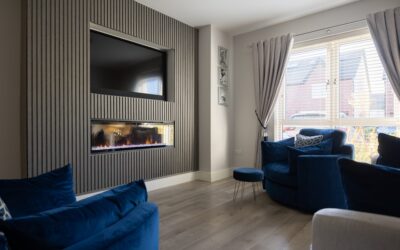
The wood slat half-wall trend that started with mid-century Danish design is now mainstream. Pre-finished slat panels from Acupanel and Felt Right cost $14 to $22 per square foot and install with construction adhesive plus finish nails. A typical 8-by-5-foot half wall runs $560 to $880 in materials.
DIY versions using individual 1×2 pine slats over a felt backer cost about $7 per square foot in materials but require two full days. Use a quality stain like Minwax Special Walnut and a satin polyurethane topcoat for moisture resistance.
Tile Half Walls in Wet Zones
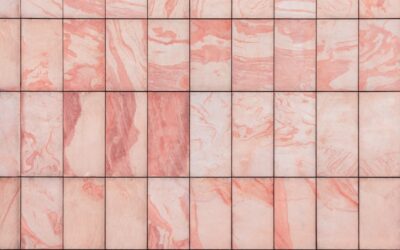
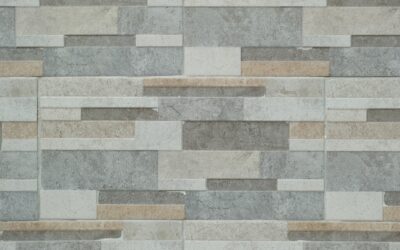
Bathrooms and laundry rooms benefit from the durability of tile on the lower half. Standard subway tile from Daltile runs $2 to $3.50 per square foot installed at $7 to $9. Handmade-look zellige from Clé or Cement Tile Shop runs $14 to $28 per square foot. The lower half resists splash and scuff far better than paint.
The top edge needs a finished detail. Schluter Jolene profiles at $24 each give a crisp metal edge. Bullnose tile from the same series runs another $3 to $5 per linear foot. Cap with painted drywall above for the cleanest look.
Material and Cost Comparison
Choose based on budget and effort tolerance:
- Paint only: $1 to $2 per square foot, 4 hours labor, beginner-friendly
- Board and batten: $4 to $7 per square foot, 6 to 10 hours, intermediate
- Shiplap: $6 to $10 per square foot, 6 hours, intermediate
- Wood slats: $14 to $22 per square foot, 6 hours, intermediate
- Tile: $9 to $35 per square foot installed, pro recommended
- Wainscot panels (pre-fab): $11 to $18 per square foot, 4 hours, beginner-friendly
Half-wall projects rarely require permits since they don’t affect structure or systems, but check local rules if you’re tying into electrical or plumbing.
Color and Material Pairings That Work
Warm white walls above a deep navy lower half (Benjamin Moore Hale Navy HC-154) is the most-requested combo of the past three years and still feels current. Other reliable pairings include warm sage like Sherwin-Williams Evergreen Fog SW 9130 below light beige walls, terracotta below cream, or charcoal black below soft white for a dramatic loft look.
Add a wood cap rail in white oak or walnut for an extra layer of dimension. The cap rail covers any imperfect line and gives the wall a tailored finish. A 1×4 select pine cap rail runs $25 per 8-foot section and installs in 20 minutes with construction adhesive plus 2-inch finish nails.
Shiplap as a Half-Wall Treatment
Shiplap remains popular and works especially well on the lower half. Pre-primed nickel-gap shiplap from Metrie or Yellawood runs $1.40 to $2.20 per square foot. Install horizontally for traditional farmhouse look or vertically for a modern coastal vibe. Use a Bostitch finish nailer with 2-inch 16-gauge nails into studs every 16 inches.
Caulk the top and bottom edges where shiplap meets baseboard and chair rail. Paint with the same enamel as the board-and-batten variant. Shiplap absolutely demands acclimation; stack the boards in the room for 72 hours before install or the gaps grow as the wood dries.