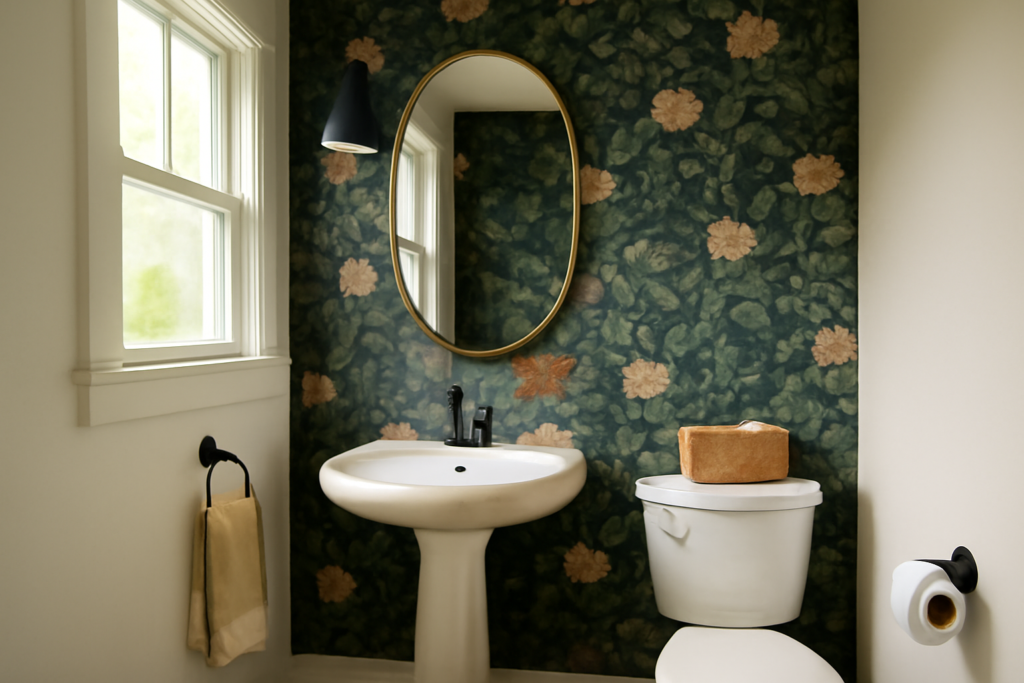
A powder room is the smallest room in most houses, which is exactly why it is the best place to take a design risk. A well-placed half bathroom accent wall turns a forgettable box into the space guests actually remember, and because you are only treating one wall of maybe 30 to 45 square feet, the material budget stays low even when you splurge. I have finished dozens of these for clients, and the pattern is always the same: the smaller the room, the bolder you can go.
Part of our Bathroom Remodeling & Flooring guide — explore the full guide →
Below I walk through the wall to choose, the finishes that work, real cost ranges, and the installation details that separate a clean job from a busy mess. Everything here assumes a standard half bath with a toilet, a small vanity or pedestal sink, and no shower or tub to complicate the layout.
Which Wall Should Be the Accent
Pick the wall your eye lands on first when the door swings open. In nine out of ten half baths that is the wall behind the vanity and mirror, because the plumbing fixtures anchor it and the mirror reflects it back at you. Treating that wall doubles the visual payoff since the reflection carries the pattern across the room.
If the sink sits on a side wall, the wall directly opposite the door becomes your best candidate. Avoid making the toilet wall your feature unless the toilet is tucked into a nook, because you do not want the eye drawn straight to the fixture. Whichever wall you choose, commit to just one. Two accent walls in a room this small fight each other and shrink the space.
Paint: The Fastest, Cheapest Statement
Paint remains the highest-impact, lowest-cost option. A single accent wall in a half bath needs roughly one quart to one gallon of paint, so you can buy a premium bathroom-rated product for $18 to $45 and still have leftovers. Use a satin or semi-gloss sheen; the moisture and hand-splashes in a powder room will ruin a flat finish within a year.
Deep, saturated colors are the move here. Charcoal, forest green, navy, oxblood, and inky plum all read as luxurious in a small footprint where they would feel oppressive in a living room. Pair a dark accent wall with a white vanity, brass or matte-black fixtures, and a large mirror to keep the room from closing in.
Pro Tips for a Clean Paint Line
- Cut in with a quality angled 2.5-inch brush before rolling, and keep a wet edge to avoid lap marks.
- Run painter’s tape along the adjoining walls and ceiling, then seal the tape edge by painting over it with the base wall color first so bleed-through matches the background.
- Give dark colors two coats minimum, and a tinted primer under deep bases like true red or navy to avoid four thin coats.
Wallpaper and Peel-and-Stick Patterns
Wallpaper is the single most popular half bathroom accent wall treatment, and for good reason: the tiny square footage means a bold, expensive pattern costs almost nothing to install. A single accent wall usually needs one to two double rolls, so even a $6-per-square-foot designer paper lands around $60 to $150 for the wall.
Peel-and-stick versions run $30 to $80 for the same coverage and pull off cleanly when you want a change, which makes them ideal for renters. Go with large-scale botanicals, geometric grasscloth looks, or a moody mural. Because guests view the wall from just a few feet away, quality and print resolution matter more than in a bigger room.
Hanging Wallpaper Without Bubbles
- Prime and lightly sand the wall so the surface is smooth and non-porous; texture telegraphs through thin paper.
- Snap a plumb line with a level for your first drop rather than trusting the corner, which is rarely square.
- Smooth each panel from the center outward with a felt-edged squeegee, and trim excess at the ceiling and baseboard with a fresh razor and a wide taping knife as a guide.
Board and Batten, Shiplap, and Wainscoting
Adding dimension with millwork gives a half bath instant architectural weight. Board and batten, made from primed MDF or poplar strips, is the most forgiving for a beginner and costs about $2 to $4 per linear foot of material. A typical accent wall in vertical battens runs $60 to $150 in lumber plus paint.
Shiplap delivers a cleaner, more horizontal rhythm and visually widens a narrow wall. Traditional wainscoting capped at chair-rail height, around 32 to 36 inches, pairs beautifully with wallpaper or bold paint above it, giving you two treatments on one wall without clutter. Caulk every seam and nail hole, then paint the millwork in semi-gloss so it wipes clean.
Tile as an Accent Wall
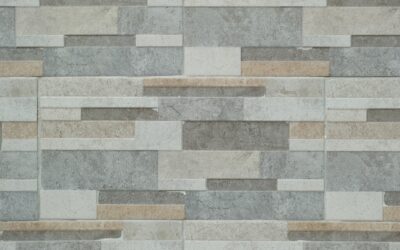
Tile is the most durable and most expensive route, but a half bath is where the math works in your favor. A geometric cement tile, a zellige in a jewel tone, or a stacked vertical subway pattern turns the sink wall into a focal point that shrugs off water and years of cleaning. Budget $8 to $25 per square foot for material on a designer tile, so a 35-square-foot wall lands roughly $280 to $875 plus setting materials.
Keep the grout color intentional: a contrasting grout emphasizes the pattern, while a matching grout lets a bold tile shape read as a single field. Seal cement and natural-stone tiles after installation, and run the tile all the way to the ceiling on a feature wall so it looks deliberate rather than an unfinished backsplash.
Lighting and Finishing Touches
An accent wall only sings when it is lit well. Swap a builder-grade flush mount for a pair of sconces flanking the mirror, or a single fixture above it, to wash light down the feature wall and reveal texture. Warm bulbs in the 2700K range flatter deep paint and wood tones; cool white makes them look flat.
Layer in a statement mirror, a small piece of framed art, brass or matte-black hardware, and a folded hand towel in a color pulled from the wall. These finishing details tie the accent wall to the rest of the room so the design feels styled rather than one loud gesture.
Budget and Timeline at a Glance
Here is roughly what to expect for a single-wall project you tackle yourself over a weekend:
- Paint: $20 to $60, half a day of work.
- Peel-and-stick wallpaper: $30 to $80, two to three hours.
- Traditional wallpaper: $60 to $200, a full afternoon.
- Board and batten or shiplap: $80 to $250, one weekend including paint and dry time.
- Designer tile: $350 to $1,000 in materials, two days including cure time.
Frequently Asked Questions
Does an accent wall make a small bathroom look smaller?
No, when done right it does the opposite. A single dark or patterned wall adds depth and draws the eye to a focal point, which makes the room feel intentional and layered rather than cramped. Trouble only starts when you treat multiple walls or use a busy pattern on every surface.
Should the accent wall be behind the toilet or the sink?
Behind the sink and mirror almost always wins because the mirror reflects and amplifies the treatment, and the vanity anchors the composition. Reserve the toilet wall for cases where the toilet sits in a separate nook.
What is the most budget-friendly accent wall option?
Paint is unbeatable on cost, running $20 to $60 for a powder-room wall. For pattern lovers on a budget, peel-and-stick wallpaper delivers a designer look for well under $100 and comes off cleanly later.
Can I use regular wallpaper in a half bath?
Yes. A half bath has no shower, so humidity stays low and standard wallpaper holds up fine as long as you run the exhaust fan. Choose a vinyl or coated paper near the sink for extra splash resistance.
Whatever finish you land on, remember the guiding principle of any half bathroom accent wall: one wall, one bold idea, executed cleanly. The small footprint is your permission slip to be daring, and the tight budget means you can afford the material you actually love.