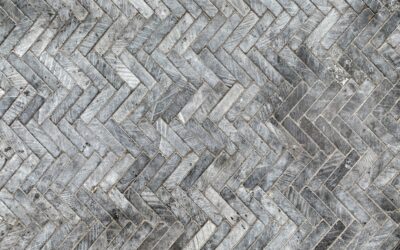
Walk into a high-end farmhouse remodel and the floor almost certainly tells a story before anyone says a word. Hand scraped oak flooring delivers the look of a 200-year-old plank with scallops, ridges, and chatter marks pressed or carved into modern engineered or solid wood. Done well it earns $9 to $14 per square foot installed; done poorly it looks like a stamped pattern repeating every six boards. Knowing what to specify, which brands produce true variability, and how to maintain the texture decides whether you end up with character or kitsch.
What Hand Scraped Actually Means
True hand-scraped flooring is finished one plank at a time by a craftsman using a draw knife or scraper to cut shallow scallops along the grain. Mass-market hand scraped, which now dominates the category, uses CNC routers programmed with randomized patterns or rubber-mat presses that emboss the same texture across thousands of planks. The visual difference at three feet is small; the difference at six inches is significant. Premium brands like Mannington Restoration, Bruce American Originals, and DuChateau use multiple pattern dies or genuine hand finishing to avoid the repeating-pattern giveaway.
Red Oak vs White Oak
Oak species selection matters more than most buyers realize. Red oak runs 1,290 on the Janka hardness scale with pronounced open grain and a pink-brown undertone; white oak rates 1,360 Janka with a tighter, closed grain and a cooler tan-gray base. Both scrape well, but white oak’s denser grain holds finer scrape detail without splintering, which is why most current designer collections use white oak as the substrate. White oak also fumes and reactive-stains beautifully, giving the gray, weathered finishes popular in modern farmhouse and Scandinavian designs.
Solid vs Engineered Construction
Hand scraped oak comes in two constructions, and each fits different installations:
- Solid hand scraped: 3/4 inch thick milled from a single oak board. Sands and refinishes 6-8 times. Nail-down only over plywood subfloor above grade. Costs $6-$10 per sq ft material.
- Engineered hand scraped: 3/8 to 5/8 inch with a 2-6 mm hardwood wear layer over plywood or HDF core. Sands 1-3 times depending on wear layer. Nail, glue, or float over wood or concrete. $5-$12 per sq ft material.
Engineered now outsells solid roughly three to one because it tolerates basement installations, radiant heat, and humidity swings that warp solid product. For radiant heat especially, only engineered hand-scraped oak should be specified.
Cost Per Square Foot Installed
Pricing breaks down across three tiers. Budget hand scraped from Home Depot or Lumber Liquidators (now LL Flooring) runs $3.50 to $5.50 per square foot material, $7 to $9 installed. Mid-tier Bruce, Mohawk RevWood Plus, and Shaw Couture Oak land at $5 to $8 per square foot material, $9 to $12 installed. Premium Mannington Restoration, Anderson Tuftex, and DuChateau push $8 to $14 per square foot material and $13 to $20 installed. Site-finished solid hand-scraped, where a contractor scrapes boards on-site after install, runs $12 to $18 per square foot installed and delivers the most authentic variability.
Finish Options
Modern hand scraped oak ships with one of three factory finishes. Aluminum oxide urethane is the default on most engineered product, offering 25-year residential wear warranties and the hardest scratch resistance. UV-cured oil finishes from Rubio Monocoat, WOCA, and Pallmann produce a flatter, more natural look that emphasizes the scraped texture but requires re-oiling every two to three years in high-traffic rooms. Site-finished products take Bona Traffic HD or Loba Easy Finish water-based polyurethane in two to four coats. Each finish reads differently: urethane plasticizes the scrape; oil enhances it.
Installation Realities
Hand-scraped texture forgives subfloor irregularities better than smooth-faced hardwood. The eye accepts a 1/16 inch height variation between planks because the texture already reads as uneven. That tolerance lets installers move 15 to 20 percent faster on hand-scraped jobs compared to square-edge smooth product. Always rack three to five boxes at once during install to randomize color variation; oak ranges from blonde to chocolate within a single pallet and stacking boards from one box at a time produces visible bands across the floor.
Acclimate solid hand-scraped oak in the install room for at least 7 days at 60 to 80F and 30 to 50 percent relative humidity per NWFA guidelines. Engineered product needs 48 to 72 hours. Skip acclimation and the floor will cup or gap within the first heating season.
Brand Spotlight: Mannington Restoration Collection
Mannington Restoration uses a 12mm engineered construction with a true hardwood veneer scraped and color-treated using more than 30 distinct visual variations across each SKU. The collection runs $6 to $9 per square foot material and lands at $11 to $14 installed. It carries a 50-year residential, 5-year light commercial warranty, and ships in 7.5-inch and 9-inch widths that match current wide-plank design trends. The hand-scraped grade on Restoration is the best mass-market hand-scraped texture available, with no visible pattern repeat across a typical 500 square foot room.
Cleaning and Care
Hand-scraped grooves trap dust and grit that act like sandpaper underfoot. Vacuum weekly with a hard-floor attachment, not a beater bar. Damp-mop monthly with a pH-neutral cleaner like Bona Hardwood Floor Cleaner or Bruce Hardwood Cleaner. Never use steam mops, vinegar, or oil-soap products: steam delaminates engineered wear layers, vinegar etches polyurethane, and oil soap leaves a residue that dulls the finish within months. Recoat urethane finishes every 7 to 10 years; re-oil oil-finished floors every 2 to 3 years in living spaces, annually in kitchens.
Final Verdict
Hand scraped oak flooring earns its place when authentic character and forgiving installation matter more than crisp modern minimalism. Pick engineered white oak in the 7-inch to 9-inch width range, specify a true multi-pattern manufacturer like Mannington or Bruce American Originals, and budget $11 to $14 per square foot installed for a result that holds its value for 25 years. Skip cheap budget hand-scraped from big-box stores where the pattern repeats every six boards; the savings disappear within five years as the look starts reading dated.
Prefer to explore on your own?
See how new flooring looks in your actual room in seconds — free, no signup.
Try the free Floor Studio →