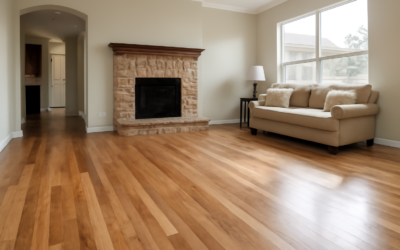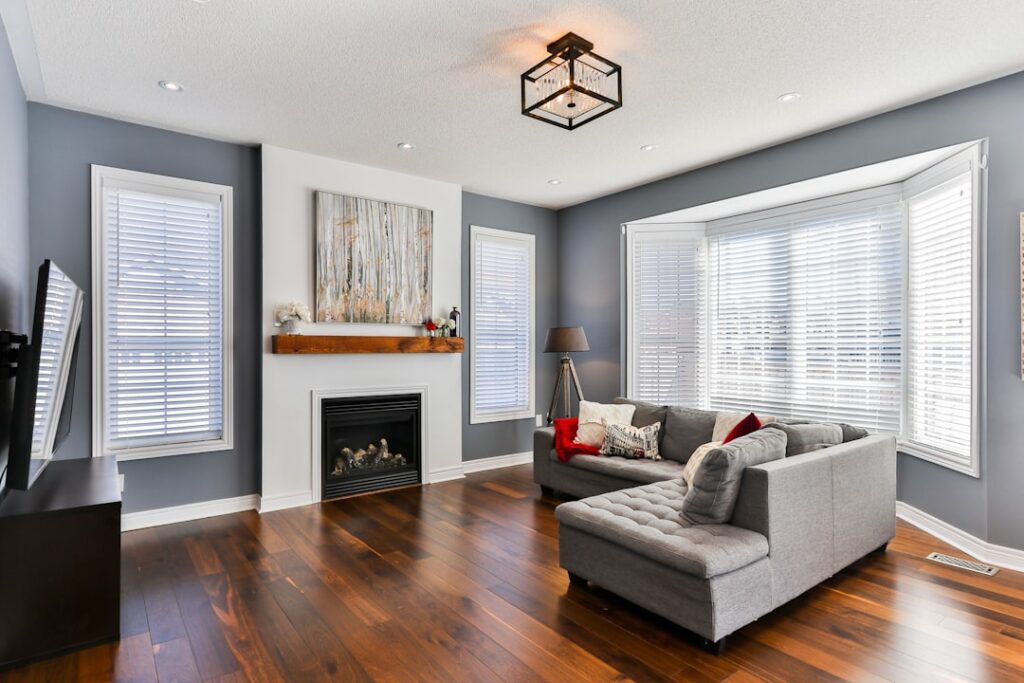
Frisco’s North Texas climate is hard on wood floors in ways most homeowners never expect. Choosing hardwood flooring in Frisco TX means planning for hot, humid summers, dry winters, and the wide indoor humidity swings that come with running the AC five months a year. Get the species and construction right and a floor lasts 30 years; get it wrong and you’ll see gaps and cupping by the second summer. This guide breaks down what actually works locally, what it costs, and how to hire well.
Why Frisco’s Climate Changes the Decision
Collin and Denton County sit in a humid subtropical zone, with summer dew points that push indoor relative humidity toward 55-60% if your HVAC isn’t dialed in, then drop to 25-30% during dry January cold snaps. Solid 3/4-inch wood expands and contracts with every swing. That movement is the number-one cause of warranty complaints around Frisco, Prosper, and McKinney.
Most local flooring pros now steer homeowners toward engineered hardwood for exactly this reason. A quality engineered plank uses a multi-ply or HDF core that moves far less than solid wood, so it tolerates the humidity range better, especially over a concrete slab — which is what the vast majority of Frisco homes are built on.
Best Species and Construction for North Texas
White oak and hickory are the workhorses here. White oak rates around 1,360 on the Janka hardness scale and hides grain movement well; hickory hits roughly 1,820 and shrugs off kid and pet traffic. Both pair nicely with the transitional and modern-farmhouse looks common in newer Frisco subdivisions.
- Engineered white oak — most popular; 1/2 to 5/8-inch with a 3-4mm wear layer can be refinished once or twice
- Hickory — best for busy households and dogs; dramatic grain
- Maple — clean, contemporary; takes light stains evenly
- Avoid wide solid planks over slab — 7-inch solid boards are the most likely to gap in winter
If you have your heart set on solid wood, keep boards 3-1/4 inches or narrower and budget for proper acclimation.
Typical Frisco Price Ranges
Pricing in the Frisco market runs higher than the national average because labor demand here is strong. Expect these installed ranges as a planning baseline:
- Mid-grade engineered oak, installed: $8-$12 per sq ft
- Premium wide-plank European oak, installed: $13-$20 per sq ft
- Solid hardwood, installed: $9-$15 per sq ft
- Refinishing existing floors: $3.50-$6 per sq ft
For a 1,500 sq ft main floor, a quality engineered installation typically lands between $13,000 and $22,000. Slab prep — grinding, moisture testing, and self-leveling — can add $1-$3 per sq ft and is worth every penny over Frisco’s expansive clay soils, which cause slabs to shift.
How to Vet a Frisco Installer
The metroplex has plenty of skilled installers, but also plenty of subcontracted crews who rush. Before signing, confirm a few non-negotiables:
- Texas businesses don’t license flooring contractors, so verify general liability and workers’ comp insurance directly
- Ask whether they perform a calcium chloride or in-situ RH moisture test on your slab — skipping this is a red flag
- Request three local references from the past year in Frisco, Plano, or Little Elm
- Confirm the acclimation period: quality crews leave wood on-site 3-7 days before install
Check their Better Business Bureau standing and read Google reviews for patterns, not one-off complaints. A long local track record matters more than the lowest bid.
What to Look For When Comparing Quotes
Line-item bids protect you. A vague “$10/sq ft installed” number hides where corners get cut. Make sure each quote spells out:
- Tear-out and haul-away of old flooring (often $1-$2 per sq ft)
- Subfloor prep and moisture mitigation
- Underlayment or moisture barrier type
- Transitions, shoe molding, and stair nosing
- Written warranty on both labor and product
When you get three bids, the middle one is usually the safest. A bid 25% below the others almost always means thinner prep or cheaper underlayment.
Solid vs Engineered for Frisco Homes
This is the decision that trips up most homeowners, so it’s worth spelling out clearly. Solid hardwood is a single piece of wood, typically 3/4 inch thick, that can be sanded and refinished six to ten times across a 50-to-100-year life. Engineered hardwood layers a real wood veneer over a plywood or HDF core, giving you a genuine wood surface that moves far less with humidity.
In Frisco, the slab foundation tilts the math heavily toward engineered. You cannot nail solid wood directly to concrete — it requires a plywood subfloor or a floating system, which adds cost and height. Engineered planks glue or float directly over slab, install faster, and resist the seasonal movement that causes gaps. Reserve solid wood for the rare pier-and-beam home or a second story over a wood subfloor.
Acclimation and Installation Timeline
Rushing a hardwood install is how you guarantee a callback. Quality crews deliver the wood and let it sit in the conditioned home for 3 to 7 days so it equilibrates to your indoor humidity before a single board goes down. Skipping acclimation is the second most common cause of gapping and cupping after moisture problems.
Plan for the full project to take several days. A typical 1,500 sq ft installation runs 3 to 5 working days including tear-out, prep, acclimation, install, and trim. Refinishing an existing floor adds 3 to 5 days for sanding, staining, and multiple coats of finish, with 24 to 48 hours of cure time before you walk on it in socks and longer before moving furniture back.
Pros and Cons at a Glance
Hardwood adds real resale value in Frisco’s competitive market — buyers expect it in homes above $500K. The trade-offs are cost and the maintenance discipline North Texas humidity demands.
- Pros: strong resale appeal, refinishable, timeless look, pairs with open floor plans
- Cons: sensitive to humidity swings, higher upfront cost than LVP, requires humidity control (aim to keep indoor RH 35-55% year-round)
Run a whole-home humidifier in winter and keep the AC sized correctly in summer, and quality hardwood flooring in Frisco TX will outlast every other surface in your home. Choose engineered white oak, hire a crew that moisture-tests the slab, and insist on line-item bids — that combination is what separates a 30-year floor from a callback.
Prefer to explore on your own?
See how new flooring looks in your actual room in seconds — free, no signup.
Try the free Floor Studio →