Frisco’s mix of newer slab-on-grade homes, hot North Texas summers, and clay soil that shifts with the seasons makes flooring choice less casual than it looks. If you’re shopping for laminate flooring in Frisco, the good news is that modern water-resistant laminate handles this climate well, but only if you match the AC rating, expansion gaps, and underlayment to local conditions. This guide walks through what actually matters for Frisco homeowners and how to avoid the mistakes installers see most often.
Why Laminate Works in the Frisco Climate
Summers here regularly push past 100°F, and homes run air conditioning hard for months. That keeps indoor humidity relatively stable, which laminate likes. The bigger concern is the swing between a dry, heated winter and a humid spring, because laminate’s HDF core expands and contracts with moisture in the air.
Quality laminate accommodates this movement if it’s installed as a floating floor with proper perimeter gaps. Skip the gap and you’ll get peaking — those raised ridges where planks push against a wall. In a region with real seasonal humidity shifts, leaving a 5/16-inch expansion gap around the entire room is non-negotiable.
Choosing the Right AC Rating
The Abrasion Class (AC) rating tells you how much traffic a laminate can take. For a Frisco family home, match the rating to the room:
- AC3: General residential — bedrooms and low-traffic areas.
- AC4: Heavy residential and light commercial — the right default for kitchens, entries, and hallways.
- AC5: Commercial-grade — overkill for most homes but worth it if you have large dogs or a home office with rolling chairs.
For most of the house, AC4 is the sweet spot. Pair it with a 12mm plank if you want a more solid, hardwood-like feel underfoot; 8mm is fine but sounds hollower over a slab.
The Slab Subfloor Reality
Most Frisco homes are built on concrete slabs, and concrete holds moisture. Before any laminate goes down, the slab needs a moisture test — a simple calcium chloride or relative-humidity test costs little and prevents warped planks later. A 6-mil polyethylene vapor barrier under the underlayment is essential on slab installations.
Slab flatness is the other issue. Texas slabs aren’t always level, and laminate’s click joints fail over dips greater than 3/16 inch across a 10-foot span. Budget for self-leveling compound at $1 to $2 per square foot if your contractor flags low spots during the moisture and flatness check.
Water-Resistant vs Waterproof
Standard laminate is water-resistant for spills wiped up quickly, not waterproof. If you want laminate in a Frisco kitchen or near a back door, look for a waterproof laminate line with a sealed core and tight-locking joints rated for several hours of standing water. These run a little more but earn their keep where mopping and pet bowls are part of daily life.
If a room sees real water risk — a full bathroom or a laundry — many installers will steer you toward rigid-core vinyl instead. Laminate is the better-looking, warmer-feeling choice almost everywhere else.
What It Costs in Frisco
Local pricing tracks the broader DFW market. Expect roughly:
- Builder-grade laminate: $1.50-$2.50 per sq ft
- Mid-grade AC4, 12mm: $2.50-$4.00 per sq ft
- Waterproof laminate: $3.50-$5.50 per sq ft
- Professional installation: $2.00-$4.00 per sq ft
- Slab prep / leveling: $0.50-$2.00 per sq ft as needed
For a 1,500-square-foot installation, a realistic all-in budget is $9,000 to $15,000 depending on grade and how much leveling the slab needs.
Hiring an Installer Locally
Frisco has plenty of flooring crews, but quality varies. Ask any installer how they handle slab moisture testing, what expansion gap they leave, and whether they use a vapor barrier — the right answers separate pros from price-only outfits. Get the quote itemized so material, labor, leveling, and trim are listed separately.
Confirm they’re licensed and insured, ask for two recent local references, and verify the manufacturer’s warranty stays valid with their installation method. A floating laminate floor installed correctly should last 15 to 25 years; installed over an untested slab with no vapor barrier, it can fail in two.
Underlayment and Sound
Over a concrete slab, laminate sounds hollow and cold without the right underlayment. A combination underlayment that includes a foam cushion and an integrated vapor barrier solves both problems at once, dampening the click-clack of footsteps and blocking slab moisture. Expect to pay $0.30 to $0.60 per square foot for a quality pad.
If your laminate has an attached pad already, do not stack a second one underneath — doubling up makes the floor too spongy and stresses the locking joints. For Frisco’s two-story homes, a good acoustic underlayment also cuts the noise transmitted to rooms below, which matters in open floor plans where sound carries.
Color, Style, and Resale in Frisco
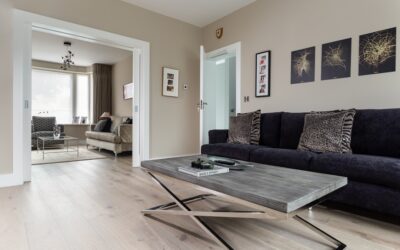
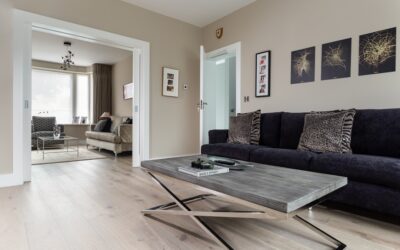
Frisco’s housing market leans contemporary, and the most popular laminate looks here follow the wider trend toward wide planks in light-to-medium oak tones with matte finishes. Gray was dominant a few years ago but warmer beiges and natural oaks now read as fresher to buyers. A 7-inch or wider plank makes a room feel larger and more current than narrow strips.
For resale, neutral, realistic wood-look laminate appeals to the broadest pool of buyers in a competitive market like Frisco. Avoid trendy high-gloss or strongly colored options if you may sell within a few years. A convincing matte oak laminate photographs well, shows clean in listings, and rarely turns a buyer off.
The Bottom Line
Laminate is a strong, budget-friendly choice for Frisco homes when you respect the slab and the seasons. Choose AC4 for living areas, leave generous expansion gaps, test the slab for moisture, and use a vapor barrier on concrete. Spend up for a waterproof line in kitchens and entries. Do those four things and you’ll get a floor that looks like wood, shrugs off North Texas heat, and lasts two decades for a fraction of hardwood’s cost.
Prefer to explore on your own?
See how new flooring looks in your actual room in seconds — free, no signup.
Try the free Floor Studio →