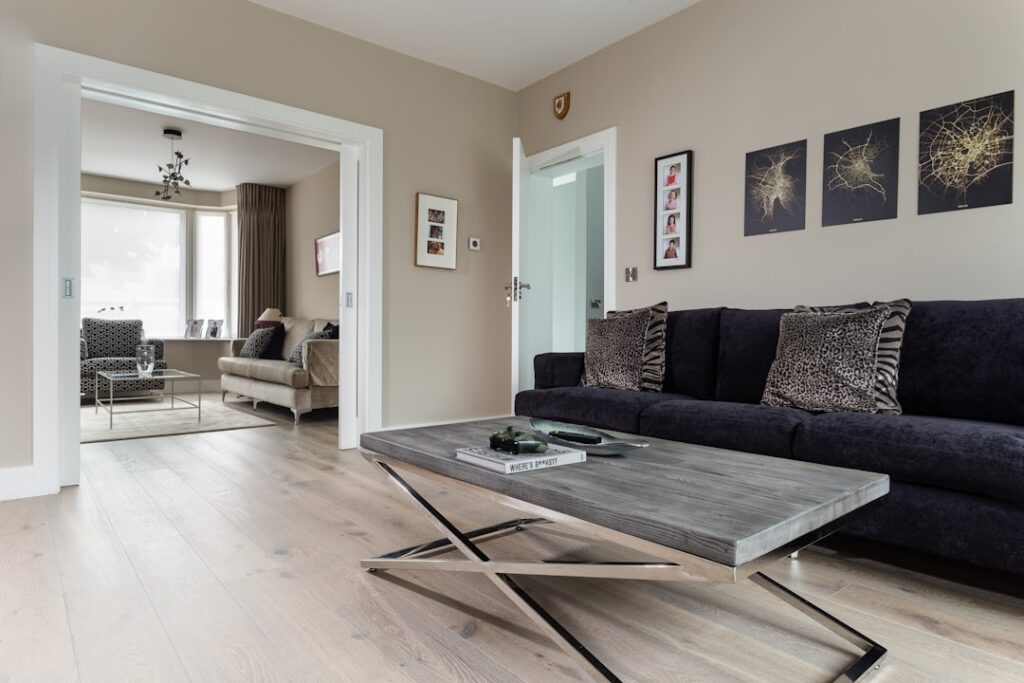
Dallas homeowners love laminate for the same reasons as everyone else: it delivers a convincing wood look at a fraction of hardwood’s price. But choosing laminate flooring Dallas homes can rely on means accounting for North Texas conditions, scorching summers, episodes of humidity, and the notoriously expansive clay soil that causes foundations and slabs to shift. Pick the right product and prep the subfloor correctly, and laminate is a durable, affordable choice. Get it wrong, and you will see gapping, peaking, or swollen edges within a season.
- Why Dallas Conditions Matter for Laminate
- Understanding AC Ratings
- Waterproof and Water-Resistant Laminate
- Typical Costs in the Dallas Market
- Subfloor Prep on Dallas Slabs
- Installation Best Practices
- Pros and Cons for Dallas Homeowners
- Plank Thickness and Underlayment
- Maintenance in the Texas Climate
- The Bottom Line
Why Dallas Conditions Matter for Laminate
Laminate is built on a high-density fiberboard (HDF) core topped with a printed decorative layer and a clear wear layer. That fiberboard core is the vulnerability. It reacts to moisture and to temperature-driven expansion and contraction. Dallas summers push attic and slab temperatures high, and the region’s clay soil swells and shrinks with rainfall, which can flex slabs and stress floating floors above. Add the occasional humid stretch and you have a climate that punishes poorly installed or moisture-sensitive laminate.
Understanding AC Ratings
The single most useful spec when buying laminate is the AC (Abrasion Class) rating, which grades durability from AC1 to AC5:
- AC1-AC2: light residential; bedrooms and closets only.
- AC3: general residential, all rooms in a typical home.
- AC4: heavy residential and light commercial; ideal for busy Dallas households with kids and pets.
- AC5: commercial-grade.
For most family homes, AC3 is the minimum and AC4 is the smart choice for high-traffic areas like entryways, kitchens, and hallways.
Waterproof and Water-Resistant Laminate
Traditional laminate swells permanently when water sits on it, which is a problem in any climate. Newer water-resistant and waterproof laminates use sealed cores and tighter joints to survive spills and humidity far better. In Dallas, where occasional storms and the odd plumbing leak are facts of life, paying extra for a waterproof-rated laminate is usually worth it, especially for kitchens, laundry rooms, and entries. Just remember that “waterproof” laminate still should not sit submerged; standing water from a major leak can eventually find a way in.
Typical Costs in the Dallas Market
Laminate is one of the most budget-friendly wood-look options. In the Dallas-Fort Worth market, expect roughly:
- Material only: $1 to $4 per square foot for most residential laminate.
- Premium waterproof or thick 12mm planks: $3 to $5 per square foot.
- Professional installation: $2 to $5 per square foot in labor.
- Total installed: commonly $4 to $9 per square foot.
Old-floor removal, subfloor leveling, and slab repair add to the bill, and in older Dallas homes with shifting slabs, leveling is a frequent and important line item.
Subfloor Prep on Dallas Slabs
Most Dallas homes sit on concrete slabs, and slab prep is where laminate projects succeed or fail. Because clay soil movement can leave slabs uneven, the surface must be flat, generally within 3/16 inch over 10 feet, before laminate goes down. Grind down high spots and use self-leveling compound on low areas. Always run a moisture test on the slab; even a flat slab can wick moisture that warps laminate from below. A quality moisture-barrier underlayment is essential over concrete and helps with both moisture and sound.
Installation Best Practices
Floating laminate is a popular DIY project, but a few steps are non-negotiable in this climate.
- Acclimate the planks in the room for at least 48 hours so they adjust to your home’s temperature and humidity.
- Leave a 1/4- to 3/8-inch expansion gap around all walls and fixed objects to accommodate movement.
- Use the right underlayment with a vapor barrier over concrete.
- Stagger end joints by at least 8 to 12 inches for strength and a natural look.
- Cover the gap with baseboard or quarter-round, never caulk or fasten the floor down.
The expansion gap is the most commonly skipped step and the leading cause of peaking and buckling when planks expand in summer heat.
Pros and Cons for Dallas Homeowners
- Pro: affordable, realistic wood looks at a low price point.
- Pro: scratch- and fade-resistant wear layer holds up to pets and sun.
- Pro: DIY-friendly floating installation.
- Con: standard laminate is vulnerable to moisture; choose waterproof for wet areas.
- Con: sensitive to slab flatness and movement, common in North Texas.
- Con: cannot be refinished like hardwood.
Plank Thickness and Underlayment
Two specs beyond the AC rating shape how laminate feels and sounds in a Dallas home. Plank thickness ranges from about 6mm to 12mm; thicker planks feel more solid underfoot, bridge minor subfloor imperfections better, and produce a quieter, less hollow sound. On the common Dallas slab, an 8mm to 12mm plank with a quality attached or separate pad is the sweet spot. Underlayment does double duty here: it cushions the floor and, with the right product, provides a vapor barrier over concrete to block slab moisture. In second-story rooms, a sound-dampening underlayment reduces the click-clack noise that thin laminate transmits to the room below. Skimping on underlayment is a false economy that you will hear and feel every day.
Maintenance in the Texas Climate
Laminate is low-maintenance, but a few habits keep it looking sharp through Dallas heat and dust. Sweep or dust-mop frequently, since the fine grit common in North Texas acts like sandpaper on the wear layer over time. Damp-mop with a well-wrung mop and a laminate-safe cleaner, never a soaking-wet mop or steam, because standing water can seep into the seams and swell the core even on water-resistant products. Wipe spills promptly. Place walk-off mats at exterior doors to trap grit and felt pads under furniture to prevent scratches. With this simple routine, a quality AC4 laminate stays attractive for 15 to 25 years in a typical Dallas household.
The Bottom Line
For Dallas homeowners, laminate flooring Dallas projects succeed when you match the product to the climate and prep the slab properly. Choose at least an AC3 rating, lean toward waterproof laminate for kitchens and entries, level and moisture-test the slab, and never skip the expansion gap. Whether you DIY or hire a local installer, those steps turn an affordable floor into one that stays flat and attractive through North Texas heat and seasonal soil movement for many years.
Prefer to explore on your own?
See how new flooring looks in your actual room in seconds — free, no signup.
Try the free Floor Studio →