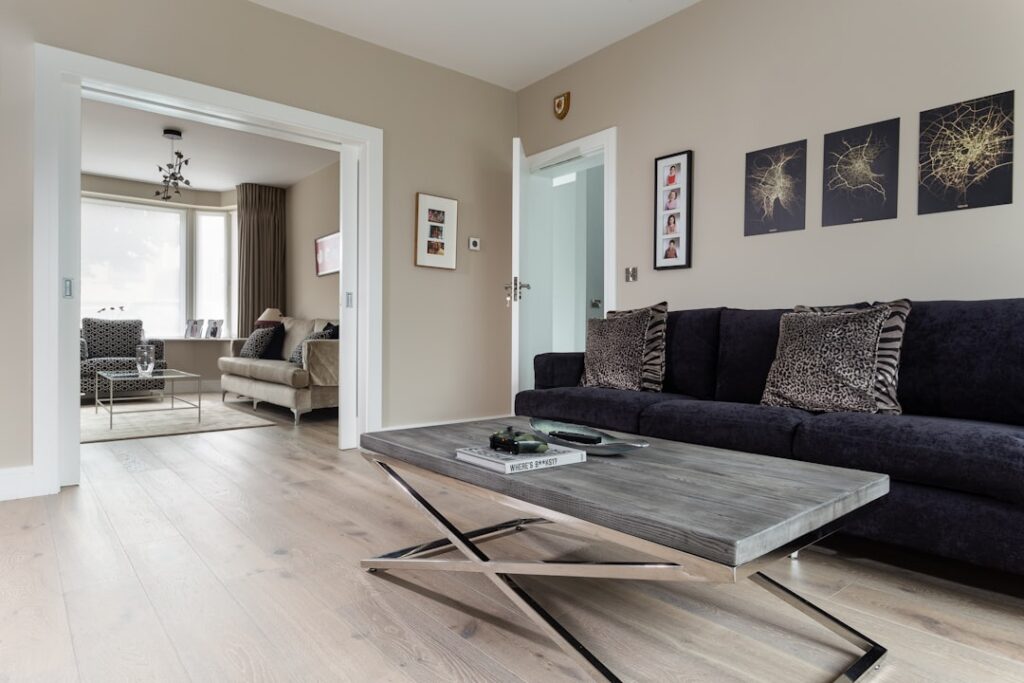
The word “laminate” still makes some homeowners picture the shiny, hollow-sounding floors of the early 2000s, but today’s luxury laminate plank flooring is a different product entirely. Modern luxury laminate plank flooring uses high-definition printing, deep embossing, and beveled edges that make it genuinely hard to tell from real hardwood at arm’s length. It also handles scratches, dents, and everyday traffic better than most solid wood floors. This guide walks you through what makes a laminate plank “luxury,” how to read the specs that matter, and what you should realistically budget per square foot.
Laminate is a layered product: a printed decorative image sits under a clear, tough wear layer, all bonded to a dense high-density fiberboard (HDF) core. “Luxury” laminate simply means the higher tier of this category, with thicker cores, tougher wear layers, better water resistance, and more realistic textures than entry-level builder-grade planks.
What Makes Laminate “Luxury”
Not every plank labeled premium earns the title, so focus on four upgrades. Thicker planks, usually 10mm to 12mm rather than 6mm to 8mm, feel more solid underfoot and hide minor subfloor imperfections. Higher abrasion ratings resist scratching from pets and furniture. Enhanced water resistance keeps spills from swelling the core. And realistic surface texture, where the embossing lines up with the printed wood grain, sells the illusion up close.
Beveled or micro-beveled edges are another hallmark. They create a subtle groove between planks that mimics individual hardwood boards and disguises tiny height differences at the seams. Cheaper laminate skips this, which is part of why it reads as fake.
Understanding AC Ratings
The single most useful spec on the box is the AC rating, an abrasion resistance scale from AC1 to AC5 set by the European EPLF standard. It tells you how much traffic a plank can take before the wear layer gives out.
- AC1 to AC2: light residential use, like bedrooms and closets. Skip these for a main floor.
- AC3: the sweet spot for most homes, rated for all residential rooms plus light commercial traffic.
- AC4: heavier residential and moderate commercial use, ideal for busy households with kids and pets.
- AC5: commercial-grade durability, more than most homes ever need but reassuring in a mudroom or entryway.
For luxury laminate plank flooring in a family home, aim for AC4. It costs only slightly more than AC3 but buys you meaningful extra scratch resistance in hallways and kitchens.
Thickness and Underlayment
Plank thickness affects both feel and sound. Entry-level laminate runs 7mm to 8mm, while luxury lines are typically 10mm or 12mm. A 12mm plank feels closer to real hardwood underfoot and does a better job spanning small dips in an older subfloor. It also tends to sound quieter, especially when paired with a quality underlayment.
Underlayment is not optional. A foam or cork pad, usually 2mm to 3mm, cushions the floating floor, dampens the hollow click of foot traffic, and can add a moisture barrier over concrete. Some premium planks come with underlayment pre-attached, which speeds installation but limits your ability to upgrade the pad. Over a concrete slab, always confirm you have a 6-mil poly vapor barrier or an underlayment rated to block moisture.
Water Resistance vs Waterproof
This distinction trips up a lot of shoppers. Traditional laminate has an HDF core that swells if water sits in the seams, so standard laminate is only water-resistant at best. Newer luxury lines use water-resistant surface treatments and tighter locking joints, and some are marketed as waterproof for up to 24 to 72 hours of surface exposure.
Read the warranty language carefully. A true waterproof rating usually applies to the plank surface and locking system, not to standing water that seeps underneath from a failed dishwasher line. For bathrooms and laundry rooms with real flooding risk, luxury vinyl plank remains the safer bet. For kitchens, entryways, and living areas, water-resistant luxury laminate handles normal spills without trouble as long as you wipe them up reasonably promptly.
Cost of Luxury Laminate Plank Flooring
Price is where laminate stays compelling. Entry-level laminate sells for $1 to $2 per square foot, but luxury laminate plank flooring typically runs $2.50 to $5 per square foot for the material. Add roughly $2 to $4 per square foot for professional installation, bringing an installed floor to about $4.50 to $9 per square foot.
Compare that to solid hardwood at $8 to $15 per square foot installed, and the value is obvious, especially since luxury laminate resists the scratches and dents that plague real wood. Budget for extras too: transition strips, quarter-round trim, underlayment if not pre-attached, and about 10 percent overage for cutting waste and future repairs. On a 300-square-foot living room, that overage is roughly 30 extra square feet worth keeping on hand.
Installation Basics
Most luxury laminate uses a glueless click-lock system that floats over the subfloor, meaning it is not nailed or glued down. That makes it one of the most DIY-friendly floors available. A confident weekend DIYer can typically install a 200-square-foot room in one to two days.
- Let planks acclimate in the room for 48 hours before installing so they adjust to your home’s humidity.
- Leave a 1/4-inch to 3/8-inch expansion gap around all walls, since floating floors expand and contract with temperature.
- Stagger end joints by at least 8 to 12 inches from row to row for strength and a natural look.
- Use a tapping block and pull bar to close seams tightly without damaging the plank edges.
The most common rookie mistake is skipping the expansion gap. Without it, planks have nowhere to go on a hot, humid day and will buckle or peak at the seams. That single detail separates a floor that lasts 20 years from one that fails in a summer.
Maintenance and Everyday Care
One reason luxury laminate keeps winning over homeowners is how little it asks of you. The sealed wear layer means no waxing, no refinishing, and no annual sealing. Day-to-day cleaning is a dry dust mop or vacuum on the hard-floor setting to lift grit, followed by an occasional damp mop with a laminate-safe cleaner.
The cardinal rule is to keep it barely damp, never wet. Standing water is the enemy of any HDF core, so wring the mop hard and wipe up spills quickly rather than letting a wet mop sit. Skip steam mops entirely, since the heat and moisture can work into the seams and void your warranty. Add felt pads under furniture legs and a walk-off mat at entry doors to catch abrasive grit, and a luxury laminate floor will keep its finish for 15 to 25 years.
How It Compares to Vinyl and Hardwood
Shoppers cross-shopping floors usually land on three contenders, and each has a lane. Solid hardwood offers unmatched authenticity and can be refinished several times, but it scratches easily, dents under heels, and costs $8 to $15 per square foot installed. Luxury vinyl plank is fully waterproof and softer underfoot, making it the better pick for bathrooms and basements, though its printed layer can look slightly less crisp than top-tier laminate.
Luxury laminate splits the difference. Its high-density core feels more rigid and substantial than most vinyl, its embossed textures rival the realism of hardwood, and its hard wear layer shrugs off scratches that would mar real wood. For living rooms, bedrooms, hallways, and kitchens that see spills but not flooding, it is often the smartest all-around value of the three.
Is Luxury Laminate Plank Flooring Right for You
If you want the look of hardwood with better scratch and dent resistance, a friendly DIY installation, and a material cost well under real wood, luxury laminate plank flooring is one of the best values in flooring today. Choose an AC4 rating, a 10mm or 12mm thickness, and a water-resistant line for main living areas, and you will have a floor that looks sharp and shrugs off years of family traffic. Save true waterproof vinyl for the wettest rooms, and let luxury laminate handle everywhere else with confidence.
Prefer to explore on your own?
See how new flooring looks in your actual room in seconds — free, no signup.
Try the free Floor Studio →