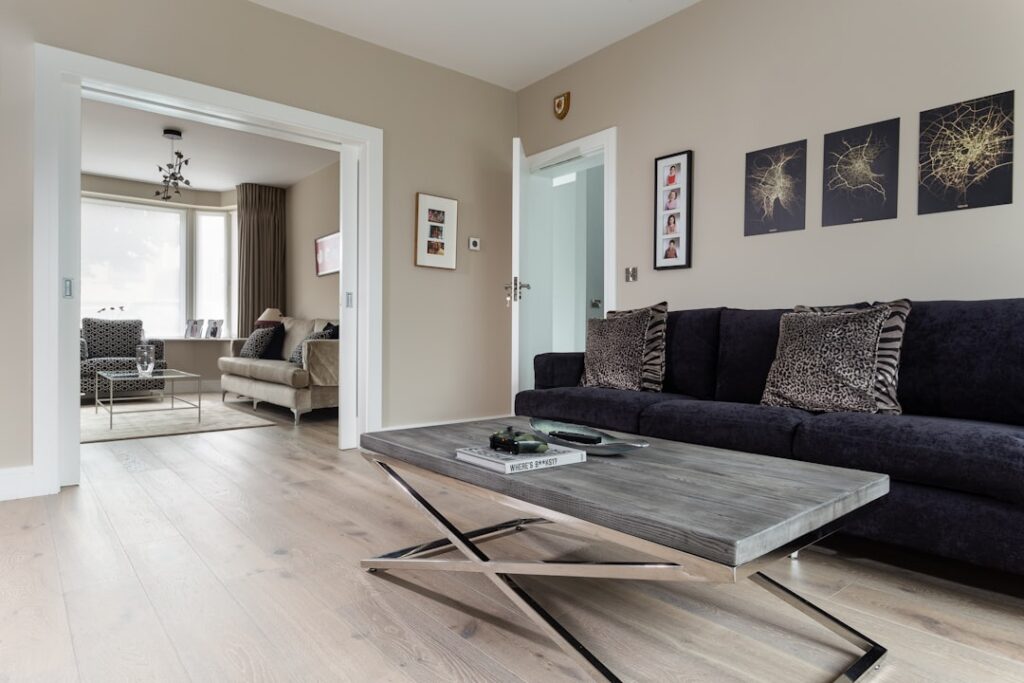
Solid maple hardwood can cost $8 or more per square foot and dents if you look at it wrong. Maple laminate gives you that same bright, clean, subtly grained look for a fraction of the price while standing up to kids, pets, and busy hallways far better than the real thing. If you love the light, contemporary feel of maple but want a durable, budget-friendly floor, laminate deserves a serious look. Here is everything you need to know about styles, ratings, cost, and installation.
- Why Choose the Maple Look
- How Maple Laminate Is Built
- Understanding AC Ratings
- Cost and Value
- Durability and Everyday Care
- Installation Basics
- Water Resistance and Room Selection
- Underlayment and Sound Control
- Choosing the Right Finish and Texture
- Maple Laminate Versus Engineered Wood
- Is Maple Laminate Right for You
Why Choose the Maple Look
Maple is prized for its pale, creamy color and its fine, understated grain. Unlike oak, which has bold cathedral patterns, maple reads smooth and consistent, which makes rooms feel larger, brighter, and more modern. That clean aesthetic works beautifully in contemporary, Scandinavian, and transitional interiors.
Laminate captures this look through a high-resolution printed image layer pressed under a clear wear surface. The best maple laminates reproduce the soft grain and occasional mineral streaks convincingly, so from standing height most people cannot tell it apart from milled hardwood.
How Maple Laminate Is Built
Understanding the four layers helps you judge quality. From bottom to top, a laminate plank consists of a moisture-resistant backing, a dense high-density fiberboard, or HDF, core, the printed decorative layer, and a tough transparent wear layer often reinforced with aluminum oxide.
The HDF core determines stability and dent resistance, while the wear layer determines how well the floor survives scratches and foot traffic. A thicker plank, typically 10mm or 12mm, feels more solid underfoot and muffles hollow echo better than budget 7mm boards.
Understanding AC Ratings
Laminate durability is graded on the Abrasion Class scale, or AC rating, which runs from AC1 to AC5. This single number tells you where a floor belongs, and matching it to your space prevents premature wear.
- AC3 handles all residential use, including busy family homes with pets.
- AC4 steps up to light commercial and is a smart choice for entryways and kitchens.
- AC5 is built for heavy commercial traffic and is overkill for most houses.
For a typical home, choose at least AC3, and lean toward AC4 for maple in high-traffic zones since lighter floors can show scuffs more readily than dark ones.
Cost and Value
Price is where maple laminate shines. Material costs generally run $1.50 to $4 per square foot, with premium water-resistant and thicker planks reaching $5. Professional installation adds roughly $2 to $5 per square foot depending on your region and subfloor prep.
Compare that to solid maple hardwood at $8 to $14 per square foot installed, and the savings are obvious. For a 300-square-foot living room, choosing quality laminate over hardwood can keep $1,500 to $3,000 in your pocket while delivering a nearly identical appearance.
Durability and Everyday Care
Laminate’s aluminum oxide wear layer resists scratches, fading, and stains better than most hardwood finishes, which is a big reason it thrives in homes with dogs and children. The tight click-lock seams shrug off surface spills as long as you wipe them up reasonably promptly.
Cleaning is simple. Sweep or vacuum with a hard-floor setting to remove grit, then damp-mop with a microfiber pad and a laminate-safe cleaner. Never wet-mop or use a steam cleaner, because standing water can seep into the seams and swell the HDF core. Felt pads under furniture legs and a doormat at every entry keep the surface looking new for years.
Installation Basics
Most maple laminate uses a floating, click-lock installation that requires no nails or glue, making it a realistic weekend DIY project. The planks snap together and rest over a foam underlayment rather than fastening to the subfloor, so the whole floor expands and contracts as one unit.
Two rules prevent nearly all problems. First, acclimate the boxes flat in the room for 48 hours before installing so the planks adjust to your home’s temperature and humidity. Second, leave a 1/4-inch to 3/8-inch expansion gap around every wall and fixed object, hidden later by baseboard or quarter-round. Skipping either step invites buckling or gapping down the road.
Water Resistance and Room Selection
Standard maple laminate handles living rooms, bedrooms, hallways, and offices with ease. For kitchens, entries, and half-baths, look specifically for water-resistant or waterproof laminate lines, which use a treated core and tighter seams to survive occasional splashes.
Full bathrooms and laundry rooms with standing water risk still favor luxury vinyl over laminate, since even water-resistant HDF cores can fail under prolonged moisture. Match the product to the room and you avoid the single most common laminate complaint, which is edge swelling near water.
Underlayment and Sound Control
The underlayment beneath maple laminate does more than cushion your steps. It smooths minor subfloor imperfections, adds a moisture barrier over concrete, and dampens the hollow, clicky sound that cheap laminate installs are known for. Many planks come with a thin foam pad pre-attached, but a separate premium underlayment noticeably improves comfort and quiet.
Over a concrete slab, choose an underlayment with a built-in vapor barrier to stop ground moisture from reaching the HDF core. In upstairs rooms and condos, look for an acoustic-rated underlayment that reduces impact noise transmission to the floor below, which some homeowner associations actually require. Spending an extra $0.30 to $0.60 per square foot here pays off every time you walk across the room.
Choosing the Right Finish and Texture
Maple laminate comes in a range of surface finishes that change both appearance and practicality. A smooth, higher-gloss finish reflects light and reinforces the clean, modern maple look, but it shows dust and fine scratches more readily. A matte or low-sheen finish hides everyday wear better and reads more natural.
Texture options include smooth, embossed grain, and embossed-in-register, or EIR, which aligns the texture precisely with the printed grain for the most convincing hardwood feel. For maple specifically, a subtle embossed texture suits the wood’s fine, understated grain, while a heavy hand-scraped texture looks out of place since real maple is rarely distressed that way. Order a sample and run your hand across it before committing to a full order.
Maple Laminate Versus Engineered Wood
Shoppers cross-comparing floors often weigh maple laminate against engineered maple hardwood. Engineered wood has a real maple veneer over a plywood core, so it can be sanded and refinished once or twice and generally adds more resale appeal. It also costs considerably more, typically $5 to $10 per square foot installed, and its softer real-wood surface scratches more easily than laminate.
Laminate wins on price, scratch resistance, and DIY friendliness, while engineered wood wins on authenticity and long-term refinishing. If you want the maple look for the lowest cost and the toughest surface for pets and kids, laminate is the smarter buy. If you value genuine wood underfoot and plan to stay in the home for decades, engineered maple may justify the premium. Knowing this distinction helps you choose confidently rather than second-guessing at the store.
Is Maple Laminate Right for You
If you want a light, clean, contemporary floor that resists the daily abuse of real life without a hardwood price tag, maple laminate is an excellent fit. It pairs beautifully with white trim, gray walls, and modern furnishings, and it installs quickly enough for a confident DIYer to tackle a whole room in a day or two.
Buy at least AC3, choose a 10mm or thicker plank for a solid feel, and select a water-resistant line for anywhere near moisture. Do that, and your maple laminate floor will deliver the airy, upscale look you want and hold up for a decade or more of ordinary household wear.
Prefer to explore on your own?
See how new flooring looks in your actual room in seconds — free, no signup.
Try the free Floor Studio →