Walk into a model home today and you would be hard-pressed to tell the difference between real oak and a good laminate plank until you knock on it. Wood look laminate flooring has come so far in the last decade that its embossed textures, beveled edges, and high-definition printed grain convincingly imitate everything from hand-scraped hickory to wide-plank white oak, all at roughly a third of the cost of the real thing. For homeowners who want the warmth of wood without the price or the maintenance, it is one of the smartest value choices on the market.
But not all laminate is created equal, and buying by looks alone leads to floors that scratch, peel, or swell within a couple of years. Here is how to choose well.
- What Makes Wood Look Laminate Flooring Convincing
- Understanding AC Ratings and Thickness
- The Pros of Wood Look Laminate
- The Cons You Should Know
- Cost Breakdown for a Real Project
- Installation Basics for a Floating Floor
- Is Wood Look Laminate Right for You
- Underlayment and Sound: The Overlooked Details
What Makes Wood Look Laminate Flooring Convincing
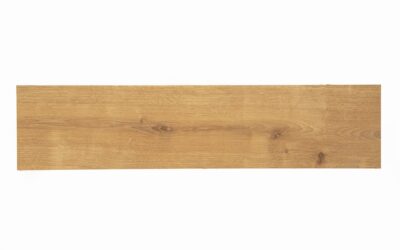
Wood look laminate flooring is a multi-layer engineered product, and its realism comes from the top two layers. A high-resolution photographic image of real wood is fused beneath a clear, tough wear layer, and the best boards add embossed-in-register (EIR) texture, meaning the surface grain and knots you feel line up exactly with the printed image below.
A typical laminate plank has four layers:
- Wear layer: a transparent aluminum-oxide coating that resists scratches and fading
- Design layer: the printed wood photograph
- Core: a high-density fiberboard (HDF) that gives the plank rigidity and locking edges
- Backing: a moisture-resistant balancing layer that keeps boards flat
The more varied the plank patterns in a box, the more natural the finished floor looks. Cheaper laminate repeats the same three or four board images, creating an obvious pattern across a large room. Premium lines carry a dozen or more unique board faces, so you rarely see two identical planks side by side, which is the single biggest visual tell separating a convincing floor from an obvious fake.
Edge treatment adds realism too. Micro-beveled or painted-bevel edges create a subtle groove between planks that mimics the gap between real hardwood boards and catches light the way a true wood floor does. Square-edge laminate, by contrast, can look like one continuous printed sheet. When you shop, run your hand across a sample; the best boards feel like wood grain under your fingertips, not a smooth photograph under plastic.
Understanding AC Ratings and Thickness
Two specs predict how a laminate floor will hold up: the AC rating and the core thickness. Ignore them and you may buy a pretty floor that wears out fast.
The Abrasion Class (AC) rating runs from AC1 to AC5 and measures durability against wear:
- AC3: good for all residential use, including busy living rooms
- AC4: residential plus light commercial; ideal for high-traffic homes with pets and kids
- AC5: heavy commercial; overkill for most homes but bulletproof
For a family home, AC4 is the sweet spot. Thickness ranges from 6 mm to 12 mm; thicker boards, 10 to 12 mm, feel more solid underfoot, muffle sound better, and handle minor subfloor imperfections more gracefully. Combined with a quality underlayment, a 12 mm AC4 plank feels remarkably close to hardwood.
Do not confuse thickness with durability, though, because they measure different things. The AC rating tells you how well the wear layer resists abrasion and scratching, while thickness affects how solid and quiet the floor feels and how forgiving it is over an imperfect subfloor. A thick board with a low AC rating will still scratch easily, and a thin board with a high AC rating will resist wear but sound hollow and telegraph subfloor flaws. The best value combines both: aim for at least 10 mm thickness and an AC4 rating. Also check the warranty, since manufacturers back their better products with 20-year to lifetime residential wear warranties, and a short warranty is a quiet signal of a thinner, less durable wear layer.
The Pros of Wood Look Laminate
Laminate earns its popularity honestly. The advantages are real and practical.
- Cost: $1 to $4 per sq ft for materials, versus $6 to $12 for solid hardwood
- Scratch resistance: the aluminum-oxide wear layer shrugs off pet claws and dropped toys better than most hardwood finishes
- Easy installation: the click-lock, floating-floor design is genuinely DIY-friendly
- Low maintenance: no sanding, no refinishing, no waxing; just sweep and damp-mop
- Fade resistance: holds its color under sunlight better than real wood
The Cons You Should Know
Laminate is not perfect, and being honest about its weaknesses helps you decide where to use it.
The biggest limitation is water. Traditional laminate has an HDF core that swells permanently if water sits in the seams, so standing spills must be wiped promptly. Water-resistant and fully waterproof laminates now exist with sealed cores and tighter locking systems, but for a bathroom or a mudroom that gets soaked, luxury vinyl plank is still the safer choice.
Laminate also cannot be refinished; once the wear layer is compromised, the board is replaced, not sanded. It feels harder and sounds hollower underfoot than solid wood, though good underlayment helps. And while it boosts resale appeal over carpet or dated tile, it does not add the same value as genuine hardwood.
Cost Breakdown for a Real Project
Budget the whole job, not just the planks. A realistic installed cost for wood look laminate runs $3 to $7 per square foot including materials and professional labor.
- Laminate planks: $1 to $4 per sq ft
- Underlayment: $0.30 to $0.80 per sq ft (some planks include it attached)
- Professional installation: $2 to $4 per sq ft
- Transition strips and trim: $50 to $200 for a typical room
A 300 sq ft living room in mid-grade AC4 laminate might total $900 to $2,100 installed. DIY the click-lock install and you cut the labor entirely, bringing that same room down toward $500 in materials.
Budget an extra 7 to 10 percent of material for waste and cuts, more for a diagonal layout or a room with many jogs and closets. That overage covers the trimmed end pieces, the occasional damaged plank, and the offcuts you cannot reuse. It is also smart to keep a full box of leftover planks after the job, since laminate lines are discontinued regularly and a matching board for a future repair can be impossible to find a few years later. Factor transition strips at doorways, where laminate meets tile or carpet, and the quarter-round or baseboard that hides the expansion gap, since these finishing pieces are easy to forget in the initial estimate.
Installation Basics for a Floating Floor
Wood look laminate installs as a floating floor, meaning the planks lock to each other, not to the subfloor. Success comes down to prep and expansion gaps.
The subfloor must be clean, dry, and flat within about 3/16 inch over 10 feet; high spots and dips telegraph through and stress the locking joints. Lay a moisture barrier over concrete. Crucially, leave a 1/4 to 3/8 inch expansion gap around every wall and fixed object, because laminate expands and contracts with humidity, and boards pressed tight to the wall will buckle in summer. Cover the gap with baseboard or quarter-round. Let the boxes acclimate in the room for 48 hours before installing so the planks reach the home’s temperature and humidity.
Is Wood Look Laminate Right for You
Choose wood look laminate flooring if you want the appearance of hardwood on a real-world budget, have kids or pets that would scratch a softer finish, and are comfortable keeping standing water off the floor. For living rooms, bedrooms, hallways, and offices, an AC4 plank of 10 to 12 mm is a durable, handsome, cost-effective floor that will look great for 15 to 25 years.
Reach for waterproof luxury vinyl instead in full bathrooms and laundry rooms, and consider genuine hardwood only if resale value and refinishing ability matter more than cost. Match the AC rating to your traffic, respect the expansion gap, and wood look laminate will give you the wood floor you wanted without the wood floor price.
Underlayment and Sound: The Overlooked Details
Two homeowners can install the exact same plank and end up with floors that feel completely different underfoot, and the difference is almost always the underlayment. This thin foam or cork layer beneath the planks cushions each step, smooths minor subfloor imperfections, and dampens the hollow click that gives cheap laminate away.
Standard foam underlayment costs about $0.30 per sq ft and does the basic job. Upgraded pads with an attached moisture barrier or higher IIC and STC sound ratings run $0.50 to $0.80 per sq ft and are worth it in upstairs rooms or condos where footfall noise travels to the space below. Over a concrete slab, a moisture barrier is non-negotiable; concrete wicks water vapor that will otherwise warp the plank cores from beneath. Some premium laminates ship with a pad already bonded to the plank, which simplifies installation but usually still needs a separate vapor barrier over concrete. Do not double up two attached pads, though, since too much cushion lets the locking joints flex and eventually fail.
Prefer to explore on your own?
See how new flooring looks in your actual room in seconds — free, no signup.
Try the free Floor Studio →