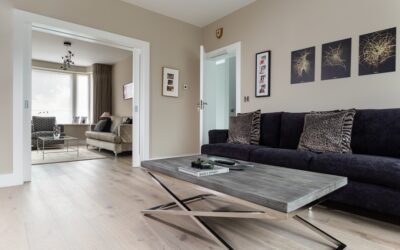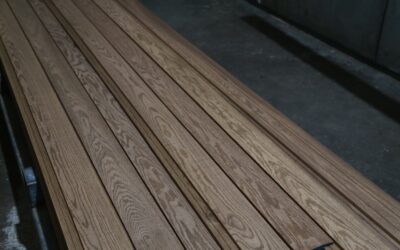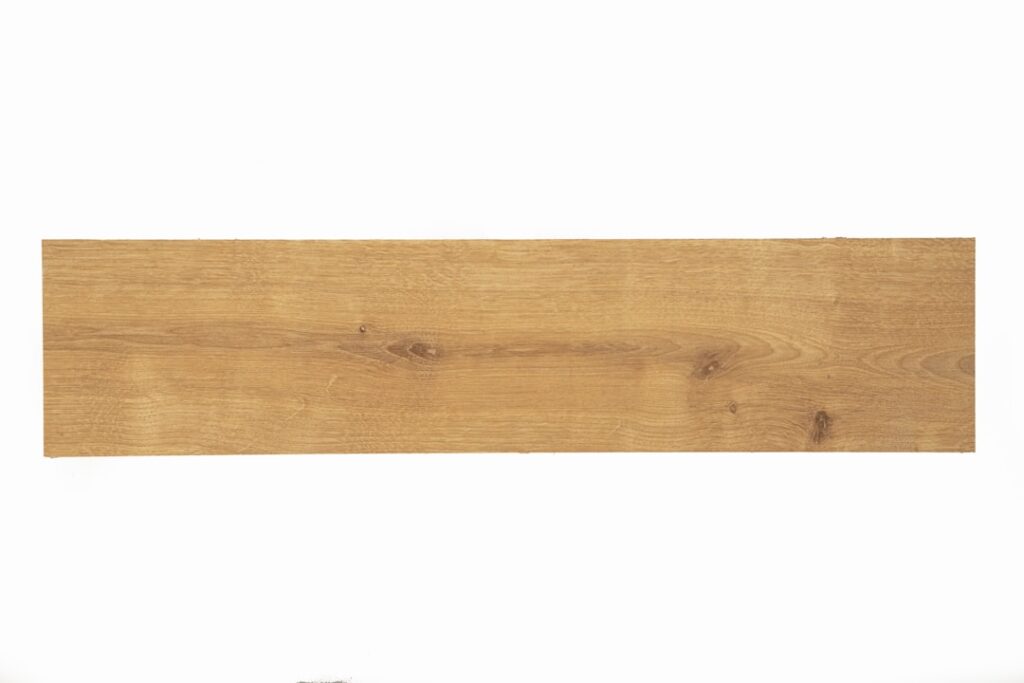
If you want the warm, grainy look of an oak or hickory floor without the price and upkeep of solid planks, natural wood laminate flooring is the product that gets you closest for the least money. Today’s laminate photographs real timber in high resolution, embosses the surface to match the grain, and seals it under a tough aluminum-oxide wear layer, all for roughly $1.50 to $4.50 per square foot. I have watched homeowners crouch down and run their hands over a good natural-wood-look laminate convinced it was refinished hardwood. It was not, and it cost them a quarter as much.
The catch is that “natural wood look” spans a huge quality range, from flat, plasticky boards that fool nobody to richly textured planks that read as genuine wood from any angle. Knowing which specs create that convincing look, and which corners manufacturers cut to hit a low price, is the difference between a floor you are proud of and one you apologize for. Here is how to tell them apart and buy the right one.
What “Natural Wood Look” Actually Means
Laminate is a printed product. The wood grain you see is a high-definition photograph of a real board, laminated over a high-density fiberboard core and sealed under clear melamine and aluminum oxide. The realism of that photo layer, and how the surface texture aligns with it, decides whether the floor looks like wood or like a picture of wood. Cheaper laminate repeats the same three or four plank images over an entire room, so your eye picks up the pattern and the illusion collapses.
Premium natural wood laminate uses 8, 12, or even 30 unique board images in a single box, so no two planks near each other match, exactly like real lumber pulled from different parts of a tree. Look for a spec called “embossed in register,” or EIR, which means the surface texture is pressed to line up precisely with the printed grain. Run your finger along an EIR plank and the ridges follow the grain lines and the knots dip where knots should dip. That single feature does more for realism than any other.
The Advantages Over Real Hardwood
The strongest argument for natural wood laminate is scratch and dent resistance. The aluminum-oxide wear layer resists the scuffs, pet claws, and dragged furniture that leave real hardwood looking gray and tired within a few years. A quality AC4 laminate holds its finish through daily abuse that would have you refinishing an oak floor every five to seven years, a job that runs $3 to $8 per square foot each time.
Cost is the other clear win. Natural wood laminate runs $1.50 to $4.50 per square foot for material, while solid hardwood is $6 to $15 and engineered hardwood $4 to $12 before installation. Laminate also floats over the subfloor with a glueless click-lock system, so a competent DIYer can install a room in a weekend and skip $2 to $5 per square foot in labor. And because the color and grain are printed, you get consistent tone from box to box with no surprise pink or green boards mixed in, which happens with natural species that vary lot to lot.
Where Laminate Falls Short of the Real Thing
The honest limitation is that laminate cannot be refinished. A solid hardwood floor can be sanded and recoated three or four times across 50 to 100 years. When laminate’s wear layer finally wears through, usually 15 to 25 years in, you replace it. For a forever home you plan to keep for decades, real wood can outlast several laminate floors, though most people move or remodel before that math catches up with them.
Laminate also feels harder and sounds slightly more hollow underfoot than solid wood, though a 3mm cork or foam underlayment narrows that gap. Its biggest vulnerability is water: the fiberboard core swells permanently if moisture sits in the seams, so it is a poor fit for bathrooms and a risky one for entry mudrooms unless you buy a water-resistant version. And while a top-tier natural wood laminate is stunningly convincing, a bargain-bin one under $1.50 per square foot with a shallow, uniform texture will never pass for real wood.
AC Ratings and Thickness for Realistic Wear
The AC rating, or Abrasion Class, runs from AC1 to AC5 and tells you how much traffic the wear layer can take. For a whole-home natural wood look, I recommend AC3 as a minimum and AC4 for kitchens, hallways, and homes with kids or dogs. The upgrade from AC3 to AC4 usually costs only 30 to 60 cents per square foot and roughly doubles the abrasion life. AC5 is commercial-grade and unnecessary at home.
Thickness affects both feel and realism. Laminate ranges from 6mm to 12mm, and thicker planks allow deeper embossing, which reads as more authentic wood texture. I steer homeowners to 8mm at a minimum and 10mm to 12mm where budget allows, because the extra depth lets the manufacturer press a more three-dimensional grain and the joints lock more solidly. Beveled or micro-beveled plank edges also help enormously, casting the small shadow line between boards that real hardwood has and that flat, square-edged laminate lacks.
Choosing Species, Color, and Texture
Because the look is printed, you can have any species at one price, so choose based on the room rather than the cost of the real timber. Oak visuals in warm honey or light natural tones hide dust and minor scratches best and suit almost any decor, which is why they dominate the category. Hickory brings dramatic color variation and knots for a rustic, high-contrast look. Walnut and dark espresso tones look rich but show every crumb, pet-hair strand, and footprint, so I warn busy households away from them.
Surface texture options include smooth, embossed, hand-scraped, and distressed. Hand-scraped and wire-brushed textures do double duty: they look like character-grade reclaimed wood and they hide real-life scuffs far better than a smooth gloss finish. Matte and low-sheen finishes also read as more natural than high gloss, which tends to look plastic and highlights every scratch. For most homes I recommend a matte, wire-brushed oak visual in a natural tone as the most forgiving, most convincing all-rounder.
Installation and Underlayment Basics
Natural wood laminate floats, meaning it is not fastened to the subfloor and moves as a single sheet with seasonal humidity. Acclimate the boxes flat in the room for 48 hours first, keep the space between 60°F and 80°F, and leave a 1/4-inch to 3/8-inch expansion gap at every wall, hidden under baseboard or quarter-round. Skipping the gap is the top cause of buckling I see on DIY jobs.
Underlayment carries the floor’s comfort and sound. A 2mm to 3mm foam or cork pad softens the step and quiets the hollow click; cork is the best sound-deadener. Over a concrete slab, use an underlayment with a built-in 6-mil moisture barrier, or lay 6-mil poly sheeting first, to stop vapor from swelling the core from below. Stagger the end joints at least 8 to 12 inches from row to row, both for structural strength and to scatter the plank pattern so the natural-wood illusion holds up across the whole floor.
What to Budget and Where to Spend
For a 200-square-foot living room, buy about 10 percent extra for waste, so roughly 220 square feet. A convincing AC4, 10mm, EIR natural wood laminate around $3 per square foot runs about $660 in material, plus $80 to $130 for underlayment and transitions. DIY installed, you are near $800 for a room that looks like a $2,000 hardwood floor. Add pro labor at $3 per square foot and the finished total lands around $1,400, still well below engineered wood.
My advice is simple: put your money into unique board count, embossed-in-register texture, beveled edges, and an AC4 rating rather than into a famous brand name. Those four features are what separate natural wood laminate flooring that fools your guests from the flat, repeating boards that give laminate a bad reputation. Buy the realism, not the logo, and you will get a floor that looks like real wood for years without the sanding, sealing, and expense that real wood demands.
Prefer to explore on your own?
See how new flooring looks in your actual room in seconds — free, no signup.
Try the free Floor Studio →