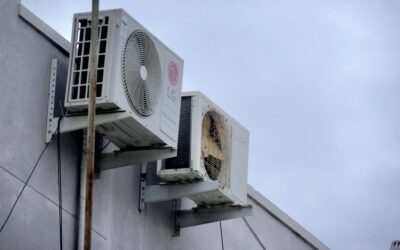
People obsess over the outdoor unit and forget that half of every heat pump lives inside the house, quietly doing the work you actually feel. The heat pump air handler is the indoor half of the system, the box in your closet, basement, or attic that holds the coil, the blower, and usually the backup heat, and it is every bit as important to comfort as the compressor outside. I have seen homeowners replace a perfectly good outdoor unit while pairing it with a mismatched, undersized air handler and wonder why the system never performs. The two halves are a matched set, and the air handler is where the conditioned air is made and moved.
This guide explains what the air handler contains, how it differs from a furnace, the blower types, sizing, install costs, and the maintenance that keeps it running.
What an Air Handler Actually Contains
An air handler is essentially a cabinet housing three key components. First is the indoor coil, the evaporator or condenser coil depending on the mode, where refrigerant either absorbs or releases heat to the air passing over it. Second is the blower, the fan that pulls return air across that coil and pushes conditioned air out through your ducts. Third, in most heat pump air handlers, is a bank of electric resistance heat strips that serve as backup and emergency heat.
Air moves through it in a simple path: return air enters, passes through the filter, crosses the coil where it gets heated or cooled, gets pushed by the blower, and heads out to the supply ducts. The air handler is where the temperature change you feel actually happens. The outdoor unit provides the refrigerant conditions, but the air handler is what turns that into moving warm or cool air in your rooms.
Air Handler vs Furnace: Know the Difference
This trips up a lot of people. An air handler is not a furnace. A furnace generates heat by burning gas or oil, or with electric elements, and has its own heat source. An air handler generates no heat of its own from combustion; it relies entirely on the heat pump’s refrigerant to warm the air, plus those backup electric strips for cold snaps.
That distinction matters when you have a dual-fuel or hybrid system. In some setups a heat pump is paired with a gas furnace instead of a plain air handler, so the furnace acts as both the blower cabinet and the backup heat, taking over from the heat pump when it gets very cold. In an all-electric heat pump system, though, you have an air handler with electric heat strips and no combustion at all. Knowing which you have tells you where your backup heat comes from and what your winter electric bill will look like when the strips run.
Blower Types: ECM vs PSC
The blower inside the air handler comes in two flavors, and the difference shows up on your electric bill and in your comfort. A PSC blower, permanent split capacitor, is the older fixed-speed design. It runs at one or a few set speeds, costs less, and uses more electricity. It is fine, but it is not efficient and it cannot fine-tune airflow.
An ECM blower, electronically commutated motor, is the modern variable-speed motor. It ramps smoothly to deliver exactly the airflow needed, runs far more efficiently, especially in continuous-fan mode, and provides steadier, quieter airflow and better humidity control. A variable-speed ECM air handler paired with a good heat pump gives the most comfortable, efficient result, and it is worth the upgrade on a system you plan to keep. When matching an air handler to a heat pump, confirm the blower type and that the airflow capacity, measured in CFM, matches the outdoor unit’s tonnage.
Sizing and Matching to the Heat Pump
An air handler must be matched to the outdoor heat pump, both in tonnage and in coil compatibility. Heat pumps and air handlers are sold as matched systems for a reason: the coil in the air handler is sized for the refrigerant and airflow the outdoor unit produces. A mismatched coil hurts efficiency, can cause improper refrigerant behavior, and voids the efficiency ratings the system was certified for.
- The tonnage must match: a 3-ton heat pump needs a 3-ton air handler and coil.
- The airflow should hit roughly 350 to 400 CFM per ton, so a 3-ton unit moves about 1,200 CFM.
- The coil and refrigerant type must match the outdoor unit exactly, especially as the industry transitions refrigerants.
Never assume you can bolt any air handler to any heat pump. Manufacturers publish approved combinations, and staying on that list is what preserves both the performance and the warranty. When you replace one half of the system, the other half often needs to change too so they remain a rated match.
What a Heat Pump Air Handler Costs
Prices depend on the size, the blower type, and whether it is a standalone replacement or part of a full system. As a rough guide, a new air handler with a matched coil runs $1,500 to $3,500 for the equipment, with variable-speed ECM units at the higher end and basic PSC units at the lower.
Installed as a standalone replacement, expect $2,000 to $4,500 including labor, refrigerant connection, and electrical for the heat strips. If you are replacing the whole system, the air handler is folded into a total that typically runs $6,000 to $12,000 for a complete heat pump and air handler installation, more for premium variable-speed equipment and difficult installs. The electric backup heat strips draw significant power, often on a dedicated 40 to 60 amp circuit or larger, so factor the electrical into any install. Replacing only the air handler while keeping an aging outdoor unit is usually false economy, because the halves should match in age and refrigerant type.
Backup Heat Strips and Your Winter Bill
The electric resistance heat strips inside an all-electric air handler deserve a closer look, because they are where a heat pump’s efficiency can quietly evaporate on cold days. Those strips are simple resistance elements, the same technology as a toaster, and they convert electricity to heat at a one-to-one ratio, meaning they are three to four times more expensive to run than the heat pump itself. They exist as backup for two situations: when it is too cold for the heat pump to keep up, and during the defrost cycle so you do not feel a cold draft.
The problem is when the strips run more than they should. If your thermostat is set to switch to auxiliary heat too readily, or if the heat pump is undersized, the strips carry a big share of the load and your winter electric bill spikes. A properly configured system uses the heat pump as the primary source and calls the strips only when genuinely needed. If you see your electric bill jump dramatically in cold weather, or the auxiliary heat indicator stays lit for long stretches, have the changeover settings and the heat pump’s capacity checked. Strips draw serious current, often on a dedicated 40 to 60 amp circuit, and running them unnecessarily is like heating your house with space heaters.
Signs Your Air Handler Needs Attention
An air handler telegraphs its problems if you know what to watch for, and catching them early prevents a comfort failure and protects the outdoor unit too. Weak airflow at the registers points to a clogged filter, a dirty blower wheel, or a failing blower motor. Water around the base of the unit or a musty smell usually means a clogged condensate drain backing up in the pan.
- Loud or rattling operation can signal a worn blower bearing, a loose blower wheel, or panels vibrating.
- Ice on the indoor coil or refrigerant lines in cooling mode points to low airflow or a refrigerant problem and needs prompt attention before the coil damages the blower.
- Air that never gets warm in heating mode can mean the heat pump is not delivering, the reversing valve is stuck, or the heat strips have failed.
- A burning smell when heat strips first fire each season is often just dust burning off, but a persistent electrical smell warrants shutting the system down and calling for service.
Because the air handler moves all the air in the system, its problems show up fast as comfort complaints, which makes it worth a look whenever the house is not keeping up.
Maintenance That Keeps It Running
The air handler needs the same basic care as any indoor HVAC equipment, and neglect shows up fast because it moves all the air. Change the filter on schedule, every 1 to 3 months for a 1-inch filter, because a clogged filter starves the blower and can freeze the coil. Keep the coil clean; a coil caked in dust loses heat-transfer capacity and airflow.
Have the condensate drain checked, since the air handler produces condensate in cooling mode that must drain freely or it will overflow the pan and trigger a safety float switch or, worse, water damage. On the electrical side, the heat strip connections and the blower capacitor are common service points. An annual professional check that includes the coil, the blower, the condensate system, and the heat strip operation keeps the indoor half of your heat pump delivering the comfort the outdoor half is working to provide. Treat the air handler as an equal partner to the outdoor unit, not an afterthought, and the whole system lasts longer and runs better.