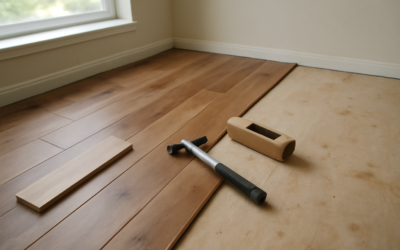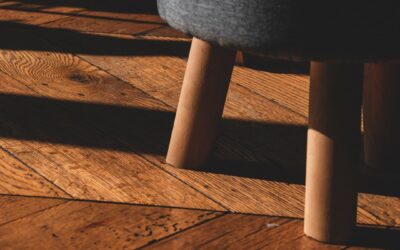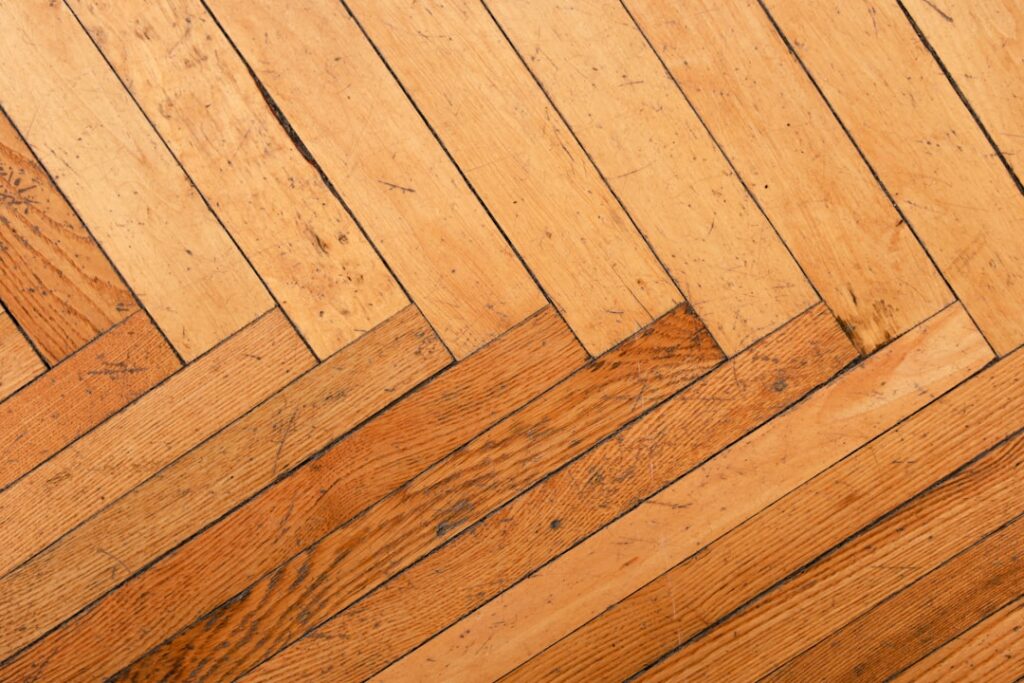
Herringbone wood flooring has adorned grand European interiors for centuries — from the Palace of Versailles to Georgian townhouses across London and Paris. The pattern’s enduring appeal lies in its visual geometry: rectangular planks arranged at alternating 90-degree angles create an interlocking zigzag that adds depth, movement, and unmistakable sophistication to any room.
- What Is Herringbone Wood Flooring?
- Solid vs. Engineered Herringbone
- Best Wood Species for Herringbone
- Herringbone Plank Dimensions
- Popular Herringbone Finishes
- Cost of Herringbone Wood Flooring
- Installation Methods
- Step-by-Step Herringbone Installation
- Step 1: Prepare the Subfloor
- Step 2: Establish the Centre Line
- Step 3: Lay the First Row
- Step 4: Work Outward
- Step 5: Cut Borders
- Step 6: Add Borders (Optional)
- Best Rooms for Herringbone Wood Flooring
- Maintenance Tips
- Frequently Asked Questions
- Is herringbone more expensive to install than straight lay?
- Can I install herringbone over underfloor heating?
- How much waste does herringbone generate?
- Does herringbone make a room look bigger?
- Final Thoughts
Today, herringbone wood flooring is experiencing a major resurgence. Advances in engineered wood technology have made the pattern more accessible and more stable than ever, while a broad range of species and finishes means there is a herringbone floor for every design vision and budget.
What Is Herringbone Wood Flooring?
Herringbone is a layout pattern, not a wood species. Standard rectangular planks — typically shorter and narrower than those used in a straight-lay installation — are arranged in a staggered zigzag. Each plank sits at a right angle to its neighbour, with the end of one plank butting against the side of the next. The result is a series of V-shapes that run down the length of the room.
Herringbone is often confused with chevron. The key difference: herringbone uses rectangular planks that create a staggered zigzag, while chevron uses planks cut at an angle so the ends align in a continuous V. Herringbone is easier and less wasteful to install because no angled cuts are needed on the planks themselves.
Solid vs. Engineered Herringbone
Solid Hardwood Herringbone
Solid herringbone planks are milled from a single piece of timber, typically 3/4 inch thick. They can be sanded and refinished many times over a lifespan that can exceed 100 years. Solid herringbone is the traditional choice and delivers the most authentic feel, but it is susceptible to expansion and contraction with humidity changes — especially in wide plank formats.
Engineered Herringbone
Engineered herringbone features a real wood veneer (2 mm to 6 mm) bonded to a plywood core. The cross-laminated core resists warping and dimensional changes, making engineered planks the more stable option — particularly important for herringbone, where movement in one plank can disrupt the alignment of the entire pattern. Engineered herringbone is compatible with underfloor heating and can be installed over concrete subfloors.
For most homeowners, engineered herringbone is the practical choice. It delivers the same visual result as solid wood with greater dimensional stability and more flexible installation options.
Best Wood Species for Herringbone
European Oak
European oak is the classic herringbone species. Its fine, linear grain does not compete with the geometric pattern, and its high tannin content responds beautifully to fuming, reactive stains, and hardwax oils. Most designer herringbone collections are European oak.
White Oak
American white oak is a close relative of European oak. It is widely available, hard-wearing (Janka 1,360), and takes stains and finishes consistently. White oak is the best choice if you want herringbone in a grey, whitewashed, or custom-stained colour.
Walnut
Walnut herringbone is dramatic and luxurious. The rich chocolate-brown colour and swirling grain create a warm, opulent floor. Walnut is softer (Janka 1,010) than oak, so it is best suited to lower-traffic rooms like bedrooms and formal dining rooms.
Ash
Ash’s bold, straight grain adds striking visual texture to a herringbone layout. It is slightly softer than oak but still suitable for residential use. Ash herringbone works well in both light natural finishes and grey-washed treatments.
Maple
Hard maple (Janka 1,450) is extremely dense, producing a smooth, refined herringbone surface. Its subtle grain pattern creates a clean, modern look. Maple is harder to stain evenly, so it is best used in natural or clear-coated finishes.
Herringbone Plank Dimensions
Herringbone planks are smaller than standard hardwood planks. Common sizes include:
- Small: 400 mm x 80 mm (16″ x 3″). Traditional, intricate look suited to smaller rooms and period properties.
- Medium: 600 mm x 100 mm (24″ x 4″). The most popular size, balancing detail with visual impact.
- Large: 750 mm x 150 mm (30″ x 6″). Contemporary look that suits open-plan spaces and modern interiors.
Smaller planks create a more intricate, traditional pattern; larger planks produce a bolder, more contemporary result.
Popular Herringbone Finishes
Hardwax Oil
The most popular finish for herringbone in 2026. Oil soaks into the wood, enhancing natural colour and texture without creating a plastic-looking surface layer. Matte to satin sheen. Spot-repairable without sanding the entire floor.
Fumed (Smoked)
Ammonia fuming reacts with tannins in oak to produce rich, warm brown tones with plank-to-plank variation. Fumed herringbone has an aged, character-filled look that stain alone cannot replicate.
Lacquered
UV-cured lacquer provides a hard, protective surface that is more scratch-resistant than oil. The finish sits on top of the wood rather than within it, producing a slightly sealed appearance. Lower maintenance than oil but not spot-repairable.
Natural and Clear Coat
A clear finish with no stain lets the wood’s natural colour and grain speak. On white oak, this produces a warm honey tone. On walnut, it showcases the full depth of the chocolate-brown heartwood.
Grey and Whitewashed
Grey-stained or lye-treated herringbone is a staple of Scandinavian and modern minimalist interiors. The neutral tone allows the pattern to dominate without colour distraction.
Cost of Herringbone Wood Flooring
- Engineered oak herringbone: $7.00 to $15.00 per square foot.
- Solid oak herringbone: $8.00 to $16.00 per square foot.
- Engineered walnut herringbone: $10.00 to $18.00 per square foot.
- Professional installation: $4.00 to $8.00 per square foot. Herringbone is more labour-intensive than straight lay.
- On-site finishing (unfinished planks): Add $2.00 to $4.00 per square foot.
For a 500-square-foot living room, expect total installed costs between $5,500 and $11,500 for engineered oak herringbone with professional installation.
Installation Methods
Glue-Down
Glue-down is the preferred method for herringbone. A flexible urethane adhesive bonds each plank directly to the subfloor, creating a solid, stable installation with no hollow spots. This is especially important for herringbone because the pattern amplifies any movement or loose planks.
Nail-Down
Solid hardwood herringbone can be nailed to a plywood subfloor using a pneumatic floor nailer. This is the traditional method for above-grade installations. Each plank is blind-nailed through the tongue.
Floating
Some engineered herringbone products feature click-lock profiles for floating installation. While easier, floating herringbone can feel less solid and may produce a hollow sound in some areas. Glue-down is recommended for the best result.
Step-by-Step Herringbone Installation
Step 1: Prepare the Subfloor
The subfloor must be flat, clean, dry, and structurally sound. Herringbone is less forgiving of subfloor imperfections than straight-lay — uneven surfaces cause gaps and misalignment in the pattern.
Step 2: Establish the Centre Line
Snap a chalk line down the centre of the room, running parallel to the longest wall. This line is the spine of the herringbone pattern. Every plank aligns to it, so accuracy is paramount.
Step 3: Lay the First Row
Position the first plank along the centre line, then place the second plank perpendicular to it. Continue alternating to build the initial spine.
Step 4: Work Outward
Build rows outward from the spine toward each wall. Each new plank butts against the previous row, forming the V-shaped pattern.
Step 5: Cut Borders
At the walls, planks will need angled cuts. A mitre saw provides the most accurate cuts. Maintain the required expansion gap.
Step 6: Add Borders (Optional)
A straight-laid border frame around the herringbone field adds a traditional finishing touch. Two or three rows of straight planks around the perimeter create a crisp picture-frame effect.
Best Rooms for Herringbone Wood Flooring
- Hallways and entryways: Herringbone’s directional pattern draws the eye and makes narrow spaces feel longer.
- Living rooms: The pattern adds visual interest to large, open spaces without overwhelming the decor.
- Dining rooms: Herringbone beneath a dining table creates a formal, elegant setting.
- Bedrooms: Warm wood herringbone creates a luxurious, cocoon-like atmosphere.
Avoid real wood herringbone in bathrooms and basements. For those spaces, herringbone vinyl or waterproof flooring replicates the look without moisture risk.
Maintenance Tips
- Sweep or vacuum regularly to remove grit.
- Damp-mop with a wood-appropriate cleaner — use products matched to your finish type (oil-specific cleaner for oiled floors, pH-neutral for lacquered).
- Re-oil high-traffic areas annually if using a hardwax oil finish.
- Use felt pads under furniture and area rugs in heavy-use zones.
- Maintain indoor humidity between 35 and 55 percent.
Frequently Asked Questions
Is herringbone more expensive to install than straight lay?
Yes. Installation labour costs 30 to 50 percent more due to the additional time required for layout, alignment, and angled border cuts.
Can I install herringbone over underfloor heating?
Engineered herringbone is compatible with underfloor heating. Solid herringbone is not recommended due to the higher risk of movement from heat cycling.
How much waste does herringbone generate?
Plan for 10 to 15 percent waste, compared to 5 to 7 percent for straight lay. The angled border cuts account for most of the additional waste.
Does herringbone make a room look bigger?
The directional V-pattern can elongate a room when oriented lengthwise. In square rooms, herringbone adds visual complexity that can make the space feel more dynamic and interesting.
Final Thoughts
Herringbone wood flooring is a timeless investment that elevates any interior. Whether you choose European oak with a fumed finish or American white oak in a clean natural tone, the pattern adds a layer of design sophistication that straight-laid planks simply cannot match. Invest in quality engineered planks, hire an experienced installer, and maintain the finish with regular care — your herringbone floor will be a centrepiece of your home for generations.
Prefer to explore on your own?
See how new flooring looks in your actual room in seconds — free, no signup.
Try the free Floor Studio →