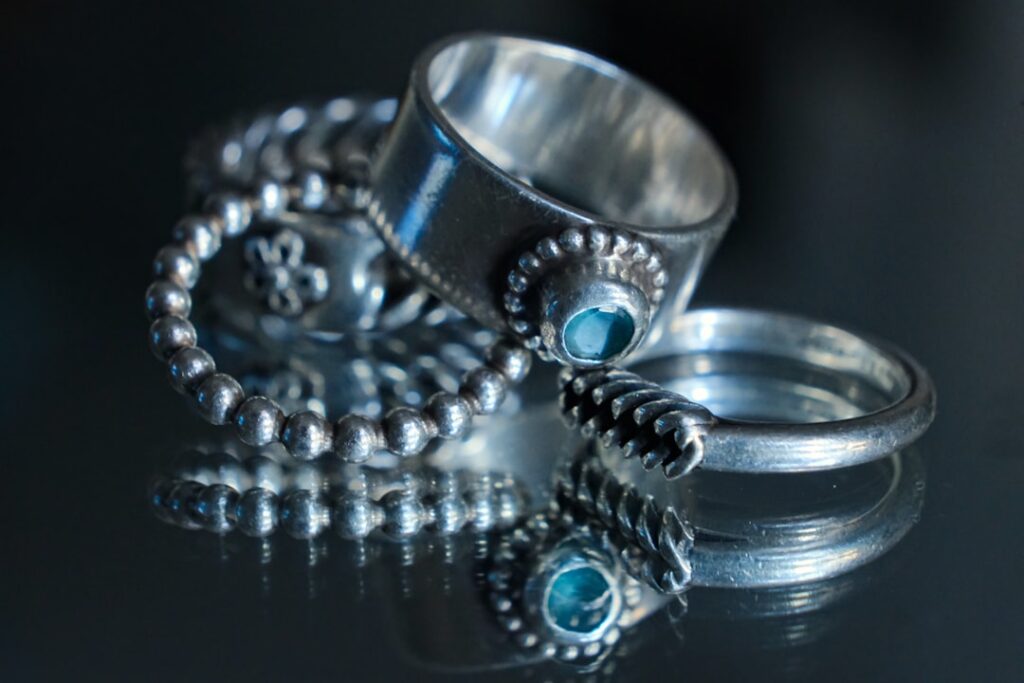
Tarnished silver looks ruined, but almost none of that black film needs to be scrubbed away, and scrubbing is actually the worst thing you can do to it. A good homemade jewelry cleaner for silver works by chemistry, not elbow grease, using a reaction that pulls the tarnish off the metal and transfers it elsewhere, so you keep every bit of the silver instead of polishing it away. With a sheet of aluminum foil and a few pantry staples, you can bring badly tarnished pieces back to a bright shine in minutes, and for a couple of dollars.
This guide covers why silver tarnishes, the foil-and-baking-soda method that does the heavy lifting, gentler options for delicate pieces, and the crucial cautions about gemstones and plated jewelry.
Why Silver Tarnishes in the First Place
Silver does not rust, but it reacts. The black or yellowish film called tarnish is silver sulfide, formed when the metal reacts with sulfur compounds in the air, in your skin’s oils, and in everyday products like rubber, wool, eggs, and some lotions. Humidity accelerates it, which is why silver stored in a damp bathroom tarnishes faster than silver kept in a dry drawer.
Understanding this explains why the best cleaning method is a chemical reaction rather than abrasion. Polishing cloths and pastes physically rub off the tarnish, but they also remove a microscopic layer of silver each time, and over years that wears down detail on antiques and thins plating. The foil method reverses the chemistry instead, converting the silver sulfide back and lifting the sulfur away, so you lose no silver at all. That distinction is why it is the preferred approach for anything valuable.
The Foil and Baking Soda Method
This is the star method, and it works through a process called electrochemical or galvanic reduction. Aluminum is more reactive than silver, so when both metals sit in a hot solution, the sulfur migrates from the silver to the aluminum foil, stripping the tarnish. It is dramatic to watch, and it reaches into crevices and engraving that a cloth never could.
- Line a glass or ceramic bowl with aluminum foil, shiny side up.
- Lay the silver pieces on the foil so each one physically touches the metal.
- Sprinkle 1 to 2 tablespoons of baking soda over the pieces, and add a teaspoon of salt if the tarnish is heavy.
- Pour boiling water over everything until the silver is submerged; the solution will fizz and may give off a faint sulfur smell, which is normal.
- Let it sit for 2 to 5 minutes for light tarnish, up to 10 minutes for heavy tarnish, then remove the pieces with tongs.
Rinse each piece in clean water and buff dry with a soft microfiber cloth. Heavily tarnished items may need a second round. This method is ideal for plain silver chains, flatware, and simple jewelry without soft stones.
Gentler Options for Everyday Cleaning
Not every piece needs the foil bath. For lightly tarnished or delicate items, a mild soak is safer. Mix a few drops of gentle dish soap into a bowl of warm water, let the silver soak for five to ten minutes, work into crevices with a soft toothbrush, then rinse and dry. This simple soap bath removes oils, dirt, and light film and is safe for almost all silver jewelry.
For a bit more tarnish-cutting power without the foil reaction, a paste of baking soda and a little water applied with a soft cloth and rubbed very gently along the metal, then rinsed, brightens surfaces. White toothpaste, the plain non-gel, non-whitening kind, is a classic light polish for plain silver, but use it sparingly and never on stones or plating, since its abrasives can scratch. Always rub in straight lines rather than circles, and rinse thoroughly.
What Not to Do: Stones and Plated Pieces
This is where homemade cleaning goes wrong, so read carefully. The foil-and-baking-soda bath and any abrasive paste can damage soft or porous gemstones. Pearls, opals, turquoise, coral, amber, and emeralds are especially vulnerable; hot water, baking soda, and salt can dull, crack, or discolor them permanently. For jewelry with these stones, clean only the metal areas gently with a damp soapy cloth and keep the stones dry.
Silver-plated jewelry needs caution too. Because the silver layer is extremely thin, abrasive polishing wears through it to the base metal underneath, ruining the piece. The foil method is gentler since it does not abrade, but for valuable plated or antique pieces with an intentional dark patina in the engraving, aggressive cleaning strips a finish you may want to keep. When in doubt on anything valuable, antique, or gem-set, stick to a mild soap-and-water clean and consult a jeweler.
Drying, Buffing, and Storage
How you finish and store silver determines how fast it tarnishes again. After cleaning, rinse thoroughly to remove all cleaning residue, then dry completely with a soft, lint-free cloth; water spots and trapped moisture actually speed up new tarnish. A gentle buff with a microfiber or dedicated silver cloth brings up the final shine.
Store silver to slow tarnish from the start. Keep pieces in a cool, dry place, ideally in anti-tarnish bags or with anti-tarnish strips that absorb the sulfur compounds in the air. Individual soft pouches prevent scratching and reduce air exposure, and tossing a piece of chalk or a silica gel packet into the storage box helps by absorbing moisture. Take silver off before swimming, cleaning, or applying lotion and perfume, since chlorine and chemicals accelerate tarnish and can damage the metal.
Keeping Silver Bright Long Term
The real secret to shining silver is wearing it and maintaining it regularly rather than letting it sit and blacken. Silver that is worn often tarnishes more slowly because the friction of contact and the oils from your skin keep a light polish on it, whereas pieces shut away in a humid drawer for years develop the heaviest tarnish. A quick wipe with a soft cloth after each wearing removes the oils and sulfur before they can react.
With an occasional foil bath for anything that does get heavily tarnished and a gentle soapy wipe for routine care, a homemade jewelry cleaner for silver keeps an entire collection bright for pennies. The approach costs almost nothing, protects the metal far better than constant polishing, and, once you know which pieces to keep away from the foil bath, works on everything from flatware to a favorite chain.
Cleaning Silver Flatware and Serving Pieces
Silver and silver-plated flatware tarnish in storage between holidays, and the foil-and-baking-soda bath is ideal for them because they are usually plain metal without stones. For a full set, use a larger vessel, a foil-lined roasting pan or even a foil-lined sink, so each piece touches the aluminum, then add baking soda and boiling water and let the reaction lift the tarnish in a few minutes. Rinse and dry each piece immediately to prevent water spots.
For flatware that has only light tarnish or that you use regularly, a wash in warm soapy water followed by thorough hand-drying is often all it needs, and it avoids stripping any intentional darkening in the pattern’s recesses that gives antique flatware its depth. Never put good silver or silver-plate in the dishwasher, where the harsh detergent and heat accelerate tarnish and can pit the surface. Hand-washing and prompt drying keep serving pieces ready to use with minimal effort.
Understanding When to See a Professional
Home methods handle everyday tarnish beautifully, but some pieces deserve professional care. Valuable antiques, heirloom sterling, and items with an intentional oxidized patina can lose value if aggressively cleaned at home, since collectors often prize the aged finish. If a piece is genuinely old, marked as fine sterling, or sentimental and irreplaceable, consult a jeweler before experimenting, and describe how it is set and finished.
Also bring in a professional for jewelry with loose stones, damaged prongs, or delicate gems that home cleaning could dislodge or harm, and for heavily tarnished or scratched pieces that need proper restoration rather than a kitchen bath. A jeweler can safely deep-clean, re-tip worn settings, and re-plate worn silver-plate, work that DIY methods cannot replicate. Knowing the line between routine home care and professional restoration protects your most valuable pieces while letting you confidently handle the everyday tarnish yourself.