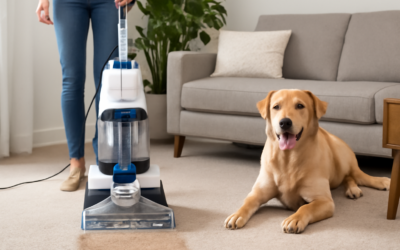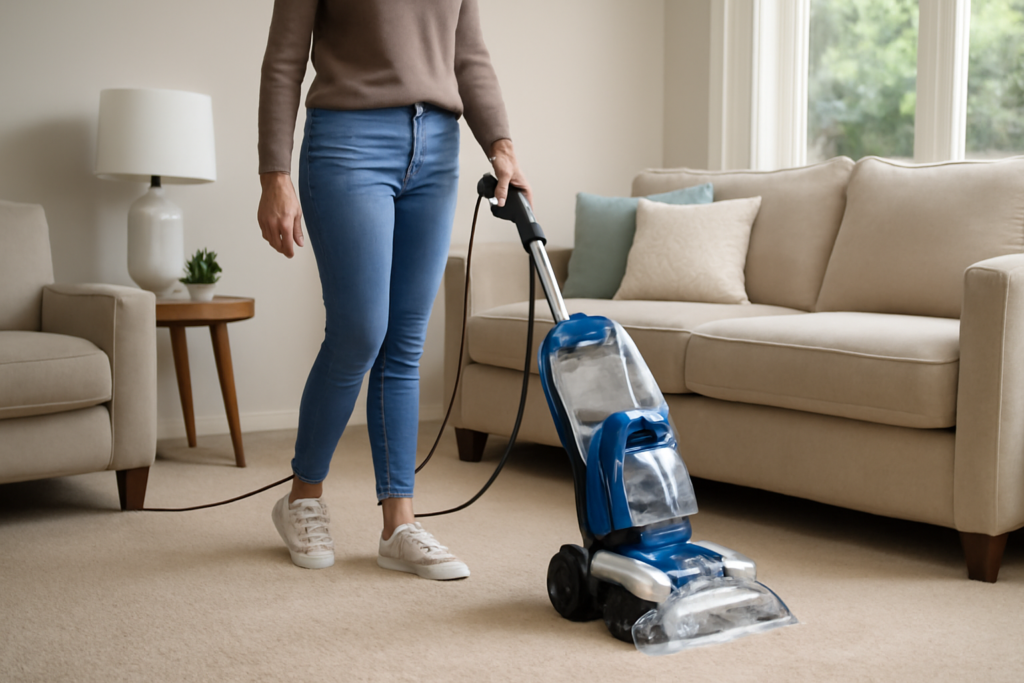
Renting a bulky carpet cleaning machine every time you have a stain is a hassle, which is exactly why the compact Hoover PowerDash carpet cleaner has become a go-to for so many homeowners. It’s a lightweight, upright deep cleaner designed to spray solution, scrub with rotating brushes, and extract dirty water in one pass — without the weight and bulk of older machines. Used correctly, it pulls embedded dirt, pet messes, and traffic-lane grime out of carpet that a vacuum alone leaves behind.
This guide walks through proper setup, mixing solution, cleaning technique, brush care, and drying so you get professional-looking results at home.
What the PowerDash Does
The PowerDash is a hot-water extraction machine, sometimes called a carpet shampooer or deep cleaner. It has two tanks — one for clean water and cleaning solution, one to collect the dirty water it pulls back out. Rotating brushes scrub the carpet while the unit sprays solution, then a suction nozzle extracts the loosened dirt and moisture. The goal is to lift grime out of the fibers and remove as much water as possible so the carpet dries reasonably fast.
It’s designed to be lighter and more maneuverable than traditional deep cleaners, which makes it easier to carry up stairs and steer around furniture. Always check the manual for your specific PowerDash model, since features and tank layouts vary slightly across the lineup.
Setting Up Your Machine
A little prep before you start makes the whole job go smoother and prevents the most common beginner mistakes.
- Vacuum first. Always run a regular vacuum over the carpet before deep cleaning. The PowerDash handles dirt and grime, but loose debris and pet hair should come up dry first.
- Clear the area. Move small furniture out of the room and place foil or plastic tabs under any furniture legs you can’t move, to prevent stains and rust.
- Fill the clean-water tank. Remove the tank, add hot tap water to the fill line, and add carpet cleaning solution per the dilution instructions.
- Empty and seat the dirty-water tank so it’s ready to collect extraction water.
- Plug in to a grounded outlet near your starting point.
Mixing the Cleaning Solution
Getting the solution ratio right matters more than people expect. Too little cleaner and you won’t lift the dirt; too much and you’ll leave a sticky residue that attracts dirt faster than before.
Use a carpet cleaning formula made for upright machines and follow the dilution ratio printed on both the machine’s tank and the detergent bottle. Use hot — not boiling — tap water, since hot water activates the detergent and loosens grime better than cold. Avoid overfilling with detergent, and never substitute regular dish soap or laundry detergent, which oversuds and are nearly impossible to rinse out. For pet messes, an enzyme-based pet formula breaks down odors at the source.
Cleaning Technique
Technique is what separates a freshly deep-cleaned carpet from a soggy, streaky mess. Work in slow, deliberate passes and let the machine do the work.
- Push forward while pressing the trigger to spray solution onto the carpet.
- Pull back slowly without spraying to extract the dirty water. This wet-pass-then-dry-pass rhythm is the key to removing moisture.
- Overlap each pass slightly so you don’t leave untreated strips.
- Make extra dry passes over heavily soiled or high-traffic areas to pull out more water.
- Work toward an exit so you’re not walking back across wet carpet.
For stubborn stains, spray solution, let it dwell for a minute or two to break down the stain, then scrub and extract. Don’t soak the carpet — more water isn’t more cleaning, it just means longer drying and a risk of mildew underneath.
Brush Care and Machine Maintenance
The brushes are the heart of the PowerDash, and keeping them clean keeps the machine working well. After every use, the most important step is rinsing.
- Empty and rinse both tanks. Dump the dirty-water tank, rinse it out, and flush any leftover solution from the clean tank.
- Run clean water through the machine. Fill the clean tank with plain water and run the unit over a sink or utility area to flush solution out of the lines and nozzle.
- Remove and clean the brushes. Take out the brush roll if your model allows, clear out tangled hair and fibers, and rinse off trapped grime.
- Wipe the nozzle and spray jets, clearing any clogs so spray stays even.
- Let everything air-dry before reassembling and storing, so the machine doesn’t develop odors.
Skipping the post-clean rinse is the fastest way to clog the spray nozzle and leave the brushes stiff and smelly. Two minutes of cleanup saves the machine.
Drying the Carpet
Good extraction technique already removes most of the water, but you can speed drying further. Open windows, run ceiling fans, and aim a box fan or two across the damp carpet. In humid weather, running a dehumidifier or the air conditioner helps pull moisture from the air.
Stay off the carpet until it’s dry to the touch — usually a few hours with good airflow, longer in thick carpet or humid conditions. Walking on damp carpet re-soils it and can leave footprints in the freshly cleaned pile. Keep furniture off and protective tabs in place until everything is fully dry.
Getting the Most From Your PowerDash
The PowerDash rewards a routine. Deep clean high-traffic areas every few months and the whole floor once or twice a year, vacuum first every time, mix solution correctly, and always rinse the machine afterward. Treat spills promptly with the same machine before they set, and your carpets will stay fresher between cleanings. Compact and easy to handle, it makes regular deep cleaning realistic instead of a chore you keep putting off.