When you are shopping for a deep cleaning machine, the hoover vs bissell carpet cleaner debate is almost impossible to avoid. Both brands dominate the consumer carpet-cleaning aisle, both have been in the floor-care business for generations, and both sell machines that pull dirt, pet stains, and ground-in grime out of fibers far better than a vacuum ever could. The trouble is that their lineups overlap so heavily that telling them apart takes a little homework.
This guide breaks down how the two brands compare across the features that actually matter day to day: tank design, brush systems, weight and maneuverability, suction and drying, the spot-cleaning versus full-size question, and price tiers. Rather than chasing specific model numbers that change every year, the focus here is on the general strengths of each brand so you can match a machine to your floors and your patience.
Two Brands With Deep Roots in Floor Care
Hoover is one of the oldest names in American floor care, historically known for upright vacuums before expanding aggressively into carpet washing. The brand tends to lean on familiar, no-nonsense designs and a wide retail presence, which makes its machines easy to find and easy to get replacement parts for.
Bissell built much of its modern identity around fabric and carpet cleaning specifically, and the company markets heavily to pet owners. That positioning shows up in the way many Bissell machines are designed, with formulas, tool kits, and tank shapes aimed at hair, accidents, and odors. Neither brand is objectively “better” across the board; each simply emphasizes different things, and the right pick depends on what you clean most often.
Tank Design and Capacity
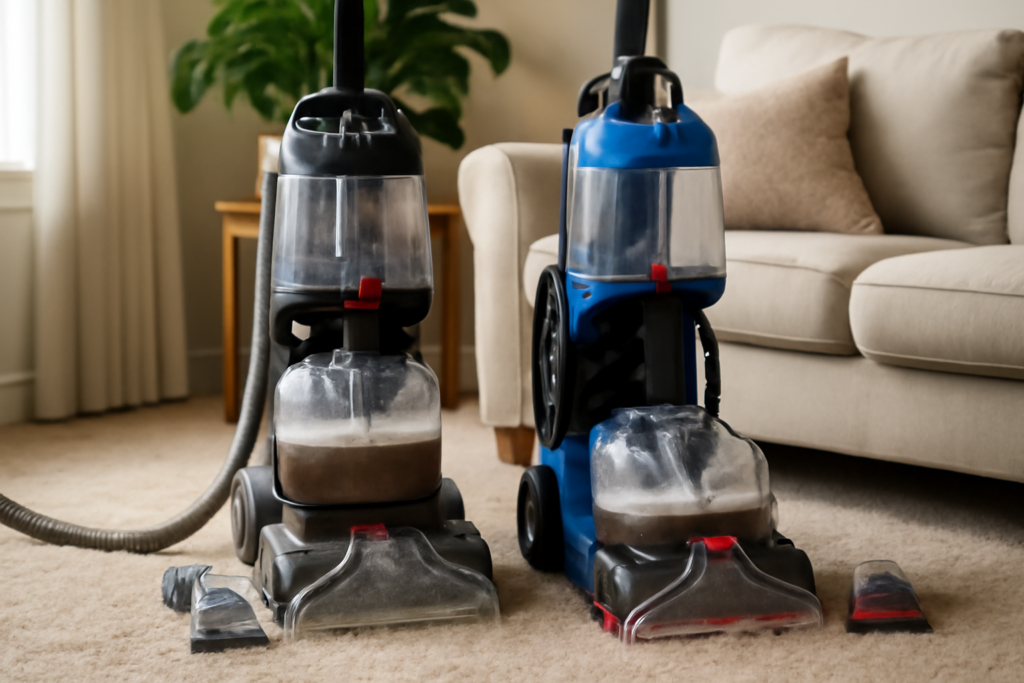
Every carpet cleaner uses two tanks: a clean-water tank that holds your water-and-solution mix, and a dirty-water tank that captures everything pulled back out of the carpet. The bigger those tanks, the longer you can clean before stopping to refill and dump.
- Larger tanks mean fewer trips to the sink, which matters in a big house or on stairs.
- Separate, easy-lift tanks are far less messy to empty than designs where you have to tip the whole machine.
- Wide-mouth dirty-water tanks rinse out faster and resist gunk buildup.
In broad terms, full-size machines from both brands carry roughly a gallon of capacity give or take, while compact and portable units hold far less. Compare the specific tanks on the models you are considering rather than assuming one brand always wins; both Hoover and Bissell offer generous and skimpy tanks depending on the tier.
Brush Systems and Cleaning Power
The brush roll is what agitates the carpet so the solution can lift soil out of the fibers. This is one area where machine-to-machine differences outweigh brand differences, but a few patterns hold.
Many of Bissell’s pet-focused machines feature dense, multi-row brush configurations designed to scrub hair and embedded dander. Hoover, meanwhile, frequently offers wide brush paths and rotating brush designs intended to cover ground quickly. If you have a high-pile carpet or heavy pet traffic, prioritize a model with aggressive, multi-directional brushing regardless of the logo. For low-pile or lightly soiled carpet, almost any mid-tier machine from either brand will do the job.
Weight, Size, and Maneuverability
Full-size carpet cleaners are heavy. Once you add water and solution, even a “lightweight” upright can push 20 pounds or more, and that weight grows as the clean-water tank fills. Pay attention to a few practical details before you buy.
- Consider whether you will carry the machine up and down stairs, which makes a lighter or more compact unit far more appealing.
- Look at the cord length and hose reach if you plan to clean stairs, upholstery, or car interiors.
- Check the height and storage footprint; some uprights are tall and awkward in a closet.
Both brands sell bulky full-size uprights and slim portable spot cleaners. If maneuverability is your top concern, the form factor matters more than the brand name on it.
Spot Cleaners vs Full-Size Machines
One of the smartest decisions you can make is choosing the right category before comparing brands at all. A full-size upright is built to deep clean entire rooms of wall-to-wall carpet. A portable spot cleaner is a compact, hose-driven unit built to attack individual stains, area rugs, stairs, upholstery, and vehicle seats.
Bissell is especially well known for its portable spot-cleaning machines, which many pet owners swear by for quick accident cleanup. Hoover competes in both categories as well. If your home is mostly hard flooring with a few rugs, a portable may be all you need. If you have rooms of carpet to maintain, invest in a full-size upright and keep a portable on hand for emergencies.
Price Tiers and Value
Carpet cleaners from both brands span a wide range. As rough estimates, compact spot cleaners often land in the lower price tier, mid-size uprights occupy the middle, and feature-loaded full-size machines with heated cleaning or self-cleaning hoses sit at the top.
- Budget tier: small portables and basic uprights for occasional cleaning.
- Mid tier: full-size uprights with decent tanks and attachments for regular household use.
- Premium tier: machines with larger tanks, more brushes, drying boost, and specialty pet tools.
Treat any price you see online as a moving target, since both brands run frequent promotions. Factor in the ongoing cost of brand-specific cleaning solutions too, which adds up over the life of the machine.
How to Choose Between Them
Start by being honest about your floors and your habits. Heavy pet household with lots of carpet? Lean toward a machine engineered for hair and odor, an area where Bissell markets hard, but verify the brush and tank specs. Want a familiar, widely available upright with easy parts access for whole-room cleaning? Hoover is a safe, proven choice.
For best results with either brand, follow the manufacturer’s solution dilution instructions exactly, pretest any spot treatment in a hidden area, ventilate the room while it dries, and avoid overwetting, which can lead to mold or backing damage. Empty and rinse the dirty-water tank after every use so it does not develop odor. In the end, the hoover vs bissell carpet cleaner question is less about which brand is superior and more about matching tank size, brush design, weight, and price tier to the way you actually live.