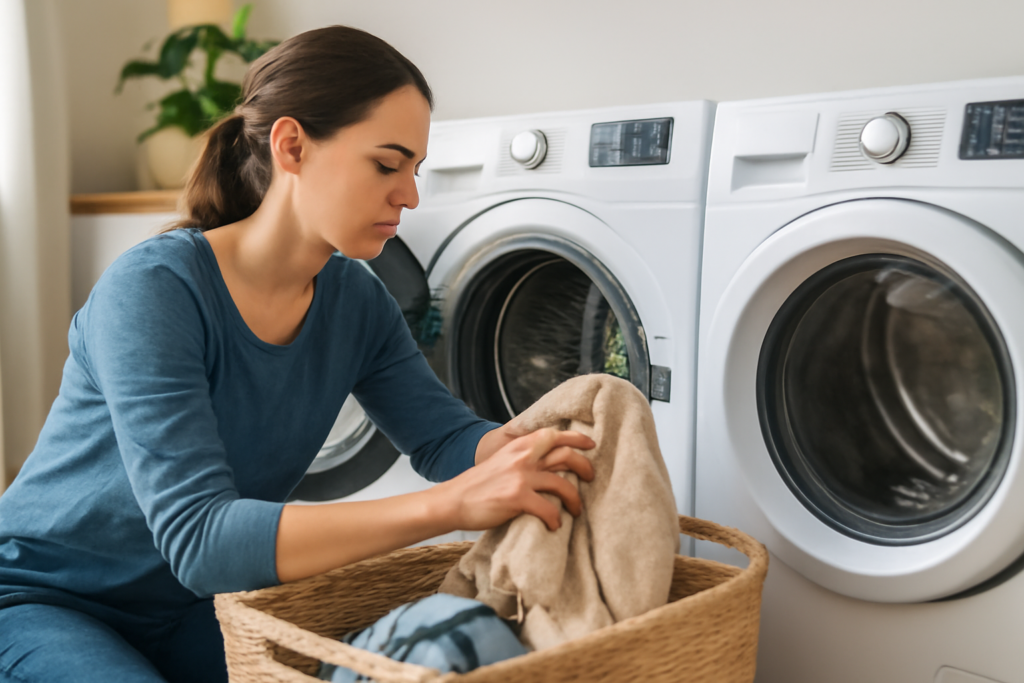
If your newer washer has no center agitator and uses a fraction of the water you remember, you own a high-efficiency machine. How do high efficiency washers work is a genuinely useful question, because these machines clean using a completely different principle than the old top loaders, and using them the old way leads to smelly laundry and poor results. Instead of drowning clothes in water and thrashing them against an agitator, HE washers use less water, specialized detergent, and a gentle tumbling or wobbling action to get clothes clean. Understanding the mechanics helps you get better results and avoid the common pitfalls.
- The Core Difference: Less Water, Smarter Motion
- Front Loaders Versus HE Top Loaders
- Why HE Detergent Is Not Optional
- The Sensing and Cycle Process
- The Real Benefits
- Getting the Best Results and Avoiding Odor
- Understanding Cycle Times and Water Levels
- Choosing the Right Cycle and Options
- Common Mistakes to Avoid
- The Bottom Line
The Core Difference: Less Water, Smarter Motion
A traditional top loader fills the tub with 30 to 45 gallons of water so clothes float freely, then uses a tall central agitator to churn them. It works, but it wastes enormous amounts of water and energy heating that water. High-efficiency washers flip the approach: they use just 12 to 15 gallons per cycle, roughly half or less, and clean through motion rather than immersion.
Instead of submerging everything, an HE machine wets the clothes and then repeatedly lifts, drops, and rubs them against each other and the drum. This mechanical action, combined with concentrated detergent and time, dissolves and dislodges soil effectively while using far less water. The result is comparable or better cleaning with dramatically lower resource use.
Front Loaders Versus HE Top Loaders
High-efficiency machines come in two forms, and they achieve the low-water tumbling differently. Front-load HE washers have a horizontal drum that rotates, using gravity to lift clothes to the top and drop them into the shallow pool of water at the bottom, over and over. This tumbling is gentle on fabrics and highly effective, which is why front loaders are known for good cleaning and fabric care.
HE top loaders have no center agitator; instead they use a low-profile plate or impeller at the bottom that rotates and wobbles, moving the clothes in a circular, rubbing motion against each other. They load from the top like a traditional machine, which many people prefer for ergonomics, but they clean with the same low-water, motion-based principle as front loaders rather than the old flood-and-agitate method.
Why HE Detergent Is Not Optional
The low water volume is exactly why HE machines require HE detergent, marked with the “he” symbol. Regular detergent is formulated to foam heavily, which is fine in a tub full of water but disastrous in the small amount of water an HE washer uses. Too many suds prevent clothes from rubbing against each other properly, cushioning the mechanical action and reducing cleaning.
Worse, excess suds do not rinse out in the limited water, so they leave residue on clothes and build up inside the machine, contributing to odor and even error codes on some models. HE detergent is low-sudsing and concentrated, designed to clean effectively and rinse away completely in minimal water. Using the correct type, and only the recommended small amount, often just two tablespoons, is essential to good results.
The Sensing and Cycle Process
Modern HE washers add intelligence to the mechanics. When you start a load, the machine typically weighs or senses it during an initial tumble to determine how much water and how long a cycle it actually needs. This is why the drum may rotate for a minute or two before you hear water flowing, and why the timer estimate changes after it starts; the machine is adapting to the specific load.
During the wash, water is often recirculated, sprayed back over the clothes from a pump rather than left standing, which maximizes cleaning contact with minimal water. HE machines also spin much faster than old top loaders, often 1,000 to 1,300 RPM, extracting far more water from clothes. That high-speed extraction is a hidden efficiency win: clothes come out drier, so they spend less time and energy in the dryer.
The Real Benefits
The payoff for all this engineering is substantial. Water savings are the headline: an HE machine can use less than half the water of an old top loader, which adds up to thousands of gallons a year for a busy household. Because most of the energy in washing goes to heating water, using less hot water cuts energy bills too, and Energy Star HE models are among the most efficient appliances in the home.
HE washers also tend to have larger capacity because there is no bulky agitator taking up drum space, so you can wash bigger loads, including comforters and bulky bedding. The gentler tumbling action is easier on fabrics than a thrashing agitator, extending the life of your clothes. And the high-speed spin means shorter dryer times, compounding the energy savings.
Getting the Best Results and Avoiding Odor
The flip side of low water use is that HE machines are prone to buildup and odor if used carelessly, especially front loaders. The same limited water that saves resources also means detergent, softener, and body soil can accumulate rather than flush away. The fixes are straightforward but important.
Use only HE detergent, and use less than you think, since overdosing is the number one cause of residue and smell. Skip or minimize liquid fabric softener, which coats the drum and gasket. Leave the door and detergent drawer open between loads so the interior dries out, and on front loaders wipe the rubber gasket periodically to clear trapped water and lint. Run a monthly cleaning cycle, either with a washer cleaner or with hot water and two cups of vinegar, to strip any buildup. Do these few things and an HE washer stays fresh and performs beautifully for years.
Understanding Cycle Times and Water Levels
New HE owners are often surprised that cycles run longer than the old machines, sometimes 60 to 90 minutes for a normal load versus 35 or 40 minutes on an old top loader. This is by design, not a defect. Because HE machines use less water and clean through prolonged mechanical action rather than a flood of water, they need more time for the tumbling and rubbing to do their work. The extra time is part of how they achieve good cleaning with minimal water.
You may also notice the drum never fully fills, even on large loads. Where an old machine submerged clothes completely, an HE washer keeps only a shallow pool at the bottom and relies on wetting the clothes and moving them through it. Do not add water manually or worry that the load looks under-filled; the machine has calculated exactly what it needs. If you want more water for a heavily soiled load, use a soil-level or deep-fill option if your model offers one, rather than second-guessing the sensor.
Choosing the Right Cycle and Options
Getting the most from an HE washer means using its cycles intentionally rather than defaulting to normal every time. The heavy-duty or bulky cycle uses more water and longer agitation for towels, bedding, and dirty work clothes. The delicate or hand-wash cycle uses gentler tumbling and slower spin for fragile items. A sanitize cycle heats water above 150°F to kill germs on items like bedding and towels, useful during illness.
Pay attention to spin-speed options too. A high final spin extracts more water and shortens drying time but is harder on delicates and can set wrinkles; a lower spin is gentler but leaves clothes wetter. Many machines also offer an extra-rinse option, which is worth using for anyone with sensitive skin to ensure all detergent is removed. Learning these cycles turns a good machine into a great one, matching water, temperature, agitation, and spin precisely to each load rather than treating every wash the same.
Common Mistakes to Avoid
A few habits carried over from old machines undermine HE performance. Overloading is a big one; clothes need room to tumble, so fill the drum but do not pack it. Using too much detergent, or non-HE detergent, causes suds problems and residue. Selecting the wrong cycle, such as using a quick wash for a heavily soiled load, shortchanges the time HE cleaning needs. And ignoring the maintenance routine invites the mildew smell these machines are notorious for.
Learn your machine’s cycles, since HE washers offer specialized options like sanitize, bulky, and allergen cycles that use different water levels and temperatures for specific needs. Matching the cycle to the load gets the most out of the technology.
The Bottom Line
So, how do high efficiency washers work? They clean with a fraction of the water by relying on tumbling or wobbling motion, concentrated HE detergent, recirculated water, and high-speed extraction, all managed by sensors that tailor each cycle to the load. The payoff is major water and energy savings, larger capacity, gentler fabric care, and shorter drying times. The trade-off is that they demand the right detergent, correct dosing, and regular cleaning to stay odor-free. Use them as designed, and an HE washer outperforms the old flood-and-agitate machines on nearly every measure that matters.